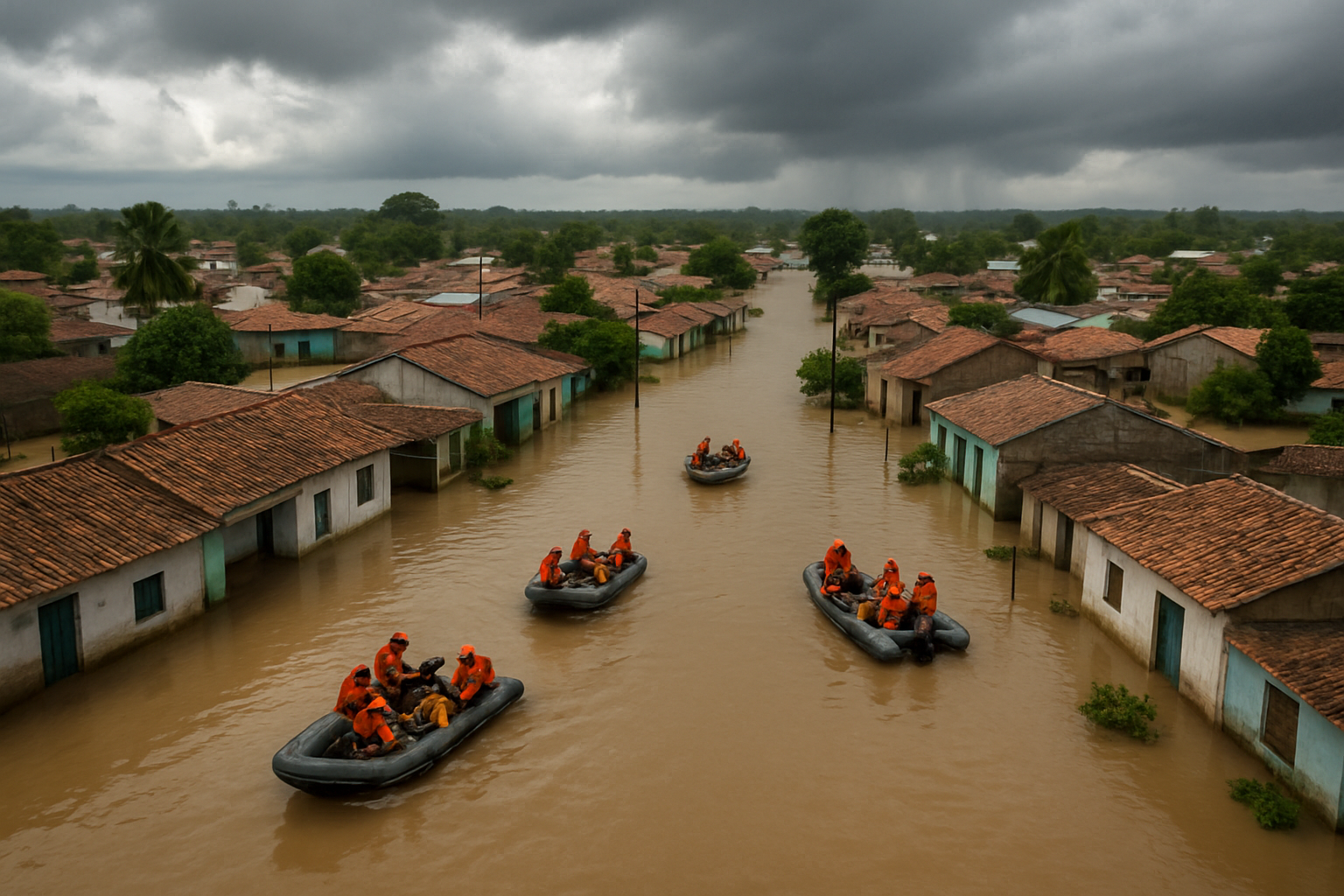
Colombia's Caribbean coast is reeling from devastating floods that have killed at least 14 people and displaced tens of thousands of families, as heavy rains associated with a cold front trigger widespread evacuations and prompt authorities to consider declaring a state of emergency.
The flooding, which has primarily affected the departments of Córdoba and Sucre, has destroyed approximately 9,000 homes and impacted around 50,000 families according to official reports. The disaster represents one of the most severe natural catastrophes to hit Colombia's northern regions in recent years, with emergency services overwhelmed by the scale of destruction.
Scale of the Humanitarian Crisis
The flooding has created a humanitarian emergency of unprecedented proportions across Colombia's Caribbean coast. Local authorities report that the combination of prolonged heavy rainfall and inadequate drainage infrastructure has led to river overflows and flash flooding that caught many communities unprepared.
Emergency shelters have been established across the affected regions, with thousands of families seeking refuge after losing their homes to the rising waters. The destruction of 9,000 residential structures has left entire communities without basic shelter, creating urgent needs for temporary housing, clean water, food supplies, and medical assistance.
The death toll of 14 people underscores the deadly nature of the flooding, with rescue operations continuing as emergency personnel work to reach isolated communities cut off by the floodwaters. Local hospitals report treating numerous cases of injuries related to the flooding, including drowning incidents and trauma from collapsing structures.
Meteorological Causes and Regional Impact
The devastating floods have been attributed to heavy rainfall associated with a cold front system that brought sustained precipitation to the Caribbean coast region. This weather pattern has overwhelmed the natural drainage capacity of rivers and streams in Córdoba and Sucre departments, leading to widespread inundation of urban and rural areas.
The flooding occurs within a broader pattern of extreme weather affecting Colombia and the wider Caribbean region. Historical context shows this crisis follows previous flooding events that have periodically affected the area, but the current magnitude represents an escalation in both intensity and impact.
Regional infrastructure, including transportation networks, has been severely compromised. Roads connecting major cities have become impassable, hampering rescue efforts and the delivery of humanitarian aid. The flooding has also disrupted essential services including electricity, water supply, and communications networks across the affected areas.
Government Response and Emergency Measures
Colombian authorities are actively considering declaring a formal state of emergency across the affected Caribbean regions, which would unlock additional federal resources and expedite disaster response procedures. This potential declaration reflects the severity of the crisis and the need for coordinated national-level intervention.
Emergency response teams from multiple agencies have been deployed to the region, including civil defense personnel, military units, and medical teams. Search and rescue operations continue across flooded areas, with priority given to reaching communities that remain cut off by floodwaters.
The government has established coordination centers to manage the humanitarian response, working to provide immediate assistance including emergency shelter, food distribution, and medical care for affected populations. Evacuation procedures have been implemented for areas at continued risk of flooding.
Historical Context and Climate Patterns
This flooding crisis occurs within the context of increasingly volatile weather patterns affecting the Caribbean region. Recent months have witnessed extreme weather events across the continent, including severe flooding in Mozambique affecting over 500,000 people, and devastating storms across Europe that have tested emergency response systems globally.
The timing of this disaster is particularly significant, as January 2026 was recorded as the hottest month in global history, part of a pattern where 18 of the past 19 months have exceeded 1.5°C above pre-industrial levels. This climate volatility demonstrates how warming trends can coexist with regional extreme weather events, creating complex challenges for disaster preparedness.
Colombia's Caribbean coast has historically been vulnerable to flooding during rainy seasons, but the intensity and scope of the current crisis suggest changing precipitation patterns that require enhanced adaptation strategies. Previous flooding events in the region have provided lessons about infrastructure vulnerabilities and the need for improved early warning systems.
Infrastructure Challenges and Vulnerabilities
The widespread destruction of homes and displacement of families highlights critical infrastructure vulnerabilities in Colombia's Caribbean coastal region. Many of the affected communities lack adequate drainage systems and flood defenses capable of managing extreme rainfall events of this magnitude.
Transportation infrastructure has been particularly affected, with major highways flooded and bridges potentially damaged or destroyed. This disruption not only hampers immediate rescue efforts but also threatens longer-term economic recovery by isolating communities and disrupting trade routes.
The flooding has also exposed weaknesses in essential service delivery, with power grids, water treatment facilities, and telecommunications networks suffering damage. These infrastructure failures compound the humanitarian crisis by limiting communication capabilities and access to basic services during the emergency response.
Economic and Social Impact
Beyond the immediate humanitarian concerns, the flooding represents a significant economic blow to the affected regions. Agriculture, which forms the backbone of the local economy in many rural areas of Córdoba and Sucre, has been severely impacted by crop damage and livestock losses.
Small businesses and local commerce have also suffered extensive damage, with many establishments destroyed or rendered inoperable by floodwaters. The economic ripple effects are expected to persist long after the immediate crisis subsides, requiring substantial investment in reconstruction and recovery efforts.
Educational infrastructure has been disrupted, with numerous schools damaged or converted to emergency shelters. This disruption threatens to impact the education of thousands of children across the affected regions, requiring alternative arrangements for continued learning during the recovery period.
International and Regional Response
The crisis in Colombia occurs amid a broader pattern of extreme weather events requiring international cooperation and assistance. Regional organizations and neighboring countries are monitoring the situation and preparing to offer support if requested by Colombian authorities.
This flooding event demonstrates the interconnected nature of climate-related disasters in the Caribbean and Central American region. Similar flooding events in recent months have affected Mozambique, requiring UN appeals for international assistance, highlighting the global scope of climate-related humanitarian crises.
The response to Colombia's flooding will likely inform broader regional disaster preparedness strategies, as Caribbean nations work to enhance their collective resilience against increasingly frequent and severe weather events.
Recovery and Reconstruction Challenges
As immediate rescue operations continue, attention is turning to the massive reconstruction effort that will be required in the coming months. The destruction of 9,000 homes represents a housing crisis that will require substantial investment and coordinated planning to address effectively.
Recovery efforts must balance the need for rapid reconstruction with improved building standards and flood resistance measures. This presents an opportunity to "build back better" with enhanced infrastructure capable of withstanding future extreme weather events.
The displacement of 50,000 families creates complex logistical challenges for providing temporary housing while permanent reconstruction proceeds. Coordination between national, regional, and local authorities will be essential to ensure an effective and equitable recovery process.
Long-term resilience building must also address the underlying vulnerabilities that contributed to the severity of this disaster, including improved drainage systems, early warning mechanisms, and land use planning that accounts for flood risk. The experience of this crisis will inform Colombia's broader climate adaptation strategy and disaster preparedness framework.