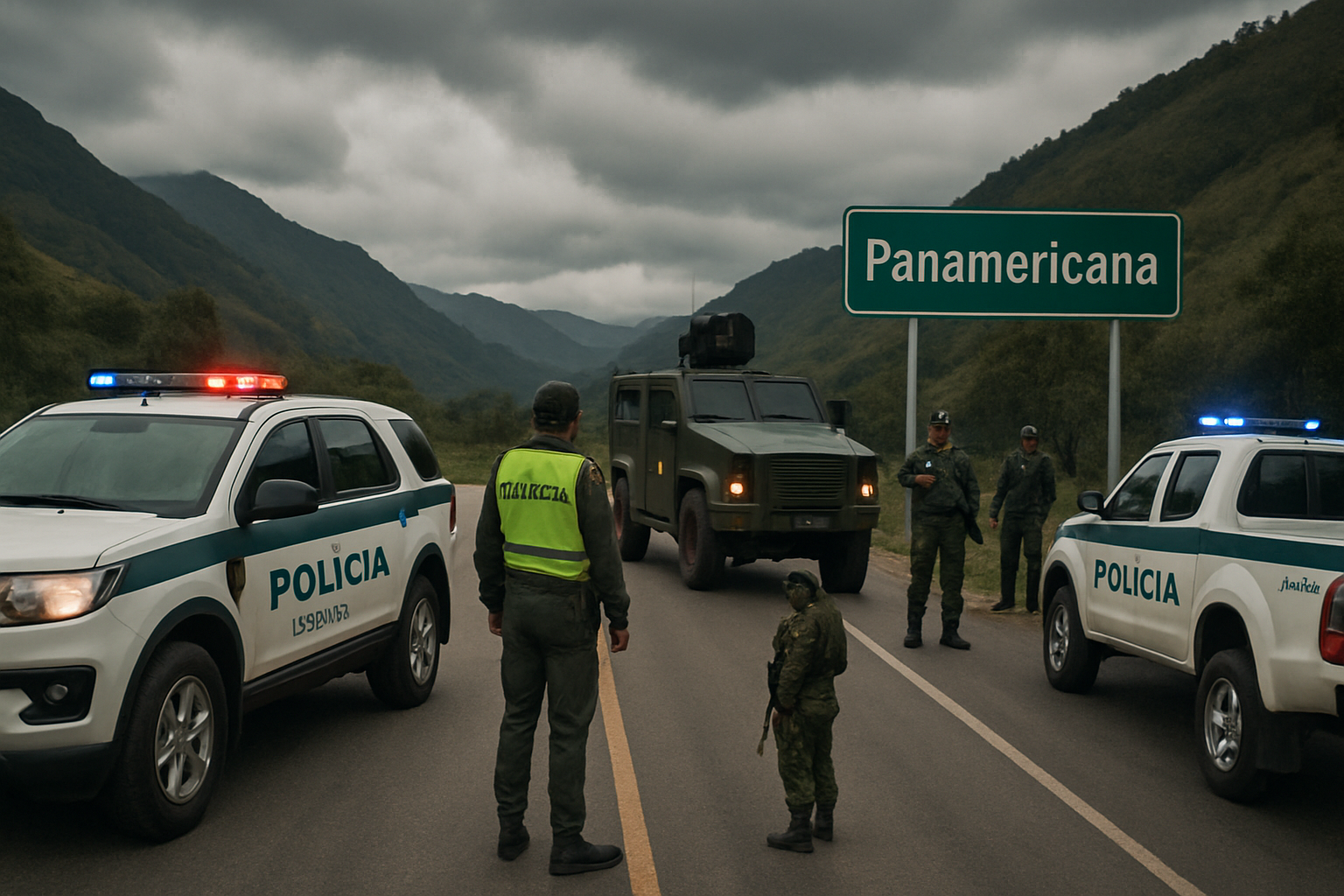
At least 20 civilians, predominantly women, were killed and 36 others wounded in a devastating guerrilla attack using explosive devices on Colombia's Pan-American Highway in Cauca province, marking one of the deadliest incidents in the country's escalating security crisis ahead of the May 2026 presidential elections.
Cauca Governor Octavio Guzmán confirmed the death toll on Saturday evening, revising earlier figures that had placed the number of fatalities at 14. The attack occurred in the department of Cauca, one of Colombia's most violence-plagued regions, where FARC dissident groups have maintained a significant presence despite the 2016 peace agreement.
Attack Details and Immediate Response
The assault targeted civilian vehicles traveling along the critical transportation corridor between Cali and Popayán. According to multiple sources, the attackers detonated explosive devices, creating chaos on one of Colombia's most important highways. Of the 20 confirmed deaths, 15 were women and five were men, highlighting the indiscriminate nature of the violence against innocent civilians.
The Pan-American Highway serves as a vital artery for both legitimate commerce and, unfortunately, drug trafficking operations. The attack has completely paralyzed traffic on this route, which typically sees over 20,000 vehicles daily, forcing thousands of travelers to seek alternative routes or delay their journeys indefinitely.
"This despicable attack demonstrates the criminal nature of these groups who have no respect for human life,"
— Octavio Guzmán, Cauca Governor
Context of Escalating Violence
The attack is part of an unprecedented wave of violence that has swept across Cauca and Valle del Cauca departments. In the past 48 hours alone, authorities have documented 26 coordinated attacks by armed groups, representing what regional governors have described as a "terrorist escalation."
These incidents include explosive drone strikes against military installations, armed assaults on police stations, and additional highway bombings. The sophistication and coordination of these attacks demonstrate that FARC dissident groups have evolved into organizations with "state-like capabilities," including advanced surveillance networks, encrypted communications, and military-grade technology.
Government Response and Investigations
The Colombian government has attributed the attacks to the "Jaime Martínez" FARC dissident structure, led by a commander known by the alias 'Marlon.' In response to the escalating violence, authorities have increased the bounty for 'Marlon's' capture to an unprecedented 5 billion pesos (approximately $1.2 million USD), reflecting the severity of the threat posed by these criminal organizations.
President Gustavo Petro's administration faces mounting pressure over its "Total Peace" strategy, which seeks to negotiate with armed groups while addressing the root causes of conflict. Critics argue that the strategy has failed to prevent the escalation of violence, while supporters maintain that the alternative of purely military responses has proven inadequate in the past.
Electoral Implications
The timing of these attacks is particularly concerning, occurring just weeks before Colombia's May 2026 presidential elections. International observers have noted a disturbing pattern of pre-election violence that appears designed to undermine democratic institutions and the peaceful transfer of power.
The systematic nature of the violence, targeting not only civilian infrastructure but also democratic institutions, suggests a coordinated campaign to create governance vacuums that criminal organizations can exploit for territorial control. Over 100 municipal ombudsmen have been declared targets by armed groups, according to the Public Ministry in Cali, representing a comprehensive assault on local democratic oversight mechanisms.
International Cooperation and Security Challenges
Colombia's security challenges have prompted enhanced international cooperation through the Shield of Americas coalition, a 17-nation initiative established in March 2026 that enables intelligence sharing with Spanish police, Interpol, and regional partners. Despite these efforts, criminal organizations continue to demonstrate remarkable adaptability and operational sophistication.
The attacks come amid broader concerns about Colombia's security situation, following the February 2026 assassination attempt against President Petro, in which his helicopter was threatened and forced to remain airborne for four hours over the Caribbean Sea. The incident highlighted the advanced capabilities of criminal organizations, including potential surface-to-air weapons systems.
Impact on Communities and Infrastructure
The violence has had profound effects beyond the immediate casualties. Thousands of residents have been forced to alter their travel patterns, avoiding the Pan-American Highway during peak hours. The tourism industry has suffered significant setbacks, with popular destinations like Tayrona National Park forced to close due to armed group threats.
Medical facilities across Cauca province are operating at capacity limits while treating the wounded from multiple attacks. The psychological trauma extends far beyond the direct victims, affecting entire communities that depend on secure transportation for access to essential services, education, and healthcare.
Criminal Evolution and Capabilities
The sophistication demonstrated in these coordinated attacks represents a dangerous evolution in criminal capabilities. Armed groups now possess advanced surveillance systems that rival those of intelligence agencies, encrypted communications that exceed law enforcement monitoring capabilities, and compartmentalized international structures that allow them to operate across multiple jurisdictions.
The use of explosive devices and the coordination of simultaneous attacks across multiple departments show that these organizations have transcended traditional guerrilla tactics. They now operate with resources and capabilities that challenge conventional law enforcement approaches and require comprehensive, long-term strategies that address both immediate security needs and underlying social conditions.
Looking Forward
The May 2026 elections will serve as a crucial test of Colombian democratic resilience and institutional capacity to manage security crises while preserving constitutional protections. The international community is monitoring closely, given the regional stability implications and the global significance of Colombia's role in addressing transnational organized crime.
Success in addressing this crisis will require not only enhanced security measures but also comprehensive approaches to poverty reduction, corruption prevention, and governance strengthening in peripheral regions where criminal organizations currently operate with impunity. The challenge lies in implementing these solutions while maintaining Colombia's democratic character and respect for human rights.
As families throughout Cauca province mourn the loss of innocent lives, the attack serves as a stark reminder of the work still needed to achieve lasting peace in Colombia. The predominantly female casualties underscore the indiscriminate nature of this violence and the urgent need for protection of Colombia's most vulnerable populations.