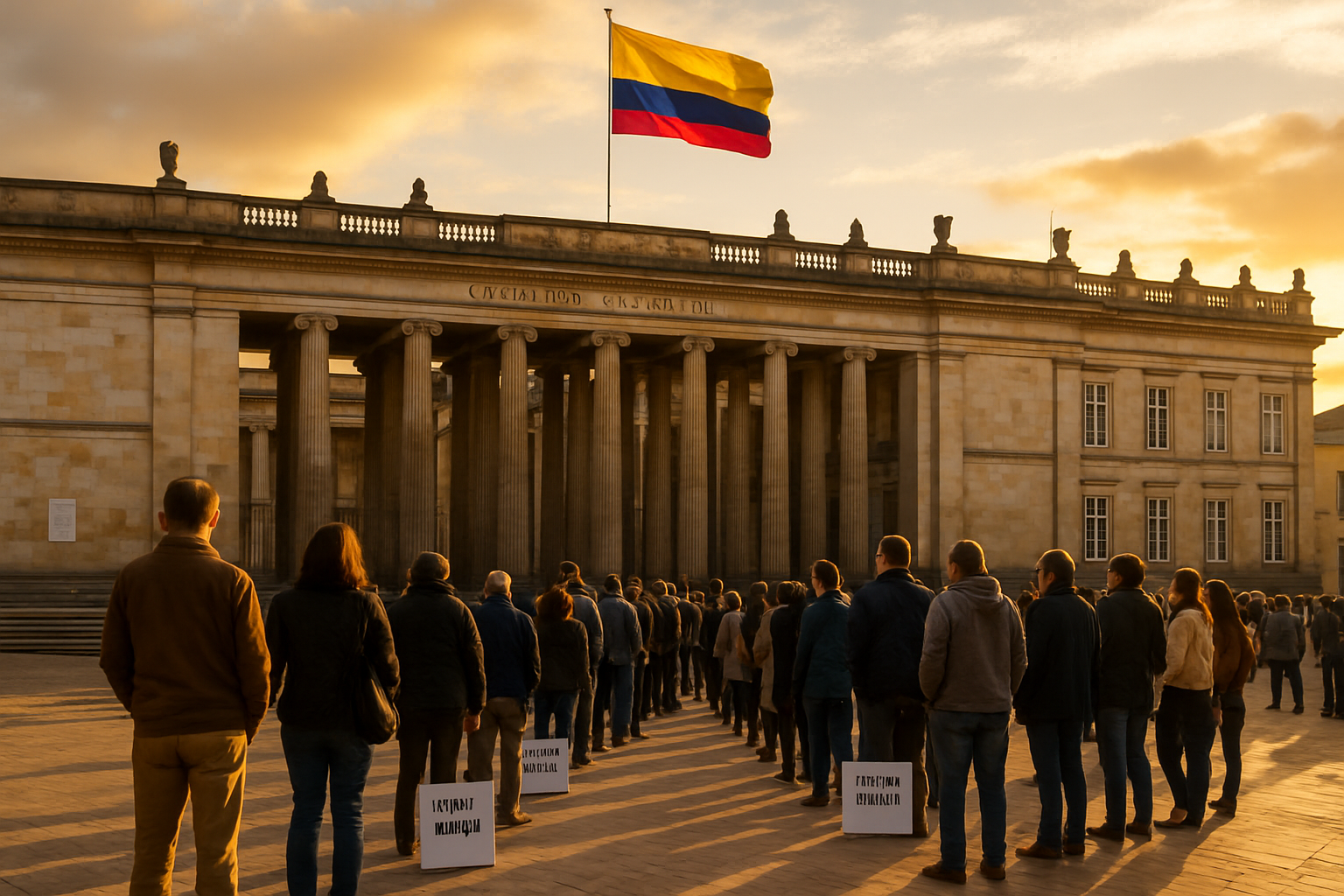
Colombia's left-wing coalition has emerged as the dominant force in the country's congressional elections held Sunday, with President Gustavo Petro's Historic Pact maintaining control of both the lower chamber and Senate despite delivering a divided Congress ahead of crucial presidential polls in May.
With more than 97% of ballots counted by Monday morning, the leftist coalition confirmed its progression in Congress, consolidating gains made since 2022 when Gustavo Petro became the first president from this political current in Colombia's history. The results position the left as the primary force heading into the May 31 presidential elections, where Petro cannot seek re-election.
Electoral Landscape and Key Results
The congressional elections saw over 41 million eligible Colombian voters participate in selecting 102 senators and 183 representatives for the 2026-2030 period. Among the 3,200 candidates competing, the Historic Pact's performance signals continued support for the progressive agenda despite facing a resurgent right-wing opposition.
According to preliminary results reported by international media, the left-wing parties have maintained their dominance while the opposition Democratic Center party has positioned itself as the principal opposition movement. Former President Álvaro Uribe's party appears to have regained significant ground, setting up a polarized political landscape for the upcoming presidential contest.
Security Concerns and Electoral Integrity
The elections proceeded despite significant security challenges that have plagued Colombia in recent months. The voting took place just weeks after President Petro survived an assassination attempt in February, when his helicopter was threatened with being shot down in Córdoba province, forcing the aircraft to remain airborne for four hours over the Caribbean Sea.
Electoral authorities reported several incidents of financial irregularities during the campaign period. In Antioquia, authorities seized 605 million pesos linked to alleged electoral crimes, while in Nariño's Tumaco, funds were intercepted that were allegedly destined for criminal organizations. Additional seizures occurred in Atlántico, where 105 million pesos were confiscated from individuals unable to justify their origin.
Despite these challenges, no polling stations required relocation due to security threats, and the electoral process concluded without major incidents. The ability to conduct nationwide elections amid ongoing security pressures demonstrated the resilience of Colombia's democratic institutions.
Regional Political Dynamics
The electoral results reveal complex regional dynamics across Colombia's diverse geography. In traditionally conservative areas, the Historic Pact managed to establish itself as a significant force, while maintaining its strongholds in urban centers and regions historically affected by armed conflict.
Valle del Cauca, with 3.8 million voters competing for 13 Chamber seats, exemplified the intense political competition. Even in areas with security concerns, such as Jamundí, which maintained 38 polling stations despite dissident group threats, voter turnout exceeded expectations with over 127,000 participants.
"The mafias and machines tried to push us off the path, but the people's will prevailed"
— Daniel Quintero, after voting in Medellín
Looking Toward May Presidential Elections
The congressional results serve as a crucial barometer for the May 31 presidential elections, where multiple candidates are expected to compete for the presidency. With Petro constitutionally barred from seeking re-election, the left-wing coalition will need to identify a successor capable of maintaining their electoral momentum.
The strengthened position of the Democratic Center as the primary opposition force suggests that the presidential race will likely feature a clear ideological divide between progressive and conservative candidates. This polarization reflects broader regional trends toward political extremes, with centrist positions losing ground across Latin America.
Institutional Challenges and Democratic Resilience
The successful completion of the congressional elections represents a significant achievement for Colombian democracy, particularly given the security challenges facing the country. The systematic targeting of democratic institutions by criminal organizations, including the February assassination attempt against President Petro and the kidnapping and rescue of Indigenous Senator Aida Quilcué, had raised concerns about the electoral process.
The elections occurred within the context of Colombia's "Total Peace" negotiations, the government's comprehensive approach to ending decades of armed conflict. The ability to conduct free and fair elections despite ongoing violence demonstrates the institutional strength of Colombian democracy, even as it faces unprecedented challenges from organized crime networks with sophisticated operational capabilities.
Economic and Social Context
The electoral results reflect Colombian voters' responses to ongoing economic challenges, including inflation and inequality issues that have dominated political discourse. The left-wing coalition's maintained support suggests continued backing for Petro's progressive economic agenda, including social programs and efforts to address historical inequalities.
The elections also occurred against the backdrop of Colombia's evolving relationship with the United States, following the historic February meeting between President Petro and U.S. President Donald Trump at the White House, which established new frameworks for counter-narcotics cooperation despite previous tensions between the two leaders.
Regional and International Implications
Colombia's electoral outcome has significant implications for regional politics and international relations. The continued dominance of the left-wing coalition positions Colombia as a key player in Latin America's shifting political landscape, where progressive movements have gained ground in several countries.
The results also impact Colombia's role in addressing regional challenges, including the Venezuelan migration crisis, drug trafficking networks, and climate change initiatives. The strengthened congressional position provides the ruling coalition with enhanced legislative capacity to implement domestic and foreign policy priorities.
As Colombia prepares for the May presidential elections, the congressional results establish the foundation for continued political competition between ideologically distinct alternatives. The outcome will ultimately determine not only Colombia's domestic trajectory but also its influence in regional and global affairs during a period of significant geopolitical transformation.