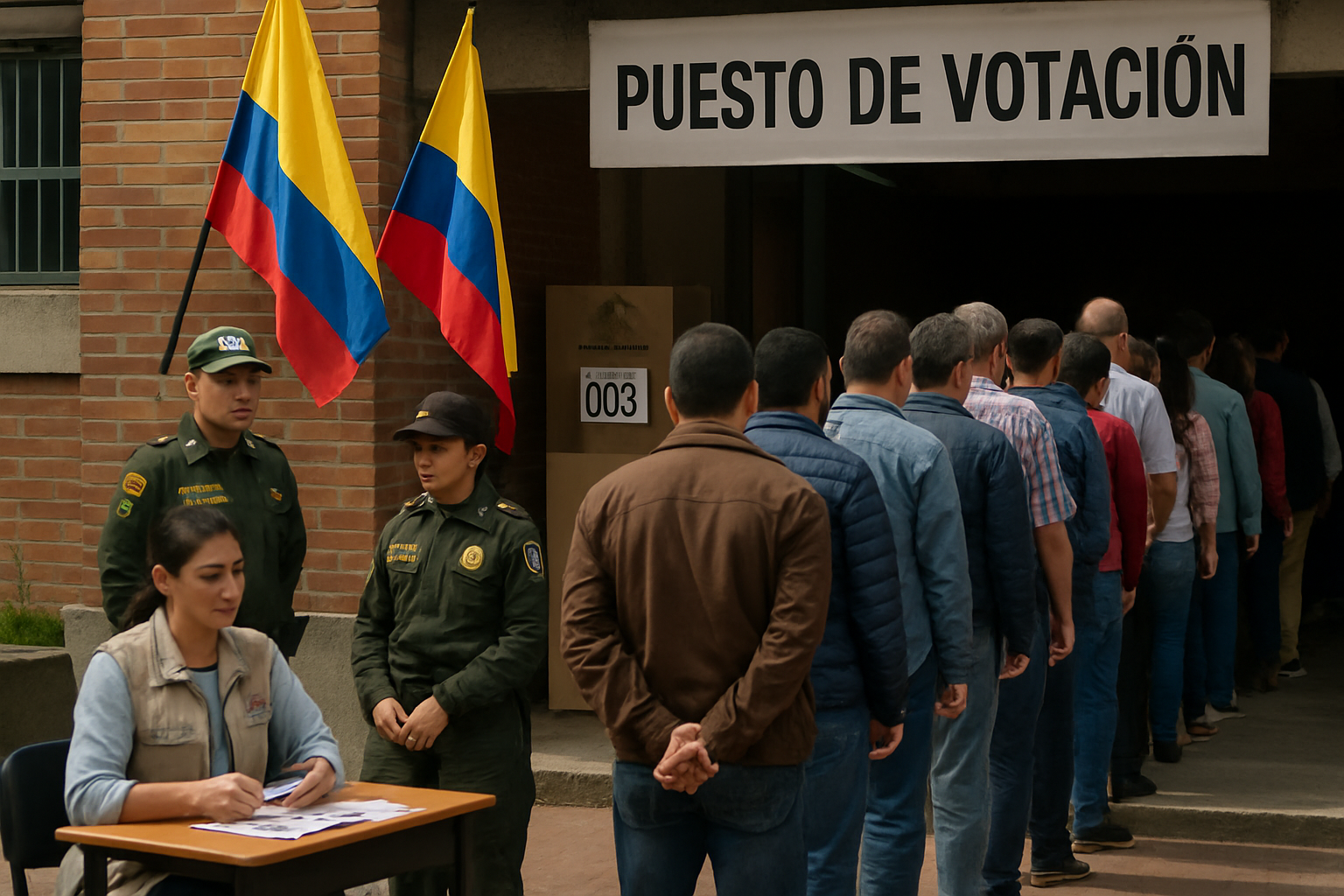
Colombia's 2026 legislative elections proceeded on March 8 with over 41 million eligible voters participating in what has become a pivotal democratic test marked by security challenges and concerning reports of electoral irregularities across the nation.
The elections, which will determine the composition of Colombia's Congress for the next four years, began at 8:00 AM and concluded at 4:00 PM, with authorities reporting generally peaceful conditions despite several significant incidents that have raised questions about the integrity of the electoral process.
Major Financial Seizures Raise Electoral Concerns
Colombian authorities conducted multiple high-profile cash seizures throughout election day that have drawn attention to potential electoral crimes. In Antioquia department, security forces confiscated 605 million pesos in connection with possible electoral violations, while two individuals were arrested at voting stations in Medellín.
The most significant seizure occurred in Tumaco, Nariño, where authorities intercepted a substantial sum of money allegedly destined for the criminal organization "Coordinadora Nacional Ejército Bolivariano." This operation, conducted shortly after polling stations opened, highlights the intersection between organized crime and electoral processes that continues to challenge Colombia's democratic institutions.
Additionally, police seized 105 million pesos in cash on the Vía al Mar in Tubará, Atlántico, when the driver of a vehicle traveling the Cartagena-Barranquilla route was unable to justify the money's origin. The driver has since been brought before judicial authorities.
Regional Voting Patterns and Competition
The electoral contest has revealed significant regional dynamics, particularly in Valle del Cauca, where 13 seats in the Chamber of Representatives are at stake. Political analysts describe intense competition between traditional parties and emerging movements, with special attention on the continued influence of "la U" (Partido de la U) in regional politics.
In Cali and surrounding Valle del Cauca areas, approximately 3.8 million voters were eligible to participate, with authorities reporting calm conditions throughout most of the day. The peaceful atmosphere in this crucial region contrasts sharply with the security challenges experienced elsewhere.
Security Operations and Threat Management
Security concerns dominated preparations for the elections, particularly in rural and conflict-affected areas. In Jamundí, authorities maintained heightened vigilance to prevent potential attacks from dissident groups, with over 127,000 citizens expected to vote at 38 polling stations comprising 381 voting tables.
Notably, none of the originally planned voting locations required relocation, including those in rural areas where there had been initial requests to move polling stations due to security concerns. This decision reflects both improved security conditions and the commitment of electoral authorities to maintain accessibility for all voters.
"The maintenance of all polling stations, especially in rural areas, demonstrates our commitment to ensuring every Colombian can exercise their democratic right," said a regional electoral official.
— Regional Electoral Authority
Candidate Statements and Political Climate
The election has been marked by strong rhetoric from various political figures. Daniel Quintero, pre-candidate for the "Frente por la Vida" (Front for Life), delivered particularly pointed comments after casting his vote in Medellín's Tricentenario neighborhood.
"Mafias and political machines have tried to push us off the path," Quintero declared, referring to what he characterized as systematic attempts to undermine his political movement. His statements reflect broader concerns about the influence of organized crime and traditional political machines in Colombian electoral processes.
Comparative Regional Performance
Across Colombia's major urban centers, electoral authorities reported varying levels of participation and incident management. In Barranquilla and the broader Atlántico department, Governor Eduardo Verano personally monitored the electoral process from the Unified Command Post (PMU), with officials reporting good voter turnout and calm conditions.
The contrasting experiences between regions—from the reported normalcy in Barranquilla to the significant cash seizures in Antioquia and Nariño—illustrate the complex security and political landscape that continues to shape Colombian democracy.
International Oversight and Democratic Implications
The 2026 legislative elections have drawn international attention, with observers monitoring Colombia's continued democratic consolidation following decades of internal conflict. The simultaneous selection of parliamentary candidates alongside preparations for the May presidential election process adds additional complexity to the political landscape.
According to international media coverage, including reports from Italian news agency ANSA, the scale of participation—exceeding 41 million eligible voters—represents one of the largest electoral exercises in Colombian history.
Looking Ahead: Presidential Elections and Congressional Composition
The results of these legislative elections will significantly influence Colombia's political trajectory, particularly as the nation prepares for presidential elections in May. The composition of Congress will play a crucial role in shaping policy agendas and providing governance support or opposition to the incoming executive administration.
The reported irregularities and security incidents, while concerning, have not appeared to fundamentally disrupt the electoral process. However, they underscore the ongoing challenges facing Colombian democracy, including the persistent influence of organized crime, the role of money in politics, and the need for continued institutional strengthening.
As vote counting proceeds and official results become available, the true test of these elections will be the acceptance of outcomes by all political actors and the peaceful transition to newly elected congressional leadership. The significant cash seizures and arrests will likely prompt investigations that could extend well beyond election day, potentially affecting the legitimacy and effectiveness of the incoming legislature.
Colombia's 2026 legislative elections thus represent both a celebration of democratic participation by over 41 million citizens and a reminder of the persistent challenges that must be addressed to ensure the full integrity of the democratic process in this pivotal Latin American nation.