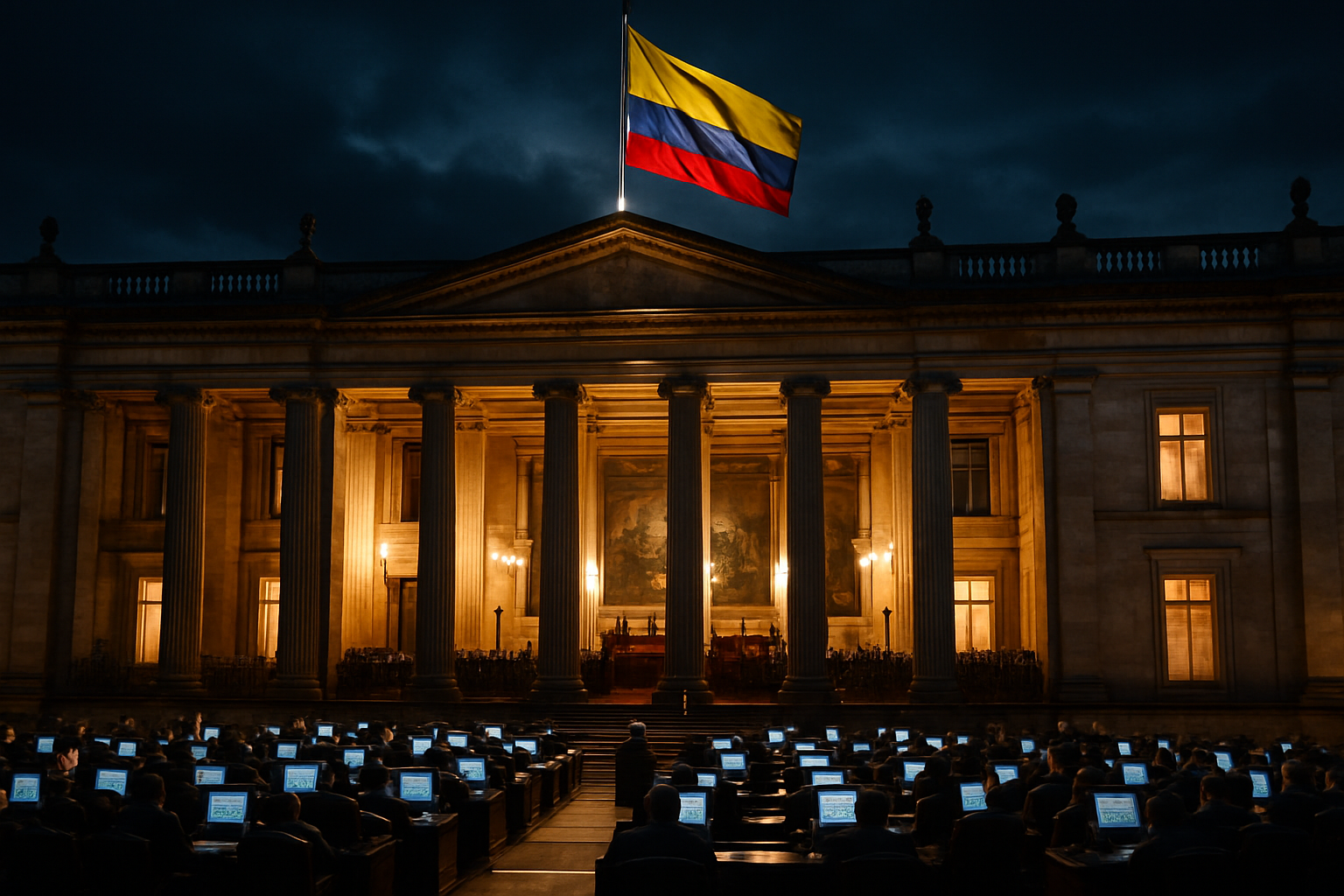
Colombian voters have delivered a seismic shift in the nation's political landscape during the March 8, 2026 congressional elections, as new faces emerge across key departments while established political dynasties face unprecedented challenges to their traditional strongholds.
The elections, conducted amid significant security concerns and marking the first major democratic test since President Gustavo Petro's February assassination attempt, saw over 879,366 votes cast for Senate seats and 854,036 for Chamber of Representatives positions across the Caribbean coast and major urban centers.
Caribbean Political Dynasties Under Pressure
The traditionally dominant political clans of Colombia's Caribbean coast experienced a major reconfiguration following the March 8 vote. While established families have maintained their grip on power, new political forces have emerged to challenge their decades-long dominance in both the Senate and Chamber of Representatives.
In Atlántico, a particularly significant development emerged with the potential arrival of Orlando De La Hoz from the Pacto Histórico (Historic Pact), which would increase the department's Senate representation from seven to eight seats. This marks a substantial consolidation of the leftist coalition as a political force in what has traditionally been a conservative stronghold.
"The voting of the Historic Pact would allow its arrival in the Senate and expand to eight the representation of Atlántico in the upper chamber."
— Electoral Analysis, EL TIEMPO
The department maintained its seven Senate seats through a partial renewal of its political representation, with Cambio Radical, Pacto Histórico, Partido Liberal, and Centro Democrático maintaining their positions. However, the composition saw three senators repeating their mandates while four new faces emerged, signaling a generational shift in political leadership.
Historic Victory in Afro-Colombian Representation
One of the most remarkable stories of these elections emerged from the Afro-Colombian constituency, where lawyer Óscar Benavides achieved a stunning upset victory. The Tumaqueño attorney, representing the Libres party, secured the Afro-Colombian seat with an impressive 146,000 votes, defeating prominent politician Miguel Polo Polo.
Benavides' victory represents a compelling narrative of social mobility and political transformation. Having transitioned from working as a sanitation worker to becoming a congressman, his success embodies the democratic aspirations of many Colombians seeking authentic representation in national politics.
Traditional Powerhouses Face Setbacks
The elections delivered significant surprises, with several established political figures experiencing unexpected defeats. Richard Aguilar, former governor of Santander, suffered a surprising loss in his Senate bid, marking the end of his congressional representation for the next four years.
Political analysts attribute Aguilar's defeat to questionable alliances, particularly his association with controversial figures, which ultimately undermined his electoral prospects in a department where he previously wielded considerable political influence.
Valle del Cauca: A Peaceful Democratic Exercise
Despite initial security concerns, Valle del Cauca conducted what authorities described as a remarkably peaceful electoral process. The department experienced mostly calm conditions, with only isolated incidents reported in municipalities such as El Cerrito and Restrepo.
The peaceful conduct of elections in Valle del Cauca, a region historically affected by violence, represents a significant achievement for Colombian democracy and the ongoing "Total Peace" negotiations initiated by the Petro administration.
"Between controlled hostilities and open ballot boxes: chronicle of a day shielded by peace in Valle del Cauca"
— EL TIEMPO Election Coverage
Magdalena Experiences Political Earthquake
The department of Magdalena witnessed perhaps the most dramatic political transformation, with the defeat of Fuerza Ciudadana and a significant reorganization of power structures. The decline of traditional political machinery coincided with the return of Uribismo and the consolidation of new political organizations seeking to redefine the region's political representation.
This "political earthquake" in Magdalena reflects broader national trends where voters are increasingly rejecting traditional political establishments in favor of new alternatives, whether from the left or right of the political spectrum.
Cauca Redefines Its Political Identity
Cauca department experienced a notable shift in its electoral dynamics, with traditional parties losing ground to new coalitions. The Pacto Histórico secured two Chamber of Representatives seats, while the Liberal Party and Fuerza Cauca each obtained one seat, representing a significant realignment from previous electoral cycles.
This change reflects the evolving political preferences of Cauca voters, who have increasingly embraced alternatives to the traditional two-party system that long dominated Colombian politics.
Antioquia's Conservative Stronghold
In Antioquia, despite the low participation in inter-party consultations, the Gran Consulta por Colombia emerged victorious with Paloma Valencia delivering a decisive performance. Her overwhelming success in the traditionally conservative region reinforced Antioquia's position as a key battleground for national political contests.
The department registered 879,366 votes for Senate positions, with Centro Democrático leading the voting in Medellín, Colombia's second-largest city, confirming the continued strength of conservative politics in the region.
Security Challenges and Democratic Resilience
The elections took place against a backdrop of significant security challenges that tested Colombia's democratic institutions. The successful conduct of voting across the nation, despite threats from illegal armed groups and the February assassination attempt against President Petro, demonstrated the resilience of Colombian democracy.
Electoral authorities and security forces coordinated effectively to ensure the protection of voting stations and the safe transportation of electoral materials, even in remote and conflict-affected areas. This achievement represents a substantial victory for institutional strength and the rule of law.
International Perspective and Regional Impact
International observers from Cuba and Portugal closely monitored the Colombian elections, recognizing their significance for regional democratic stability. The Portuguese media noted the high level of political fragmentation, with nearly half of eligible Colombians choosing not to vote in an election featuring over 3,000 candidates competing for 286 congressional seats.
This fragmentation reflects the deep political divisions that continue to characterize Colombian society, even as the country works to implement peace agreements and address historical conflicts through democratic means.
Looking Forward: Implications for Governance
The results of the March 8 elections will significantly impact the political dynamics in Congress as Colombia approaches the final years of the Petro administration. The strengthening of opposition forces, combined with the emergence of new political leaders, promises to create a more competitive and potentially more fragmented legislative environment.
The success of candidates from across the political spectrum suggests that Colombian voters are increasingly willing to experiment with alternatives to traditional political offerings, whether these come from the left, right, or emerging centrist movements.
These elections also serve as a crucial indicator for the 2026 presidential race, providing insights into regional political preferences and the electoral viability of different political projects. The performance of various parties and movements in these congressional elections will undoubtedly influence candidate selection and campaign strategies for the next presidential contest.
As Colombia continues to navigate the challenges of peace implementation, economic recovery, and institutional strengthening, the newly elected Congress will play a crucial role in determining the country's political trajectory. The emergence of new leaders and the reshuffling of traditional power structures suggest that Colombian democracy, despite its challenges, retains the capacity for renewal and adaptation that will be essential for addressing the nation's complex challenges in the years ahead.