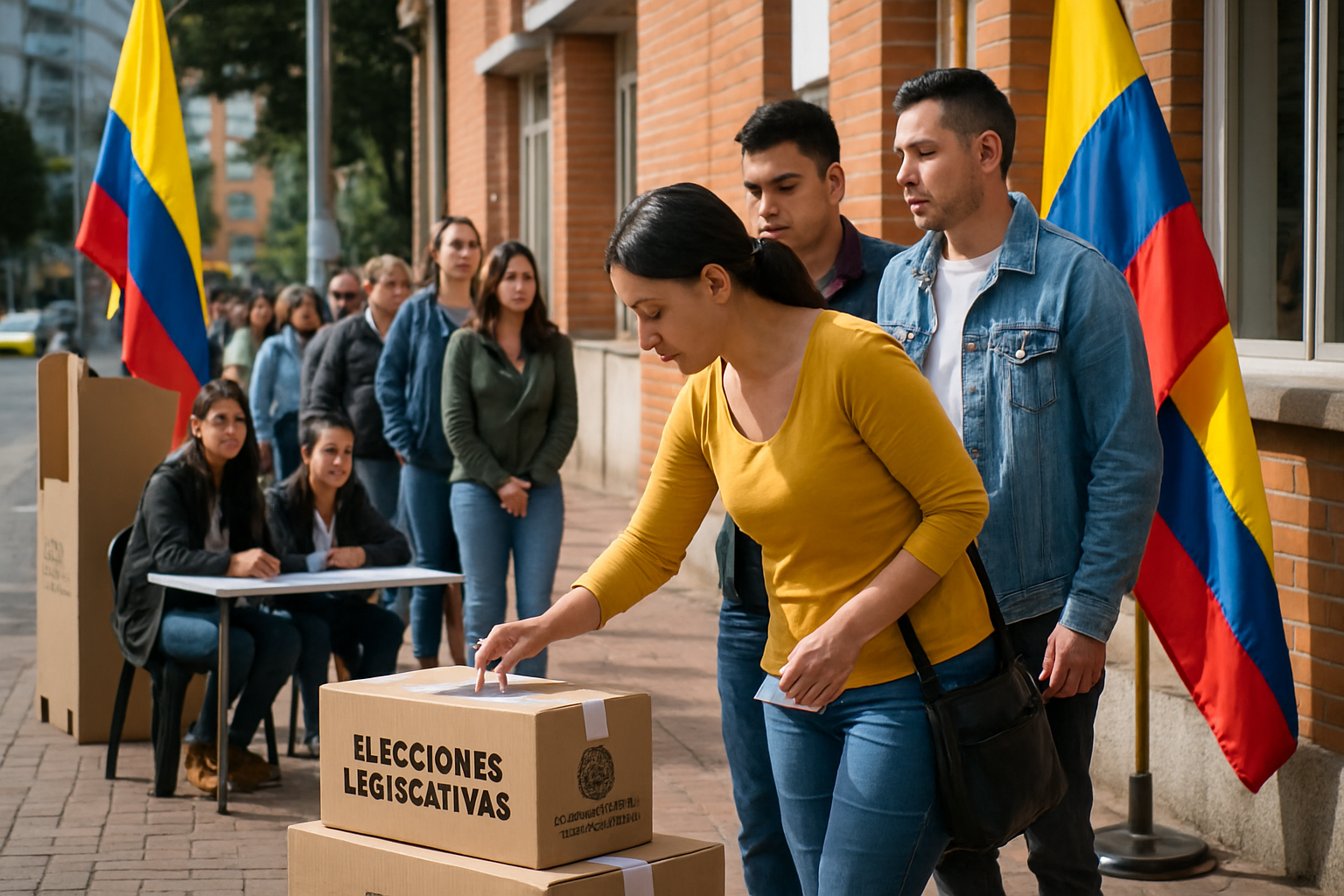
Colombia concluded legislative elections on Sunday, March 8, 2026, with over 41 million eligible voters casting ballots to determine the composition of Congress and select presidential candidates in what serves as a crucial test ahead of the May presidential elections.
The elections proceeded from 8:00 AM to 4:00 PM across the country, with voters choosing from more than 3,000 candidates vying for 102 Senate seats and 183 seats in the Chamber of Representatives. Exit polls were prohibited by law, and final results are expected to be announced Monday, according to Italian news agency ANSA.
High Stakes Electoral Process
The legislative elections took place amid significant security concerns, with authorities reporting violence alerts in over 100 municipalities, particularly in rural areas where illegal armed groups operate. Despite these challenges, the elections proceeded without major incidents requiring polling station relocations.
The electoral process combined legislative voting with a unique primary system that helped narrow the field of presidential candidates for three major political currents, functioning as a preliminary round for the May presidential race. This dual purpose made the elections particularly significant for Colombia's political trajectory.
Security Operations and Financial Irregularities
Colombian authorities conducted extensive security operations throughout election day, resulting in several notable seizures and arrests. In Antioquia department, police seized 605 million pesos allegedly connected to electoral crimes, with two arrests made at Medellín voting stations.
Tumaco authorities in Nariño intercepted substantial funds allegedly destined for the "Coordinadora Nacional Ejército Bolivariano," a criminal organization. Additionally, police in Tubará, Atlántico seized 105 million pesos from a driver who could not justify the origin of the money.
These financial seizures highlight the persistent challenge of organized crime influence in Colombian electoral processes, despite enhanced security measures and monitoring efforts.
Regional Electoral Dynamics
Valle del Cauca saw intense political competition with 3.8 million voters competing for 13 Chamber of Representatives seats. The region experienced robust democratic participation despite security concerns in some areas.
In contrast, Jamundí maintained all 38 polling stations with 381 voting tables despite threats from dissident groups, with over 127,000 expected voters demonstrating the resilience of Colombia's democratic institutions.
Barranquilla and the broader Atlántico region reported calm conditions under Governor Eduardo Verano's monitoring through the Unified Command Post (PMU), contrasting sharply with the financial irregularities discovered in Antioquia and Nariño.
"The mafias and machines tried to push us off our path, but we will continue forward for life and peace."
— Daniel Quintero, Frente por la Vida candidate, after voting in Medellín
Presidential Context and Security Challenges
The elections occurred against the backdrop of escalating political violence that has marked early 2026. President Gustavo Petro survived an assassination attempt in February when his helicopter was threatened with being shot down in Córdoba province, forcing the aircraft to remain airborne for four hours over the Caribbean Sea.
The same period saw the kidnapping and successful rescue of Indigenous Senator Aida Quilcué in Cauca province, demonstrating the sophisticated capabilities of criminal organizations to track and threaten government officials. These incidents represent what experts describe as coordinated assaults on Colombian democratic institutions.
International Monitoring and Regional Implications
International observers closely monitored the elections as a test of Colombia's democratic consolidation amid ongoing peace negotiations and security challenges. The scale of participation—over 41 million voters—demonstrated significant civic engagement despite the security concerns.
The timing of the elections, coming weeks after the historic Trump-Petro White House meeting in February that established counter-narcotics cooperation frameworks, adds an international dimension to Colombia's political developments. The relationship between electoral outcomes and ongoing peace processes remains a critical factor for regional stability.
Looking Toward May Presidential Elections
The legislative results will significantly influence the political landscape for the May 31, 2026 presidential elections. The composition of Congress will determine the level of support or opposition the next president will face in implementing their agenda.
With the cash seizures and arrests likely prompting extended investigations, questions about legislative legitimacy and the influence of organized crime in politics remain pressing concerns. The elections represent both a test of democratic participation and a challenge to institutional strengthening efforts.
Democratic Resilience Under Pressure
Despite the security concerns and financial irregularities, Colombia's electoral system demonstrated resilience by conducting elections across the entire national territory without requiring polling station relocations, even in areas initially considered high-risk.
The peaceful conduct of voting, combined with massive citizen participation, provides a foundation for democratic legitimacy even as investigations into electoral crimes continue. The success of the electoral process under challenging conditions reinforces Colombia's commitment to democratic governance while highlighting the ongoing need for institutional strengthening.
As vote counting continues and final results are prepared for Monday's announcement, Colombia moves one step closer to the May presidential elections that will ultimately determine the country's direction for the next four years and the success of ongoing peace and security initiatives.