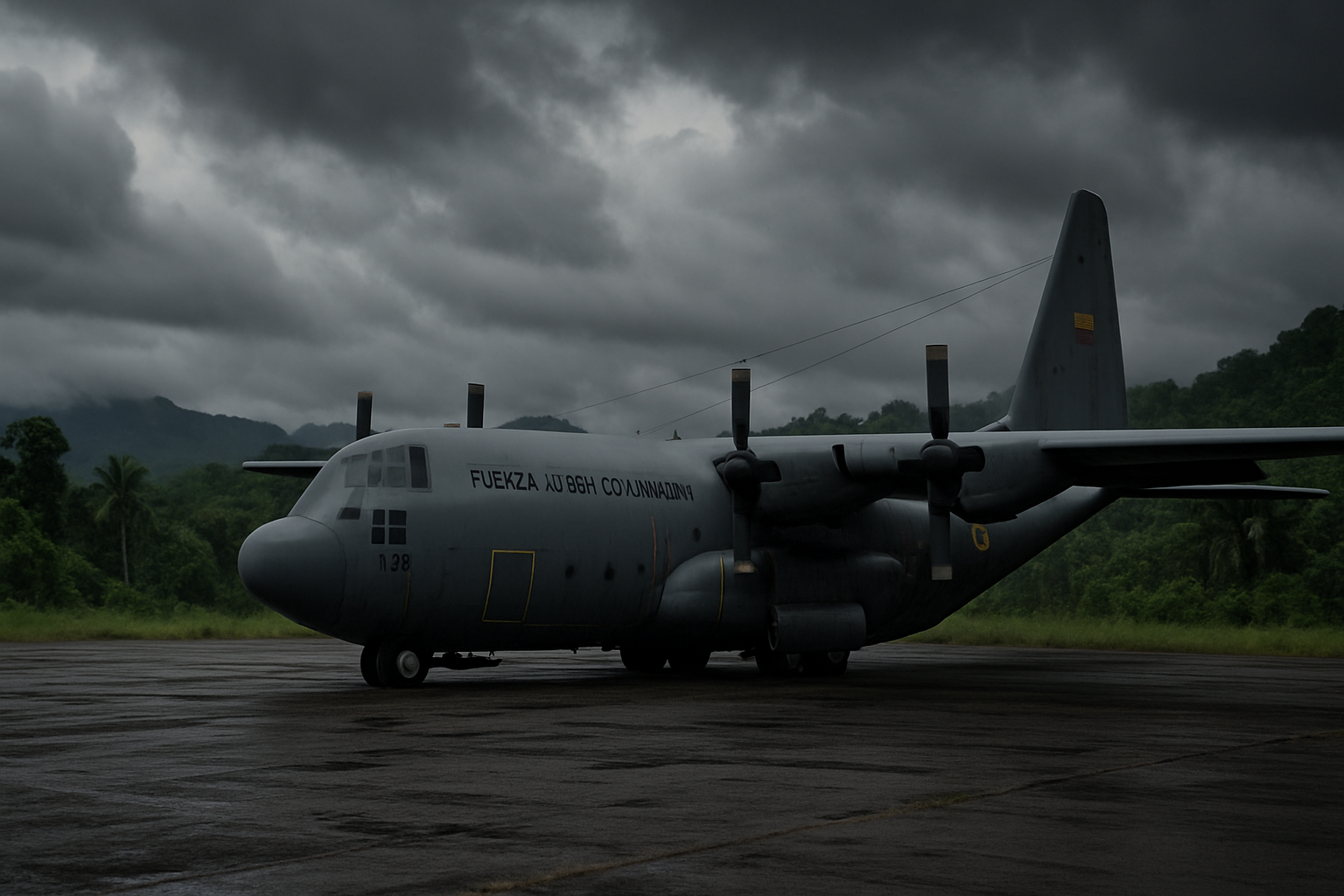
A Colombian Air Force C-130 Hercules transport aircraft crashed Monday morning shortly after takeoff from Puerto Leguízamo airport in Putumayo province, killing 68 military personnel and police officers while leaving 57 survivors hospitalized in what has become one of the deadliest military aviation accidents in recent Colombian history.
The aircraft, carrying 125 personnel including 114 Army soldiers, 11 Air Force crew members, and 2 police officers, went down during what officials described as a routine military transport mission in the Amazon region near Colombia's border with Ecuador. The crash occurred at approximately 10:00 AM local time on March 23, 2026, sending shockwaves through military families across the nation.
Tragic Human Cost Emerges
Among the heartbreaking stories emerging from the tragedy is that of a police officer who died without ever meeting his six-month-old daughter. According to his brother, the officer "was bored and dreamed of seeing his baby of six months." This personal tragedy represents just one of dozens of families torn apart by the disaster.
Two families from Magdalena department experienced particularly cruel circumstances when they were initially told their loved ones had survived the crash, only to receive devastating news hours later confirming their deaths. The emotional rollercoaster experienced by these families highlights the chaotic nature of the emergency response in the remote Amazon location.
Santander province has been particularly affected, with two crew members—a co-pilot and a lieutenant—fighting for their lives in medical facilities. Meanwhile, three military families from Bolívar department remain caught between hope and uncertainty: one serviceman battles for life in intensive care, another jumped from the aircraft before impact and survived, while a third remains missing.
Remote Location Complicates Rescue Efforts
The crash site's remote location in the Amazon rainforest presented significant challenges for emergency responders. Puerto Leguízamo's mayor, Luis Emilio Bustos, revealed that the municipality lacks resources to properly operate the airport and has requested intervention from Colombia's Civil Aviation Authority.
"The municipality lacks resources to operate the airport and we need the intervention of the Civil Aviation Authority."
— Luis Emilio Bustos, Mayor of Puerto Leguízamo
The airport serves as a crucial logistics hub for counter-narcotics operations and territorial control missions in an area where road transport is impractical due to both security concerns and challenging terrain. The Amazon region's infrastructure limitations complicated both the immediate rescue response and the ongoing investigation.
Investigation Launched into Cause
Colombian Air Force Commander Carlos Fernando Silva Rueda has established a comprehensive Accident Investigation Board to examine all aspects of the crash, including mechanical systems, weather conditions, pilot procedures, and airport infrastructure. The investigation is expected to take several months, similar to other regional military aviation investigations.
The investigation will focus particularly on the unique challenges of Amazon operations, including high humidity, tropical conditions, limited runway capacity, and the demanding environment for emergency response infrastructure. The C-130 Hercules, while generally reliable, faces particular vulnerabilities when operating in such extreme conditions with heavy cargo loads near populated areas.
Part of Concerning Regional Pattern
This tragedy marks the third major Colombian aviation accident of 2026, following a pattern of military aviation challenges across Latin America. In February 2026, a Bolivian Air Force C-130 Hercules crashed at El Alto International Airport, killing 22 people and highlighting broader regional concerns about aging aircraft fleets operating in demanding geographic and climatic conditions.
The Colombian incident underscores persistent vulnerabilities in military aviation operations throughout developing regions, where aging equipment must operate in challenging geographic conditions. Aviation experts note that while the C-130 Hercules has a strong overall safety record, complex operations in remote Amazon areas present unique risks that require specialized training and equipment.
Government Response and Support
Defense Minister Pedro Sánchez immediately activated comprehensive support protocols for victims' families and confirmed that President Gustavo Petro was informed of the tragedy. The government has mobilized medical evacuation capabilities to transport critically injured survivors to specialized facilities in major cities.
The emergency response involved coordinated efforts between military units, civil protection agencies, and medical personnel, though the remote location required specialized rescue equipment and personnel familiar with Amazon operations. The challenges included limited infrastructure for medical evacuation and the need to establish temporary treatment facilities near the crash site.
Strategic Impact on Military Operations
The loss of the C-130 Hercules represents a significant impact on Colombian military aviation capabilities in the Amazon region, where such aircraft are essential for operations in areas where ground transportation is either impossible or extremely dangerous due to the presence of illegal armed groups and narcotics trafficking organizations.
Puerto Leguízamo airport's strategic importance cannot be overstated—it serves as a vital link for military and civilian authorities in a region where the state's presence is challenged by various illegal actors. The airport enables counter-narcotics operations, territorial control missions, and the delivery of essential services to remote communities.
Looking Forward: Safety and Modernization
The investigation findings are expected to influence Colombian military aviation protocols and may accelerate discussions about fleet modernization and enhanced safety measures for operations in challenging environments. The tragedy highlights the ongoing need for improved pilot training specific to demanding operational environments and the importance of maintaining aging military aircraft fleets.
As Colombia continues its efforts to establish state presence in remote regions and combat illegal activities, incidents like this underscore the risks faced by military personnel serving in these challenging operational environments. The sacrifice of these 68 servicemen and women represents not just a national tragedy, but a reminder of the human cost of maintaining security and sovereignty in Colombia's most remote and dangerous regions.
The memories of those lost—from the police officer who never met his infant daughter to the seasoned crew members who dedicated their lives to serving their country—will serve as a stark reminder of the ultimate sacrifice made by those who serve in Colombia's most challenging operational environments.