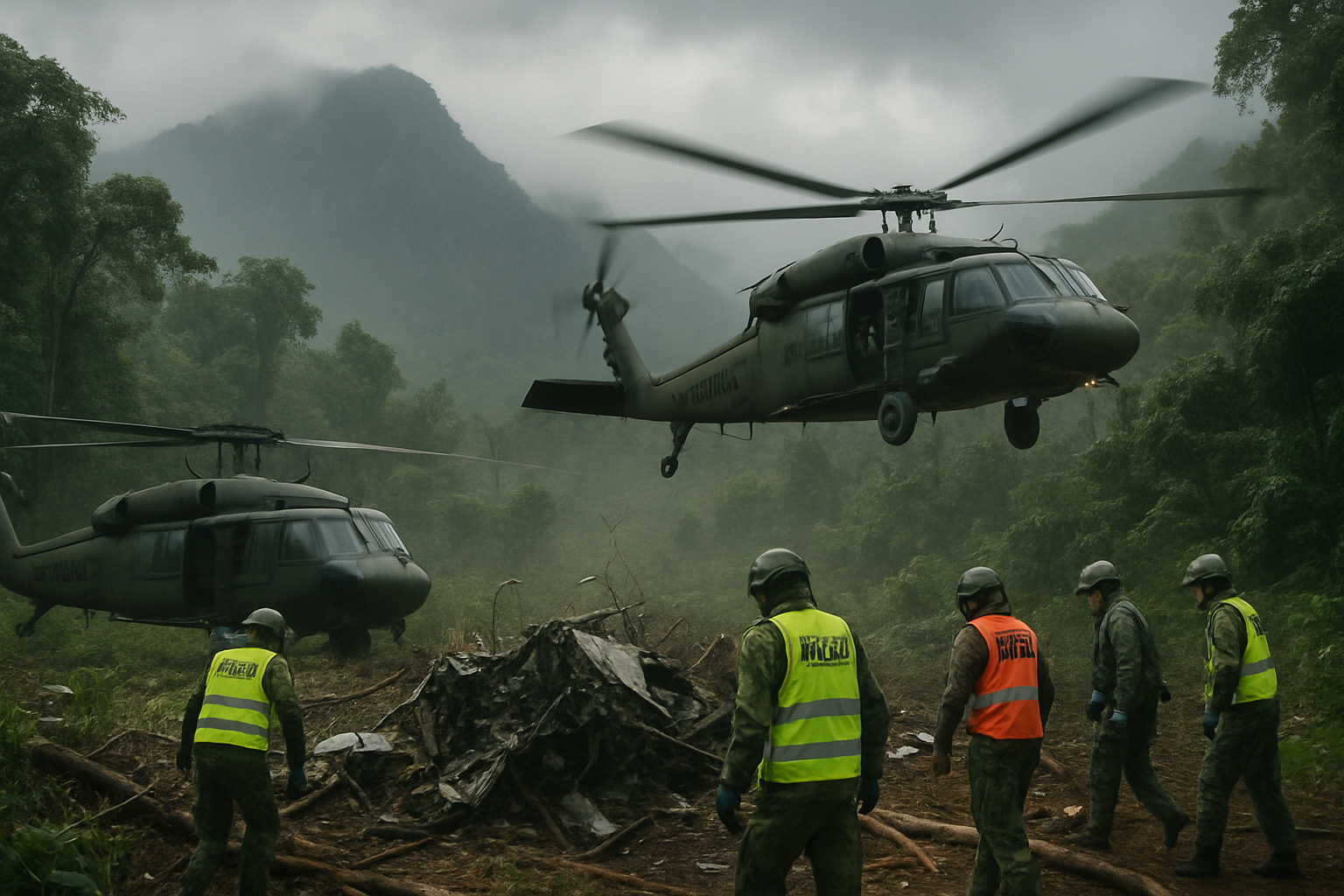
A Colombian Air Force C-130 Hercules transport aircraft crashed during takeoff at Puerto Leguízamo airport in Putumayo province on Monday, March 23, killing at least 66 people in what has become one of Colombia's deadliest military aviation disasters in recent history.
The tragic incident occurred at approximately 10:00 AM local time as the Lockheed Martin-built aircraft was carrying 128 personnel, including 115 army soldiers, 11 Air Force crew members, and 2 national police officers on a routine military transport mission in the Amazon region near the Ecuador border.
Scale of the Tragedy
According to Hugo Alejandro Lopez, head of Colombia's armed forces, the death toll has fluctuated throughout the rescue operations, with some international sources reporting as many as 69 fatalities. The Danish broadcaster DR reported the death toll rising to 69, while other sources have confirmed 66 deaths with dozens of survivors hospitalized with critical injuries requiring medical evacuation to specialized facilities.
The aircraft was operating in one of Colombia's most challenging environments - the remote Amazon rainforest where Puerto Leguízamo airport serves as a crucial logistics hub for counter-narcotics and territorial control operations. The location's isolation complicated emergency response efforts despite the immediate deployment of military units, civil protection teams, and medical personnel.
"Each name represents a story, a family, dreams, and affections in silence. Not numbers. Colombians leaving an impossible void to fill."
— Colombian Government Statement
The Critical Mission Context
The aircraft was conducting a routine military transport mission essential to Colombia's operations in remote Amazon regions where ground transportation is impractical or dangerous due to security conditions and challenging terrain. Puerto Leguízamo airport represents a vital military logistics link for counter-narcotics operations, territorial control, and essential services delivery to communities where illegal armed groups and narcotics trafficking make road access extremely hazardous.
This operational context underscores the strategic importance of military aviation in Colombia's Amazon regions, where aircraft provide the only reliable means of connectivity for military operations and civilian support in areas where traditional infrastructure is either nonexistent or controlled by hostile forces.
Investigation and Response
Air Force Commander Carlos Fernando Silva Rueda has established a comprehensive Accident Investigation Board to examine all aspects of the crash, including mechanical systems, weather conditions, pilot procedures, and airport infrastructure. The investigation timeline is expected to extend several months, similar to other regional military aviation accidents.
Defense Minister Pedro Sánchez immediately activated comprehensive support protocols for victims and their families, while President Gustavo Petro was informed of the tragedy and coordinated the national response. The government has provided extensive support for medical treatment of survivors and assistance to grieving families.
The investigation will focus particularly on the unique operational challenges of Amazon aviation, including high humidity, tropical conditions, limited runway capacity, and the demanding emergency response environment that characterizes this remote region.
Regional Aviation Safety Pattern
This tragedy represents the third major Colombian aviation accident in 2026, following a concerning pattern of military aviation incidents across Latin America. In February, a Bolivian Air Force C-130 Hercules crashed at El Alto International Airport, killing 22 people in similar circumstances involving aging aircraft fleets operating in challenging geographic conditions.
The Colombian crash highlights persistent challenges facing military aviation throughout the region, where aging aircraft fleets must operate in demanding tropical and mountainous environments with limited infrastructure support. The C-130 Hercules, while generally reliable, faces particular operational stresses in remote Amazon operations that require enhanced safety protocols and potentially accelerated fleet modernization.
Human Stories of Loss
Among the victims was a young soldier from La Guajira who had recently requested permission to marry his fiancée on March 26, leaving behind two children. His story represents the human cost of this disaster, affecting families across Colombia who lost loved ones serving their country in challenging operational environments.
Survivor testimonies have provided harrowing accounts of the crash. One soldier, Efrén David Cerón Gómez, managed to contact his mother from the rural crash site, saying "Mamá, se cayó el avión, pero tranquila, estoy bien" (Mom, the plane crashed, but don't worry, I'm okay). Other survivors described chaotic evacuation attempts, with one witness stating "Me pisoteaban" (They were trampling me) during the desperate moments following the crash.
Strategic Impact on Colombian Operations
The loss represents a significant blow to Colombian military aviation capabilities in Amazon operations, where aircraft are essential for maintaining territorial control and conducting counter-narcotics missions. The crash affects not only immediate operational capacity but also represents the loss of experienced military personnel whose expertise is crucial for ongoing security operations in Colombia's most challenging regions.
Amazon operational challenges include navigating areas where illegal armed groups maintain territorial control, making ground transportation extremely dangerous. Military aviation provides the only viable means of reaching remote communities, conducting security operations, and maintaining state presence in regions where Colombia's sovereignty faces constant challenges.
International Support and Implications
The tragedy has drawn extensive international condolences and support, with countries across Latin America, the United States, United Nations, Jordan, Saudi Arabia, and European nations expressing solidarity with Colombia. This international response demonstrates recognition of both the tragedy's scale and Colombia's strategic importance in regional security and counter-narcotics efforts.
Aviation safety experts internationally have noted this incident as part of a broader pattern of military aviation challenges facing developing nations, where aging aircraft fleets must operate in demanding geographic and climatic conditions with limited infrastructure support.
Looking Forward: Safety and Modernization
The investigation findings are expected to significantly influence Colombian military aviation protocols and potentially accelerate discussions about fleet modernization. Enhanced safety measures for challenging operational environments, improved pilot training for demanding conditions, and upgraded maintenance protocols for aging aircraft operating in tropical conditions are all likely outcomes.
The tragedy also highlights the urgent need for improved emergency response capabilities in remote regions, better coordination between military and civilian emergency services, and enhanced safety protocols for operations in areas where environmental conditions and security challenges create compounded risks.
As Colombia continues its vital work in Amazon regions - from counter-narcotics operations to territorial control and community support - the lessons learned from this tragedy must drive meaningful improvements in military aviation safety to prevent similar losses in the future.
Memorial and Support
Valle del Cauca Governor Dilian Francisca Toro declared two days of departmental mourning with flags at half-staff, while Colombia announced three days of national mourning with full military honors for the fallen servicemen. The city of Cali joined the national mourning, with Mayor Alejandro Eder expressing solidarity with the families of the uniformed personnel killed and injured in the accident.
The government has committed to providing comprehensive support for victims' families and ensuring that the investigation leads to concrete improvements in military aviation safety. The memory of those lost will serve as a constant reminder of the sacrifices made by Colombian military personnel serving in the nation's most challenging regions.