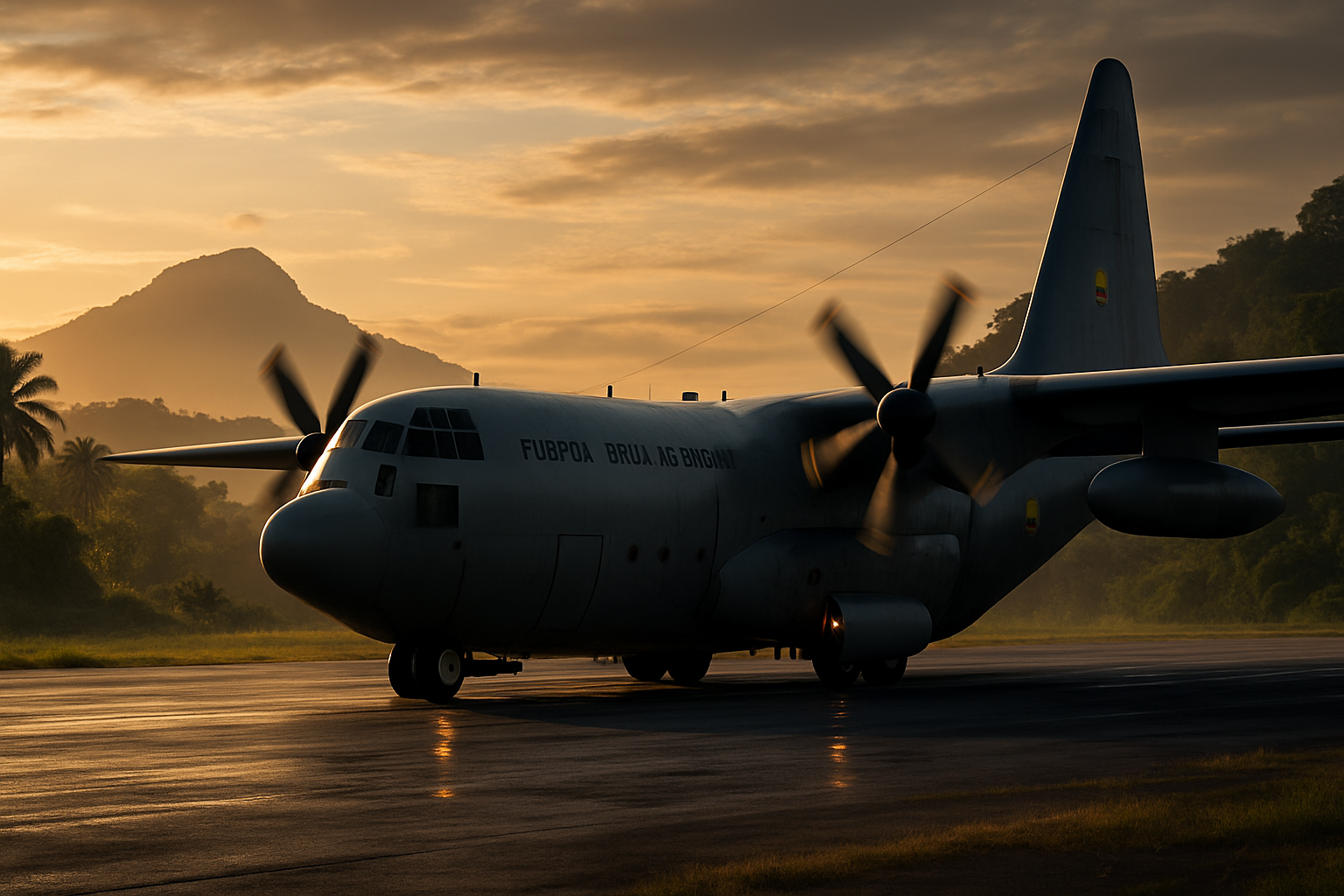
A Colombian Air Force C-130 Hercules military transport aircraft carrying between 110-125 military personnel crashed during takeoff at Puerto Leguízamo airport in Putumayo department on Monday morning, March 23, 2026, resulting in multiple casualties and highlighting ongoing challenges with aging military aircraft operations in challenging geographic conditions.
The Colombian Air Force (FAC) confirmed that the aircraft, carrying 114 passengers and 11 crew members according to General Carlos Fernando Silva Rueda, Commander of the Colombian Aerospace Force, experienced difficulties during takeoff operations at approximately 9:50 AM local time. The aircraft crashed in a rural area near Puerto Leguízamo, close to Colombia's southern border with Ecuador.
Casualty Reports and Rescue Operations
Official casualty figures vary among sources, with Defense Minister Pedro Sánchez confirming the accident through official channels. Colombian authorities report that 67 uniformed personnel were injured and have been rescued from the aircraft wreckage. However, international media sources suggest more severe casualties, with some reports indicating up to 80 fatalities among the soldiers aboard.
"We have 114 passengers aboard and eleven crew members. At this moment we know that there are 48 injured who have been rescued,"
— General Carlos Fernando Silva Rueda, Colombian Aerospace Force Commander
Emergency response teams, including military units, civil protection services, and medical personnel, were immediately deployed to the crash site. The challenging terrain and remote location of Puerto Leguízamo have complicated rescue operations, though authorities have established comprehensive emergency protocols to assist victims and their families.
Aircraft and Operational Details
The crashed aircraft was identified as a C-130H Hercules, a reliable military transport workhorse that has served air forces worldwide for decades. These four-engine turboprop aircraft typically accommodate around 100 soldiers and are extensively used for troop transport, cargo delivery, and logistics operations in challenging environments.
The flight was conducting routine military transport operations when the accident occurred during the critical takeoff phase. Video footage captured by local community members shows the moment of the accident, with the aircraft visible during its final moments before impact.
Geographic and Operational Challenges
Puerto Leguízamo airport operates in Colombia's Amazon region, presenting unique operational challenges including:
- High humidity and tropical weather conditions
- Remote location with limited emergency response infrastructure
- Challenging terrain surrounding the airfield
- Limited runway length for heavy military aircraft operations
The airport serves as a crucial logistics hub for Colombian military operations in the region, supporting counter-narcotics efforts and territorial control missions in areas with limited ground transportation access.
Government Response and Investigation
Defense Minister Pedro Sánchez expressed profound condolences to the families affected by the tragedy and confirmed that military units are on-site coordinating rescue efforts. President Gustavo Petro has been informed of the situation and has activated emergency response protocols.
The Colombian Air Force has established an Accident Investigation Board to determine the causes of the crash, examining factors including:
- Mechanical systems and aircraft maintenance records
- Weather conditions at the time of takeoff
- Pilot procedures and crew performance
- Airport infrastructure and operational factors
Regional Military Aviation Context
This incident occurs amid broader concerns about military aviation safety in Latin America, particularly involving aging aircraft fleets operating in challenging geographic conditions. Recent memory includes the February 2026 Bolivia military C-130 Hercules crash at El Alto International Airport, which killed 22 people and highlighted regional challenges with military transport operations.
Military aviation experts have noted the particular vulnerabilities of operating older aircraft fleets in South America's diverse and challenging environments, from high-altitude conditions in the Andes to humid tropical conditions in the Amazon basin.
Ongoing Developments
Colombian authorities continue coordinating rescue operations while families of affected personnel await official identification and casualty confirmation. The Defense Ministry has activated comprehensive support protocols for victims' families and is working closely with medical facilities treating the injured.
The investigation is expected to take several months, with findings potentially influencing future military aviation safety protocols and operational procedures for Colombian Air Force transport operations in remote regions.
"It is with deep sorrow that we must report that one of our Hercules aircraft has been involved in a tragic accident. Military units are at the site and protocols for victim and family assistance have been activated."
— Pedro Sánchez, Colombian Defense Minister
Implications for Military Aviation Safety
The Puerto Leguízamo crash underscores persistent challenges facing military aviation operations in Latin America, including infrastructure limitations, aging aircraft fleets, and the demanding operational environment of tropical and remote regions.
Aviation safety experts emphasize the importance of continued investment in military aviation infrastructure, enhanced maintenance protocols, and pilot training specific to challenging environmental conditions. The incident may accelerate discussions about fleet modernization and enhanced safety measures for military transport operations in remote areas.
As rescue operations continue and the investigation unfolds, this tragedy serves as a stark reminder of the risks faced by military personnel in service to their nation and the critical importance of maintaining the highest safety standards in military aviation operations.