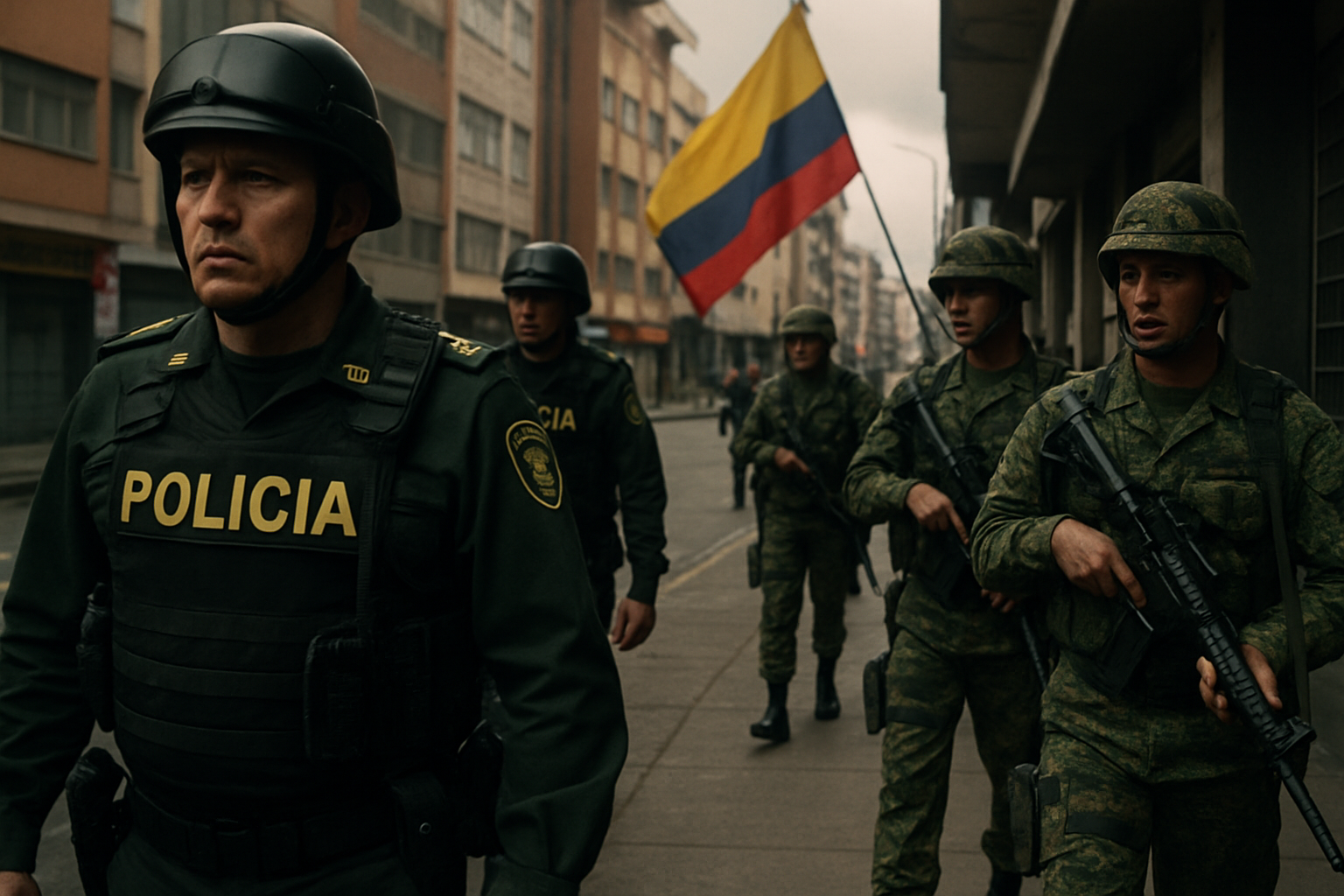
Colombia is confronting one of its most severe security crises in recent years, as drug cartels expand their territorial control, government officials face assassination threats, and popular tourist destinations close due to armed group violence, according to multiple reports from February 2026.
The escalating crisis encompasses multiple fronts: sophisticated international drug trafficking operations involving Colombian-Spanish cooperation, mayors and local officials being declared military targets by dissident groups, the closure of the renowned Tayrona National Park due to security threats, and a series of high-profile captures demonstrating the reach of organized crime.
International Cooperation Against Drug Networks
Colombian and Spanish authorities achieved a significant breakthrough in their joint efforts against the Bustamante drug clan with the capture of Diego 'Optra', described as the heir to one of Colombia's most powerful narcotics organizations. The operation, involving Spanish police and Interpol, had been tracking the suspect since 2025, demonstrating the sophisticated international coordination required to combat modern drug trafficking networks.
The success comes as part of broader international enforcement efforts, with Colombian authorities also facilitating the arrest of individuals wanted by Interpol for crimes committed abroad. In Barranquilla, police captured a man with a red circular from Interpol, accused of committing homicide in Molina de Aragón, Spain, highlighting the global nature of criminal networks operating through Colombia.
Government Officials Under Siege
The security crisis has reached alarming levels with systematic threats against government officials and civil servants. In Briceño, Antioquia, Mayor Noe de Jesús Espinosa was declared a military target by the 36th Front of FARC dissidents, who accused him of being complicit with the Gulf Clan. The National Protection Unit's (UNP) response to his urgent protection request has drawn criticism for its inadequacy given the gravity of the threat.
The situation extends beyond individual mayors to affect the broader structure of local governance. According to the Public Ministry chief in Cali, more than one hundred municipal ombudsmen have been declared targets by armed groups, creating a systematic assault on democratic institutions at the local level. These officials, who serve as defenders of citizens' rights in territories, face growing risks as criminal organizations seek to eliminate oversight of their activities.
Tourist Destination Under Threat
The closure of Tayrona National Park, one of Colombia's most popular tourist destinations on the Caribbean coast, represents a stark symbol of how violence is affecting the country's economic sectors. Park authorities announced the temporary closure on February 17, citing direct threats against park staff by armed groups.
The closure comes amid a territorial war between two criminal organizations fighting to control strategic drug trafficking routes in the region. This development not only impacts tourism revenues but also demonstrates how criminal organizations are willing to disrupt legitimate economic activities to maintain their operational control.
Violence Spreads to Multiple Regions
The security crisis extends across multiple departments, with authorities in Nariño successfully clarifying homicides that left seven people dead, including a pregnant woman, in the municipalities of Ricaurte and Mallama. Police operations in the coastal foothills of Nariño led to the capture of those allegedly responsible for these crimes.
Meanwhile, international cooperation continues with Mayor Federico Gutiérrez of Medellín confirming his participation in proceedings in the United States regarding the trial of a sexual abuser captured in Medellín, demonstrating how Colombian cities are dealing with international criminal networks operating within their territories.
Sophisticated Criminal Operations
The criminal organizations operating in Colombia have demonstrated increasing sophistication in their operations. The investigation into Diego 'Optra' and the Bustamante clan reveals how modern drug trafficking networks operate across international borders, utilizing advanced logistics and communication systems while maintaining hierarchical structures that can survive the capture of individual leaders.
These organizations have also shown their capacity to infiltrate legitimate institutions and threaten democratic governance. The systematic targeting of mayors, ombudsmen, and other local officials represents a strategic effort to create governance vacuums that facilitate criminal activities while undermining state authority.
International Response and Cooperation
The Colombian government's response has increasingly relied on international cooperation, as evidenced by the successful joint operations with Spanish authorities and Interpol. These partnerships have proven essential in tracking criminal leaders who operate across multiple jurisdictions and utilize sophisticated international networks.
The cooperation extends beyond traditional law enforcement partnerships, with Colombian authorities working with international organizations to address the root causes of violence while maintaining immediate security responses. This multi-faceted approach recognizes that the security crisis requires both tactical successes against criminal organizations and strategic efforts to strengthen democratic institutions.
Challenges for Democratic Governance
The current security crisis poses fundamental challenges to Colombia's democratic governance, particularly at the local level where armed groups have demonstrated their ability to threaten elected officials and civil servants. The systematic nature of these threats suggests a coordinated effort to undermine state authority in strategic territories.
The closure of tourist sites like Tayrona National Park illustrates how violence affects legitimate economic activities, creating ripple effects throughout the economy. This demonstrates that the security crisis extends beyond immediate violence to encompass broader challenges to Colombia's economic development and international reputation.
Path Forward
Addressing Colombia's security crisis requires sustained commitment to both immediate law enforcement responses and long-term institutional strengthening. The success of international cooperation efforts, such as the capture of high-value targets like Diego 'Optra', demonstrates that coordinated approaches can achieve significant results against sophisticated criminal networks.
However, the systematic nature of threats against government officials and the territorial control exercised by armed groups in some regions indicate that tactical successes must be accompanied by comprehensive strategies to strengthen state presence and democratic institutions throughout Colombian territory.
The international community's continued support for Colombian security efforts, combined with the government's commitment to protecting democratic institutions and civil servants, will be crucial in determining whether Colombia can overcome this challenging period and restore security to its citizens while maintaining its democratic governance structures.