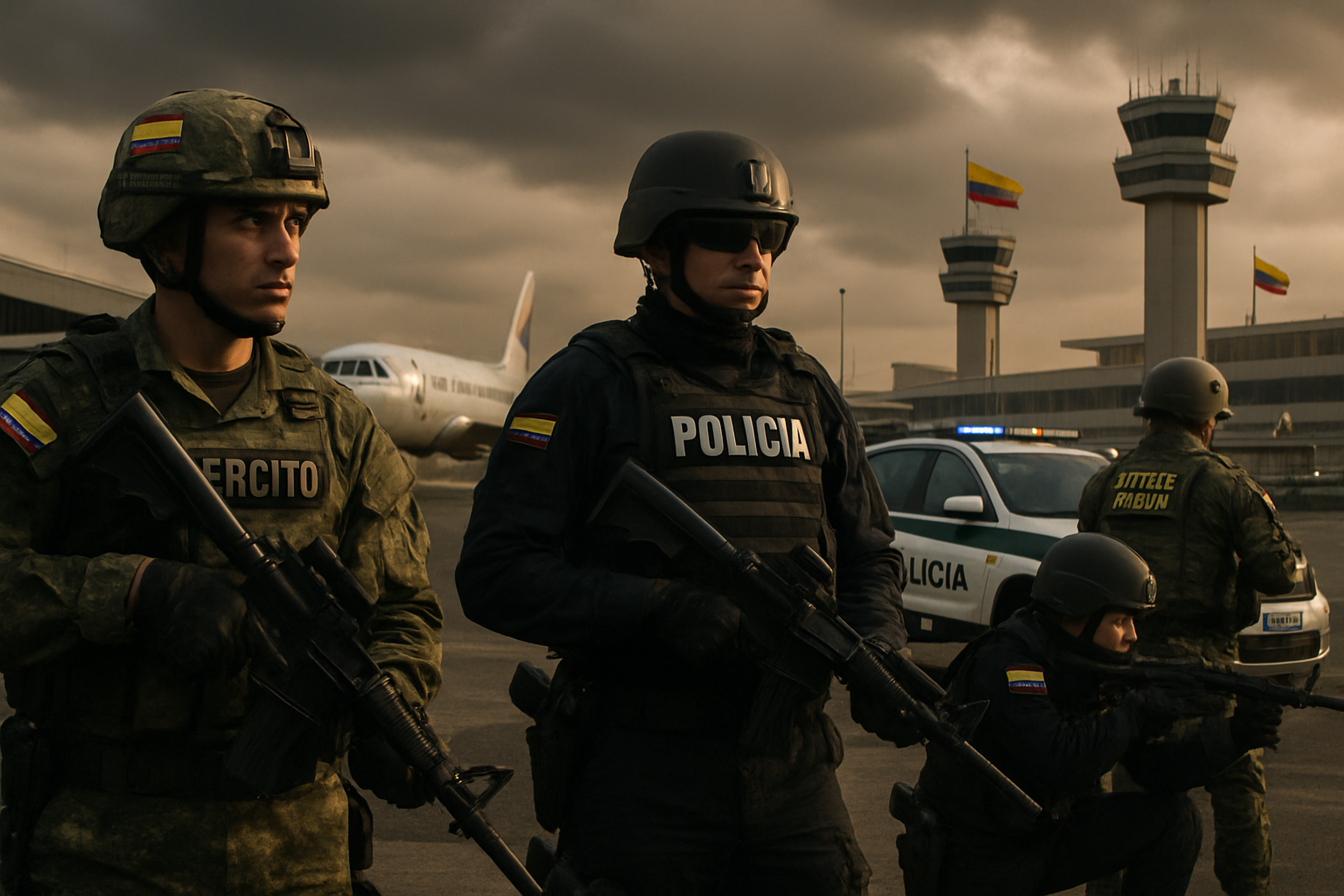
Colombian security forces launched comprehensive operations across multiple regions on April 9, 2026, including the dramatic suspension of all flights at Bucaramanga's Palonegro International Airport and the culmination of an eight-year manhunt that successfully dismantled criminal networks terrorizing Medellín's Comuna 13 district.
Airport Operations Suspended Over Security Concerns
The Civil Aviation Authority (Aerocivil) issued an emergency alert suspending all operations at Palonegro International Airport in Bucaramanga, citing unspecified security conditions that required immediate action by public security forces. The airport closure resulted in the cancellation of multiple domestic and international flights, stranding hundreds of passengers.
"The entity issued the report and warned that the reopening will depend on instructions from the Public Force," Aerocivil stated in its official communication. The unprecedented nature of the airport shutdown underscores the severity of the security situation that prompted such drastic measures.
The closure had immediate consequences for civilian transportation, with reports of a woman going into labor during protests that blocked the road from Lebrija to Palonegro Airport. The baby, weighing 2,100 grams, was born in an ambulance en route to a clinic in Girón, highlighting the broader impact of security operations on everyday Colombian citizens.
Eight-Year Manhunt Concludes in Medellín
In a separate but equally significant operation, Colombian authorities announced the completion of an eight-year investigation that successfully dismantled the criminal network responsible for unleashing a wave of violence in Medellín's San Javier district, particularly in the notorious Comuna 13 area, during 2018.
The investigation concluded with the recent capture of the suspect known as alias 'Toco', the final member of eight ringleaders who had orchestrated systematic terror campaigns in one of Medellín's most challenging neighborhoods. This achievement represents a major victory in Colombia's ongoing efforts to establish state control over territories previously dominated by criminal organizations.
"With the recent capture of alias 'Toco', the pursuit of the eight ringleaders who unleashed a wave of violence in San Javier during 2018 is complete."
— Colombian Security Forces Statement
Historical Context of Comuna 13
Comuna 13, officially known as San Javier, has long been one of Medellín's most troubled neighborhoods, marked by decades of conflict between various armed groups, drug trafficking organizations, and state forces. The area gained international notoriety following Operation Orion in 2002, a large-scale military operation that attempted to establish government control but resulted in significant civilian casualties and human rights violations.
The 2018 violence surge that prompted the eight-year investigation represented a concerning regression in security conditions, as criminal organizations sought to reestablish territorial control through intimidation, extortion, and targeted killings. The systematic approach taken by authorities to identify and capture all eight ringleaders demonstrates Colombia's evolving strategy of precision law enforcement rather than broad military campaigns.
Broader Security Context
These operations occur within the broader context of Colombia's complex security landscape, where the government continues implementing its "Total Peace" strategy while confronting increasingly sophisticated criminal networks. Recent memory from previous security operations shows that criminal organizations have developed state-like capabilities, including advanced surveillance systems, encrypted communications, and compartmentalized international structures.
The combination of airport security measures and precision criminal network dismantling reflects Colombia's multifaceted approach to addressing security challenges that range from immediate public safety threats to long-term territorial control issues. Security experts note that criminal organizations have demonstrated remarkable adaptability, often reconstituting their operations following leadership captures.
Impact on Civil Aviation and Transportation
The Palonegro Airport closure represents one of the most significant disruptions to Colombian civil aviation in recent years. Located in Santander department, the airport serves as a crucial transportation hub for the northeastern region of the country. The suspension of operations affected not only commercial passenger flights but also cargo operations critical to the region's economic activities.
Transportation authorities coordinated with alternative airports to accommodate stranded passengers, while security forces maintained heightened vigilance throughout the region. The incident also highlighted vulnerabilities in Colombia's transportation infrastructure and the ongoing challenges of maintaining security in areas where criminal organizations maintain operational presence.
Democratic Governance and Security Challenges
Colombia's approach to these security operations demonstrates the complex balance between maintaining democratic governance while addressing sophisticated criminal threats. The precision of the eight-year investigation in Medellín contrasts with more controversial military approaches of previous decades, showing institutional evolution in law enforcement strategies.
The operations also reflect Colombia's commitment to international cooperation frameworks, including participation in regional security initiatives such as the Shield of the Americas coalition. Colombian authorities have consistently emphasized the importance of surgical operations against criminal leadership while minimizing civilian impact.
Regional Security Implications
These developments occur amid broader regional security challenges, as criminal networks operating in Colombia have demonstrated increasing sophistication and international reach. Previous investigations have revealed connections between Colombian criminal organizations and trafficking networks spanning South America to European and Asian markets.
The success in dismantling the Comuna 13 network provides a template for addressing entrenched criminal control in urban areas, while the airport security response demonstrates the government's commitment to protecting critical infrastructure. Both operations underscore the ongoing nature of Colombia's security challenges and the sustained effort required to maintain territorial control.
Looking Forward
As Colombian authorities continue their security operations, the successful conclusion of the eight-year manhunt in Medellín offers hope for communities long terrorized by criminal violence. However, security experts caution that criminal organizations often adapt quickly to law enforcement pressure, requiring sustained institutional commitment and international cooperation.
The Palonegro Airport situation serves as a reminder of the ongoing security challenges facing Colombia's infrastructure and the need for comprehensive approaches that address both immediate threats and underlying conditions that allow criminal organizations to flourish. The government's ability to maintain both security and democratic governance remains central to Colombia's long-term stability and development prospects.