Colombia is experiencing an unprecedented escalation in terrorist violence as FARC dissidents and other armed groups launch sophisticated attacks using explosives and drones against both civilian and military targets across multiple departments, prompting emergency security meetings and raising fears of a broader breakdown in public order.
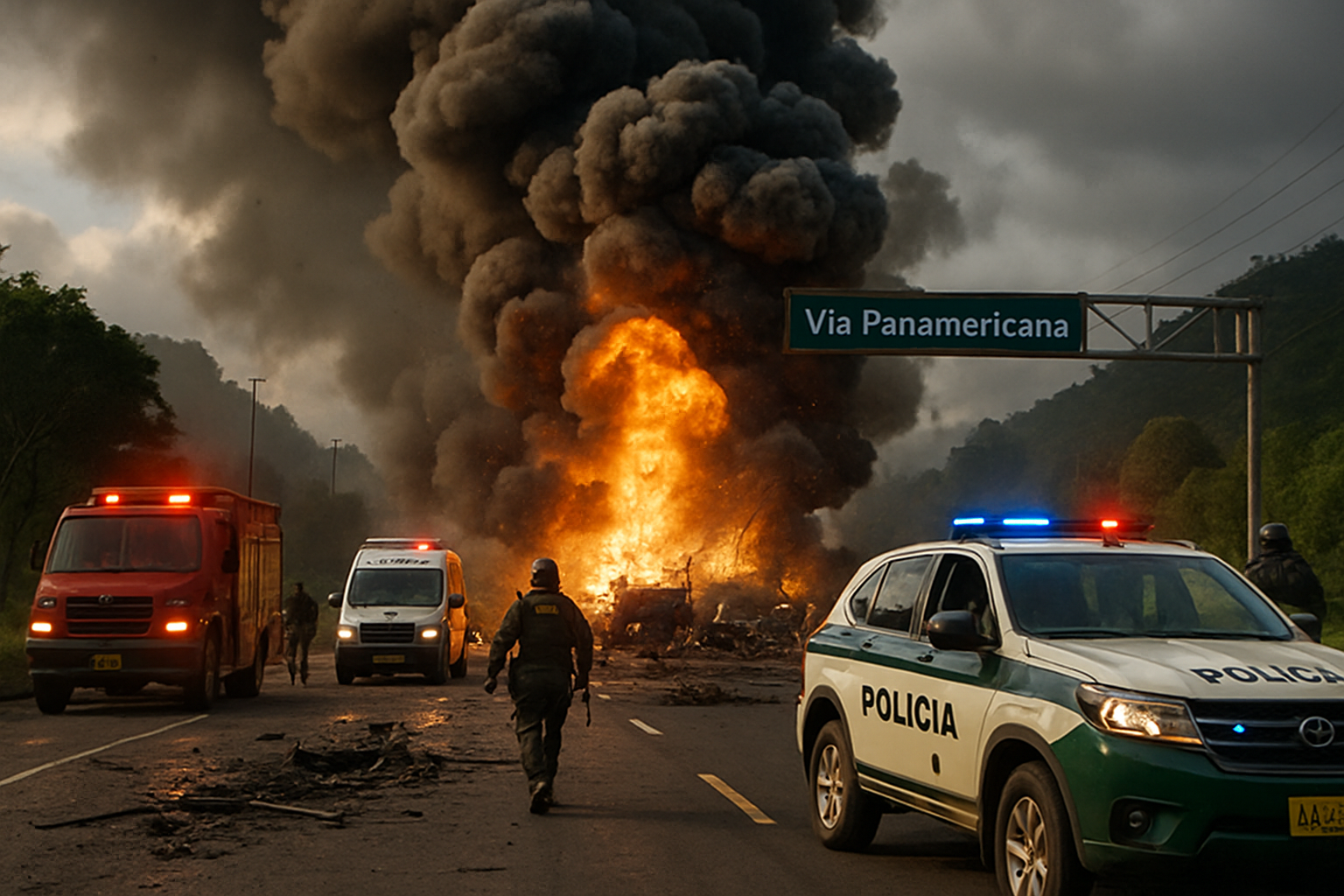
On Friday, April 25, 2026, guerrilla forces detonated explosives targeting two public transportation buses on the strategic Pan-American Highway between Nariño and Cauca departments, injuring multiple passengers and drivers in what witnesses described as a coordinated ambush. "The guerrilla came out and detonated a bomb," according to local reports, with explosives activated as the vehicles passed through the attack zone.
The highway bombings represent just the latest in a series of coordinated attacks that have intensified dramatically over the past 24 hours, culminating in what Valle del Cauca Governor Dilian Francisca Toro declared an "escalada terrorista" - terrorist escalation - against the region during an emergency security council meeting with Defense Minister Pedro Sánchez.
Drone Warfare Reaches New Heights
Perhaps most alarming for Colombian security forces is the documented use of explosive-laden drones against radar installations vital to national security. Early Saturday morning, explosives launched from drones struck the Santana radar station in El Tambo, Cauca, with two personnel reportedly taking shelter inside the facility as at least 10 explosions rocked the area.
The Aeronáutica Civil confirmed the gravity of the assault on the radar facility, which plays a crucial role in aviation security across the region. The attack demonstrates the sophisticated capabilities that criminal organizations have developed, including the tactical use of commercial drone technology for military-style operations against state infrastructure.
This represents a dangerous evolution from the traditional guerrilla tactics that have plagued Colombia for decades, showing how armed groups have adapted modern technology to create new asymmetric threats against government forces and civilian infrastructure.
Multiple Fronts of Violence
The coordinated nature of the attacks suggests extensive planning and coordination among different armed factions. In addition to the Pan-American Highway bombings and drone strikes, dissident forces launched a direct assault on the Potrerito police substation in Jamundí, where uniformed officers came under sustained fire from rifles and grenades in what authorities describe as the fourth attack against security force infrastructure within a 24-hour period.
The systematic targeting of police installations, transportation infrastructure, and aviation facilities indicates a strategic campaign designed to undermine state authority and create governance vacuums in key territories. According to security analysts, this pattern mirrors the "state-like capabilities" that criminal organizations have developed, including advanced intelligence networks and sophisticated communication systems.
Indigenous Communities Caught in Crossfire
The violence has taken a particularly devastating toll on vulnerable civilian populations, with seven members of the Sath Tama Kiwe indigenous community suffering grave injuries in the Pan-American Highway explosions. The Governor of Cauca condemned these attacks as "a grave threat against life and tranquility," highlighting how the escalating conflict disproportionately affects Colombia's most marginalized communities.
Indigenous territories have increasingly become battlegrounds as armed groups compete for control of strategic corridors used for drug trafficking and other illicit activities. The targeting of civilian buses carrying indigenous passengers represents a calculated escalation designed to terrorize local populations and assert territorial control.
Government Response and Security Council
In response to the deteriorating security situation, Valle del Cauca authorities convened an emergency security council at 10:00 AM Friday, bringing together regional leaders with national government representatives to coordinate immediate countermeasures. Governor Toro's declaration of a "terrorist escalation" reflects the severity of the threat facing one of Colombia's most economically important regions.
The coordinated government response demonstrates recognition that this latest wave of violence represents more than isolated criminal incidents - it constitutes a systematic challenge to state authority that requires a comprehensive security response involving multiple levels of government and various security agencies.
Historical Context and Pattern Recognition
This escalation builds on months of increasing violence that has tested Colombia's "Total Peace" strategy under President Gustavo Petro. The current attacks follow a documented pattern of sophisticated operations that began with the February 2026 assassination attempt against President Petro himself, when his helicopter was forced to remain airborne for four hours over the Caribbean Sea due to surface-to-air threats.
Security experts note that criminal organizations have demonstrated "state-like capabilities" including advanced surveillance networks, encrypted communications systems, and the ability to coordinate multi-regional attacks simultaneously. The systematic targeting of democratic institutions, from mayors and ombudsmen to infrastructure facilities, represents what analysts describe as a calculated assault on governance structures.
Over the past year, Valle del Cauca alone has experienced more than 80 attacks involving car bombs, motorcycle bombs, and drone explosives, resulting in over 20 deaths attributed to FARC dissidents and ELN guerrillas. The geographic spread of violence now extends far beyond traditional conflict zones, affecting Colombia's major urban centers and key transportation corridors.
Technology and Tactical Evolution
The use of drones for targeted attacks represents a dangerous escalation in the technological sophistication of criminal organizations. Unlike traditional guerrilla tactics that relied primarily on ground-based operations, the integration of aerial platforms allows armed groups to strike previously secure targets and escape detection more easily.
This technological arms race poses significant challenges for Colombian security forces, who must now defend against threats from multiple domains while criminal organizations consistently outpace institutional countermeasure development. The combination of commercial drone technology with explosive devices creates new vulnerabilities for critical infrastructure and government facilities.
International Cooperation and Regional Implications
The escalating violence occurs within the context of enhanced international cooperation through the Shield of the Americas coalition, a 17-nation security initiative launched in March 2026. Despite increased intelligence sharing and coordinated operations with international partners including Spanish police and Interpol, criminal organizations continue to demonstrate remarkable adaptability and operational security.
The success of joint operations in capturing criminal leaders has been offset by the persistent ability of these networks to recruit new personnel and acquire advanced technologies. The decentralized nature of modern criminal organizations allows them to continue operations even when key figures are removed.
Economic and Social Impact
The targeting of transportation infrastructure has significant economic implications beyond the immediate security concerns. The Pan-American Highway serves as a crucial commercial artery connecting Colombia to international markets, and disruptions to this route affect legitimate commerce while potentially facilitating criminal control over trade flows.
Educational and healthcare facilities have also been systematically targeted, undermining basic services essential for long-term development and social stability. The psychological impact extends beyond direct victims to entire communities, with families altering daily routines and businesses implementing enhanced security protocols.
Looking Ahead: Critical Juncture
The events of April 25, 2026, represent a critical juncture for Colombia's security strategy. The coordination between different armed groups, the technological sophistication of their operations, and the strategic targeting of both infrastructure and civilian populations suggest that criminal organizations are implementing a comprehensive campaign designed to challenge state authority.
The government's ability to respond effectively to this escalation will determine whether Colombia can maintain democratic governance while addressing these sophisticated security threats. The success or failure of the current security response may establish important precedents for how democratic institutions adapt to face 21st-century challenges from non-state actors possessing state-level capabilities.
As emergency security meetings continue and enhanced security measures are implemented across affected regions, Colombia faces the urgent task of developing comprehensive strategies that address both immediate threats and the underlying conditions that enable criminal organizations to recruit, operate, and challenge state authority so effectively.