Colombia confronts its most serious security crisis in years as terrorist bombings surge while neighboring Venezuela emerges as an unlikely partner in combating sophisticated organized crime networks that transcend national borders.
The latest wave of violence has claimed more than 20 lives over four years through systematic vehicle bomb attacks and drone strikes targeting military installations, with FARC dissidents and ELN militants demonstrating unprecedented tactical sophistication that experts warn represents a "dangerous inflection point" in Latin American security.
In Cali alone, 11 people have died in the past year across five separate terrorist actions perpetrated by FARC dissidents and ELN groups, according to Colombian security forces. The attacks have employed increasingly sophisticated methods, including the first-ever coordinated drone swarm assault using 15 explosive-laden aircraft against an army base in Jamundí, wounding two soldiers.
Military Cooperation Emerges Across Borders
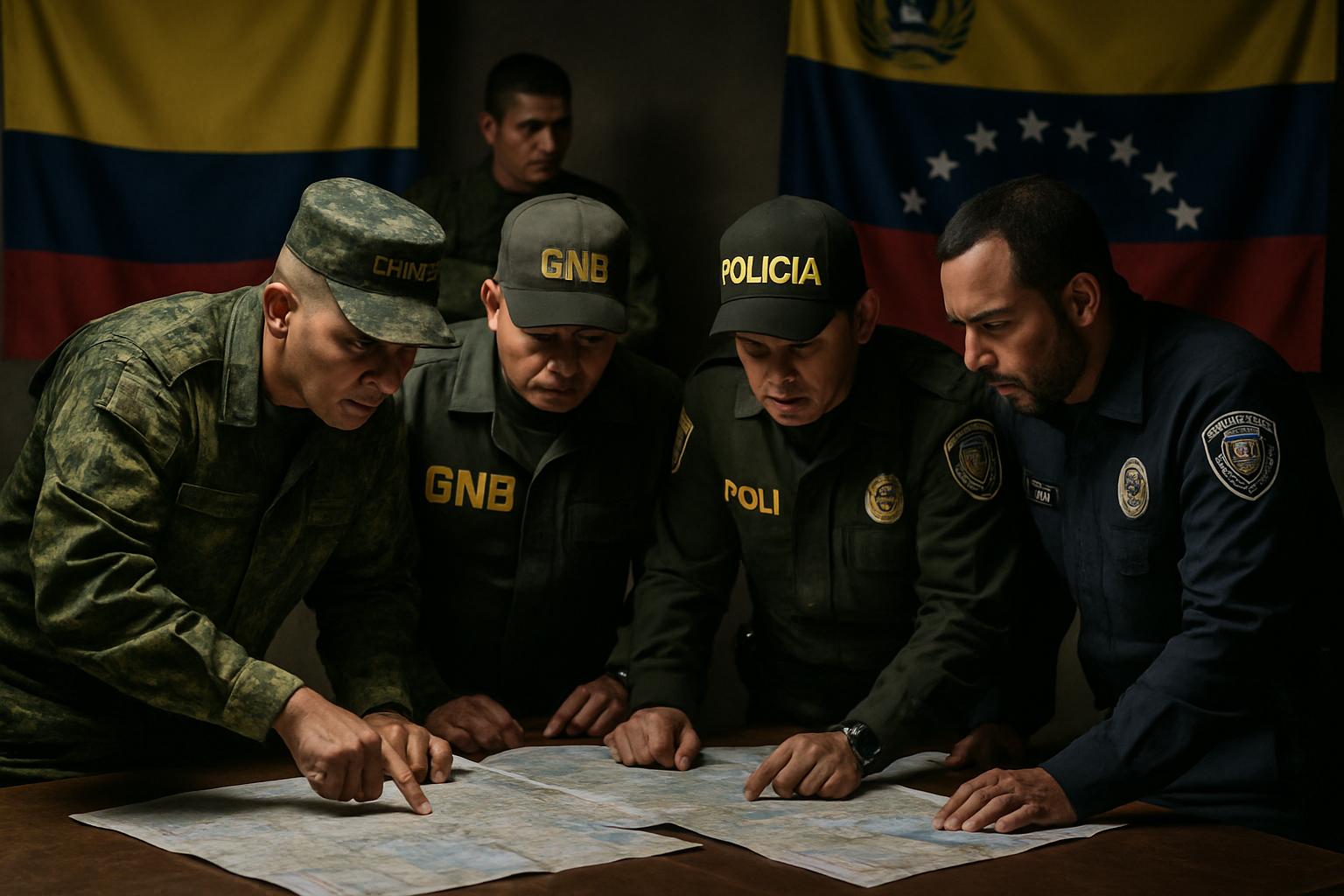
Against this backdrop of escalating violence, Presidents Nicolás Maduro and Gustavo Petro announced unprecedented military cooperation between Venezuela and Colombia to combat organized crime and armed groups, marking a dramatic shift in regional security strategy.
The cooperation agreement represents the most significant bilateral security initiative between the two nations in over a decade, coming as both countries grapple with criminal organizations that possess what security analysts describe as "state-like capabilities" including advanced surveillance, encrypted communications, and compartmentalized international structures.
"These criminal networks operate beyond borders and challenge our state sovereignty with resources that often exceed traditional law enforcement capabilities."
— Senior Colombian Security Official
Valle del Cauca Governor Dilian Francisca Toro has convened an Extraordinary Security Council following the recent attacks on military installations in Cali and Palmira, declaring that authorities "will pursue these criminals until we capture them." The governor's response underscores the urgency facing Colombian institutions as they adapt to confront increasingly sophisticated threats.
Evolving Criminal Sophistication
Security experts point to a concerning evolution in criminal tactics across Latin America. The February 2026 assassination attempt on President Petro, where his helicopter was threatened for four hours over the Caribbean Sea, exemplifies how criminal organizations now demonstrate intelligence capabilities rivaling state operations.
The pattern extends beyond Colombia. Throughout 2026, criminal networks across Latin America have shown remarkable adaptability in incorporating military-grade technology while exploiting jurisdictional boundaries designed for different eras. From Bolivia to Trinidad and Tobago, authorities document organized crime groups with encrypted communications systems and operational security measures previously associated with intelligence agencies.
This sophistication has prompted the creation of the Shield of the Americas coalition, launched in March 2026 with 17 Latin American and Caribbean nations plus the United States. The initiative represents the most significant hemispheric security framework since the Cold War, emphasizing real-time intelligence sharing and coordinated operational responses against transnational criminal threats.
Regional Security Framework
The Colombia-Venezuela cooperation builds on broader regional security initiatives that recognize criminal networks' borderless operations. El Salvador's successful security transformation under President Nayib Bukele has provided a template, though experts caution against direct replication given each nation's unique institutional challenges.
Venezuela's emergence as a security partner marks a dramatic transformation from previous years of diplomatic tensions. The cooperation reflects pragmatic recognition that criminal organizations exploit weak coordination between neighboring countries, particularly in border regions where state presence has historically been limited.
Intelligence sharing protocols developed through international frameworks like the Shield of the Americas have proven effective in recent high-profile captures, including the March 2026 arrest of drug kingpin Sebastian Marset in Bolivia through surgical intelligence-driven coordination rather than widespread military campaigns.
Democratic Institutions Under Pressure
The escalating violence poses fundamental challenges to democratic governance across the region. Criminal organizations systematically target mayors, prosecutors, civil servants, and community leaders, creating governance vacuums that facilitate illegal operations while undermining public confidence in democratic institutions.
Courts worldwide are experiencing unprecedented strain from case backlogs, resource constraints, and the specialized expertise required to process complex international evidence involving digital forensics and multi-jurisdictional legal frameworks. Despite these challenges, democratic institutions demonstrate fundamental resilience in delivering transparent justice regardless of criminal network complexity.
The psychological effects extend beyond direct victims, affecting social cohesion, institutional trust, and economic development. Families alter daily routines, businesses implement enhanced security protocols, and educational institutions reassess safety measures as communities adapt to persistent security threats.
Technology Arms Race
Perhaps most concerning is the pace at which criminal organizations adopt commercial and military-grade technologies for illegal purposes. The drone swarm attack in Jamundí represents just one example of how criminal groups incorporate new technologies faster than law enforcement can develop countermeasures.
Digital forensics capabilities, AI-assisted analysis, and encrypted communication monitoring are becoming essential investigative tools, transforming traditional policing into a highly technical discipline that requires constant investment in training, equipment, and institutional capacity.
The challenge extends to fundamental questions about democratic governance when non-state actors possess state-level capabilities. Success in addressing these threats requires balancing effective security measures with civil liberties preservation and constitutional protections essential to democratic societies.
Prevention and Community Engagement
Security experts emphasize that the most effective approaches combine technological advancement with community engagement to address the root causes of criminal recruitment. Poverty, corruption, weak governance, and limited economic opportunities create vulnerabilities that criminal organizations systematically exploit.
Community-based crime prevention, educational programs, economic development, and early intervention provide sustainable alternatives to purely reactive enforcement approaches. Mental health services have been mobilized across affected regions, with particular attention to children who witness violence.
The success of recent international operations demonstrates that sustained political commitment to judicial independence, adequate specialized law enforcement resources, and comprehensive strategies addressing underlying social conditions are essential for long-term security.
Strategic Implications for Global Security
The April 2026 developments in Colombia represent a critical test of international cooperation mechanisms against transnational organized crime with state-like capabilities. The effectiveness of coordinated responses will determine whether democratic institutions can maintain essential functions while adapting to networks that operate without regard for national boundaries.
The Colombia-Venezuela cooperation, occurring within the broader Shield of the Americas framework, provides a template for how democratic nations can coordinate responses to sophisticated transnational threats while preserving constitutional protections. Success depends on sustained international cooperation, technological investment balanced with due process preservation, and comprehensive strategies that address both immediate security needs and long-term prevention.
As criminal organizations continue to demonstrate remarkable adaptability in exploiting jurisdictional boundaries and incorporating new technologies, the international community's response will establish crucial precedents for 21st-century approaches to transnational organized crime. The stakes extend beyond individual cases to fundamental questions about democratic governance capacity in an interconnected but politically fragmented world.