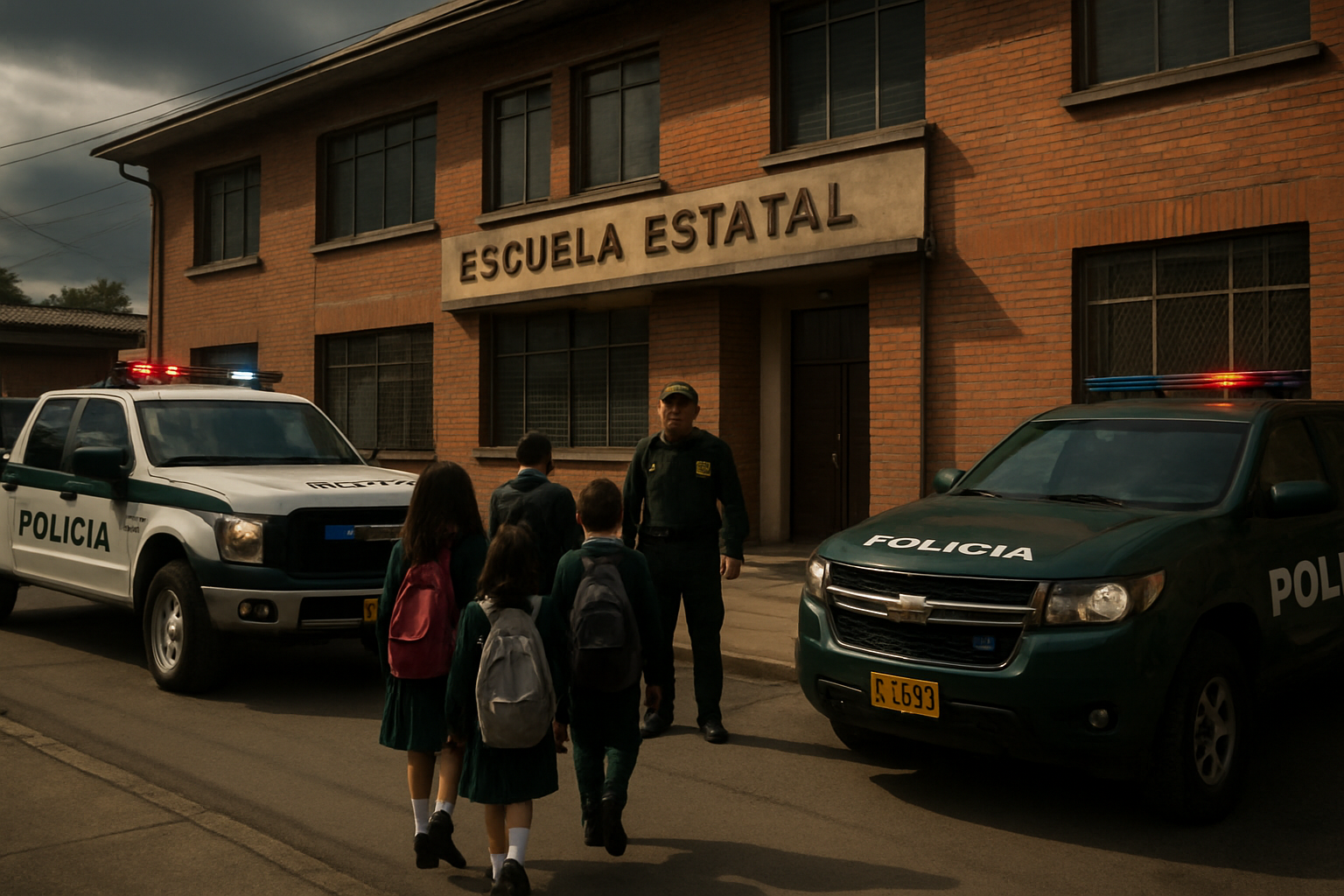
Colombia faces an escalating security crisis as violent incidents in schools and communities across the country raise urgent concerns about public safety and the protection of educational institutions, with recent events in Barranquilla and Sucre highlighting the deepening challenges confronting the nation.
A shocking incident captured on video at a school in Barranquilla has sparked nationwide outrage after a student violently assaulted a teacher inside the classroom. The footage, recorded by another student, quickly went viral on social media platforms, circulating rapidly among students and parents before reaching the broader public.
The Barranquilla incident represents just one facet of Colombia's broader security deterioration, as authorities grapple with what officials describe as a "breakdown in public order" across multiple regions. The attack on the educator comes amid a pattern of violence that extends far beyond school walls, affecting communities throughout the country.
Weekend Violence Devastates Sucre Province
The security crisis reached alarming heights over a recent weekend in Sucre province, where six crimes, including a feminicide, cast a dark shadow over communities in Sincelejo and five surrounding municipalities. Among the most disturbing cases were three victims who were compelled to attend meetings and never returned home, highlighting the calculated nature of the violence plaguing the region.
These incidents underscore the sophisticated criminal networks operating throughout Colombia, which have demonstrated increasingly brazen tactics in targeting civilians. The violence in Sucre follows a pattern documented by security analysts of criminal organizations expanding their territorial control through intimidation and elimination of perceived threats.
According to historical context from Planet News investigations, Colombia has experienced a sustained security crisis throughout 2026, with criminal organizations demonstrating advanced intelligence capabilities and coordination that rivals state operations. The systematic targeting of civilians, government officials, and educational institutions represents what experts describe as an assault on democratic governance.
Barranquilla's Broader Security Context
The violent assault on the teacher in Barranquilla occurs against the backdrop of escalating crime statistics in the Atlantic coast region. Recent data shows that February concluded with 91 homicides in the Atlantic department, with two massacres and 43 assassinations in Barranquilla alone contributing to what authorities describe as deeply concerning figures.
One of the massacres included the tragic death of a 2-year-old child, representing the most sensitive aspect of violence in the department. These incidents demonstrate the indiscriminate nature of criminal violence that has increasingly affected innocent civilians, including children and educators.
"The violence we are witnessing represents a systematic challenge to institutional authority and social cohesion," according to security analysts tracking Colombian violence patterns.
— Security Assessment Report, Planet News Investigation
The viral nature of the school attack video highlights how social media has become both a tool for documenting violence and a platform for its widespread dissemination, potentially inspiring copycat incidents while simultaneously raising public awareness about security failures in educational environments.
National Security Deterioration
The incidents in Barranquilla and Sucre are part of a broader national security crisis that has persisted throughout 2026. Government officials have warned of a "war between bands" that is increasing homicide rates and creating systematic justice failures across the country.
The Atlantic coast department has been particularly affected by what security forces describe as brazen daylight robberies by unmasked perpetrators, indicating a level of impunity that suggests criminal organizations operate with little fear of law enforcement response. This deterioration in public order extends beyond street crime to include systematic targeting of government officials and social leaders.
Historical patterns documented throughout 2026 show that criminal organizations have evolved beyond traditional drug trafficking to establish sophisticated intelligence networks capable of tracking government movements and coordinating multi-regional attacks simultaneously. The February assassination attempt on President Gustavo Petro, where his helicopter was threatened for four hours over the Caribbean Sea, exemplifies the advanced capabilities these groups now possess.
Educational Institutions Under Threat
The assault on the teacher in Barranquilla represents part of a global educational safety crisis that has affected schools across multiple countries in 2026. However, Colombia's situation is particularly complex due to the intersection of criminal violence, institutional weakness, and ongoing challenges from the peace process with former FARC guerrillas.
Educational institutions have become targets not only for criminal recruitment and territorial control but also as symbols of state authority that criminal organizations seek to undermine. The viral spread of the Barranquilla incident demonstrates how violence in schools can quickly become tools for psychological warfare against communities and institutions.
Government Response and Challenges
Colombian authorities face the challenge of maintaining the "Total Peace" negotiations with various armed groups while responding to escalating criminal violence that affects civilian populations daily. The systematic nature of attacks on mayors, civil servants, and now educational personnel represents what analysts describe as an effort to create governance vacuums that facilitate criminal activities.
The government's response has included enhanced security protocols for officials in high-risk regions and increased police patrols in affected areas. However, the scope and sophistication of criminal networks have often outpaced law enforcement capabilities, particularly in peripheral regions where state presence remains limited.
Defense Minister Pedro Sánchez has overseen increased security measures, but the criminal organizations' demonstrated capabilities—including surface-to-air threat capabilities against the president—underscore the extent to which these groups have evolved beyond traditional criminal enterprises to pose challenges to democratic consolidation itself.
International Implications and Context
Colombia's security crisis has attracted international attention, particularly following high-profile incidents like the presidential assassination attempt and systematic targeting of government officials. The timing of escalating violence has coincided with increased U.S.-Colombia cooperation in counter-narcotics efforts, raising questions about whether criminal organizations are retaliating against enhanced international collaboration.
The sophisticated nature of criminal operations, including the ability to coordinate attacks across multiple regions simultaneously, suggests that these organizations have evolved into entities with capabilities that rival those of state actors. This evolution represents a fundamental challenge not only for Colombia but for the broader region's stability and democratic governance.
Community Impact and Social Consequences
The violence documented in Barranquilla and Sucre has profound implications for community cohesion and social development. When teachers become victims of assault and families lose members to criminal violence, the social fabric that holds communities together begins to deteriorate.
The viral nature of the school assault video has created additional trauma for educational communities, as teachers and students must now confront not only the immediate security threats but also the psychological impact of witnessing such violence documented and disseminated widely.
Social leaders and community organizers continue to face systematic targeting, with assassinations in regions like Cauca province often accompanied by signs of torture, indicating that criminal organizations use extreme violence as a tool for territorial control and intimidation.
Path Forward
Addressing Colombia's escalating violence crisis requires a multifaceted approach that goes beyond traditional law enforcement responses. The sophistication of criminal networks demands enhanced intelligence capabilities, improved inter-agency coordination, and sustained political commitment to both security operations and the underlying social and economic factors that enable criminal recruitment and territorial control.
The challenge for Colombian authorities lies in balancing immediate security responses with long-term strategies that address the root causes of violence while maintaining the peace process with demobilized groups and preventing the recruitment of new generations into criminal enterprises.
The international community's role in supporting Colombia's efforts to combat sophisticated transnational criminal organizations will likely prove crucial in determining whether the country can successfully navigate this critical period in its democratic development and territorial consolidation efforts.
As incidents like those in Barranquilla and Sucre continue to highlight the daily reality of violence for Colombian communities, the urgency of comprehensive solutions becomes increasingly apparent for a nation striving to build lasting peace and security for all its citizens.