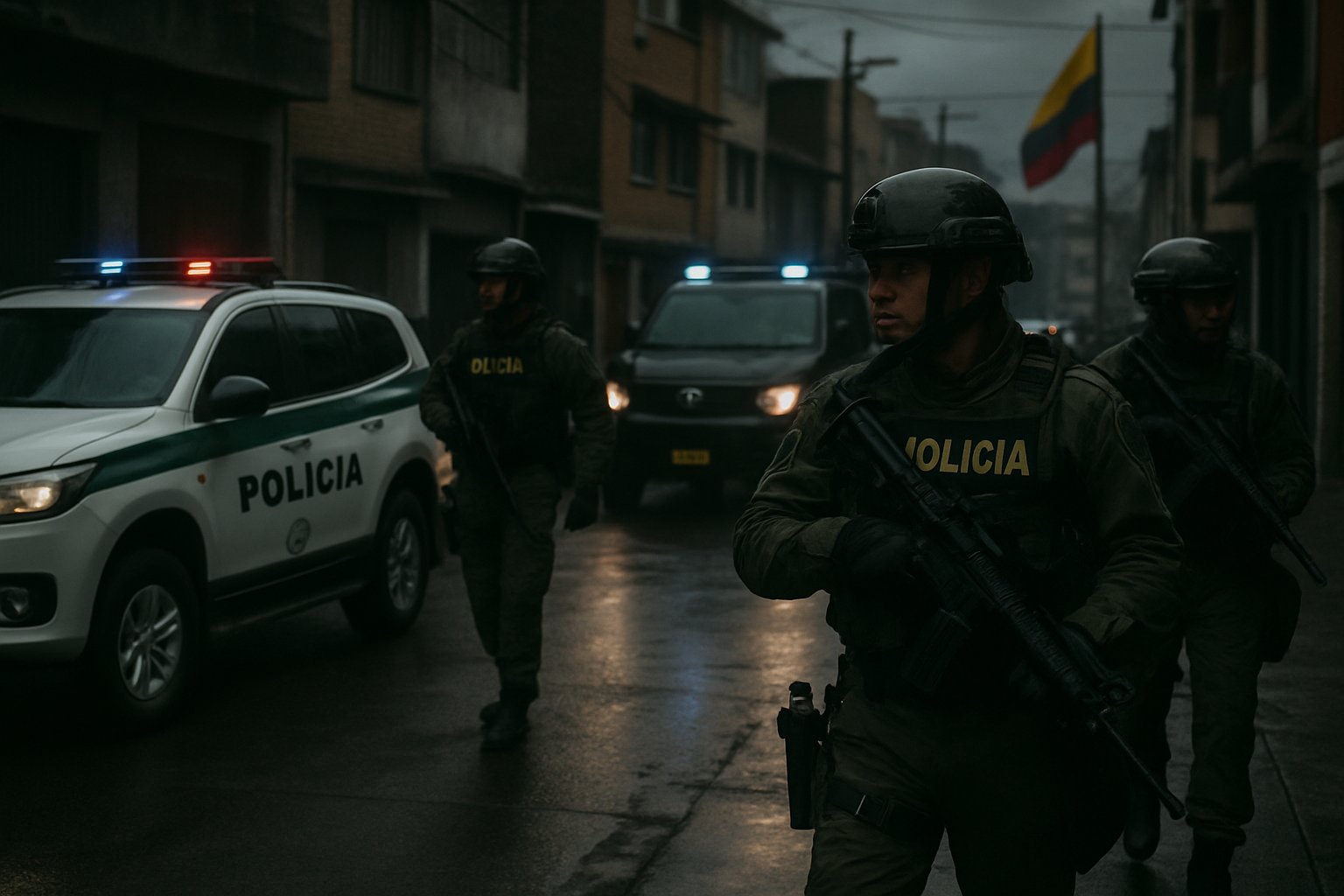
Colombia confronted a grim Valentine's Day as multiple violent incidents erupted across the nation, including a domestic homicide in Boyacá and the successful neutralization of a motorcycle bomb on the strategic Pan-American Highway, highlighting the persistent security challenges facing President Gustavo Petro's administration.
The deadly violence on February 14, 2026, occurred against the backdrop of Colombia's deteriorating security situation, which has seen coordinated attacks against government officials and escalating criminal activity throughout the country in recent weeks.
Domestic Violence Turns Fatal in Boyacá
In Boyacá department, what began as a family gathering ended in tragedy when a young woman allegedly killed her husband during a heated argument, according to reports from EL TIEMPO. The victim, identified as a coal mine worker, died from a single stab wound to the heart during what authorities described as a domestic dispute.
The incident underscores Colombia's persistent struggle with gender-based violence and domestic crime, issues that continue to plague communities across the nation despite government efforts to address the root causes of violence in Colombian society.
"What appeared to be a family reunion ended in tragedy for two families," reported EL TIEMPO, highlighting the devastating impact of domestic violence on Colombian communities.
— EL TIEMPO Investigation Team
Local authorities have taken the woman into custody as the primary suspect in her husband's death, with investigations ongoing into the circumstances that led to the fatal altercation.
Motorcycle Bomb Threat on Critical Highway
In a separate incident that could have resulted in mass casualties, Colombian National Police and specialized anti-explosives units successfully neutralized a motorcycle bomb discovered on the Pan-American Highway between Cali and Popayán, in the strategic corridor connecting Valle del Cauca and Cauca departments.
The suspicious motorcycle was abandoned near the Valencia bridge on the vital transportation route, prompting authorities to close the highway temporarily while bomb disposal experts examined the device. Police confirmed the motorcycle contained explosive materials designed to cause significant damage and potential loss of life.
The Pan-American Highway incident is particularly concerning given its location in a region where various criminal organizations, including FARC dissidents and other armed groups, compete for territorial control. The strategic importance of this corridor for drug trafficking and legitimate commerce makes it a frequent target for criminal organizations seeking to disrupt state authority.
Context of Escalating Violence
These February 14 incidents occur amid a broader pattern of violence targeting Colombian institutions and civilians. Just days earlier, President Petro survived an assassination attempt when threats forced his helicopter to remain airborne for four hours over the Caribbean Sea while traveling with his daughters in Córdoba province.
The same day as the presidential threat, Indigenous Senator Aida Quilcué was kidnapped along with two security escorts in Cauca province, only to be rescued three hours later by indigenous guards and security forces. These coordinated attacks represent what experts describe as an unprecedented assault on Colombian democratic institutions.
"Red lines have been crossed with attacks on democracy," President Petro declared following the coordinated assault on government officials.
— President Gustavo Petro
The pattern of violence extends beyond high-profile political targets. Video evidence emerged showing at least five attackers in a brutal assault on Senator Jairo Castellanos' security escorts in Arauca region, demonstrating the sophisticated planning capabilities of criminal organizations operating throughout Colombia.
Regional Security Challenges
The latest incidents highlight the complex security challenges facing Colombia, particularly in regions where state presence remains limited and various criminal organizations compete for control. Cauca province, where the motorcycle bomb was discovered, is controlled by FARC dissidents who rejected the 2016 peace agreement and continue to challenge government authority.
These criminal organizations demonstrate unprecedented intelligence networks capable of tracking presidential movements and coordinating attacks across multiple regions simultaneously. The sophistication of these operations suggests well-established criminal networks with advanced surveillance capabilities rather than opportunistic violence.
The timing of these attacks raises questions about potential retaliation for increased cooperation with the United States following the historic Trump-Petro White House meeting on February 3, which established new counter-narcotics cooperation frameworks. The escalation also coincides with Colombia's ongoing "Total Peace" negotiations aimed at ending decades of internal conflict.
Government Response and International Implications
Colombian security forces have implemented enhanced protection protocols for government officials in high-risk regions while conducting coordinated operations against criminal networks. The successful neutralization of the motorcycle bomb demonstrates the capability of specialized units when properly deployed and coordinated.
Defense Minister Pedro Sánchez has overseen increased security measures, though the ability of criminal organizations to threaten the president with surface-to-air capabilities and coordinate attacks across multiple provinces undermines state capacity and democratic consolidation efforts.
The international community continues monitoring Colombia's institutional response as a test of democratic resilience against organized crime during the peace process. The United States has increased counter-narcotics cooperation following recent diplomatic agreements, while regional partners express concern about the spillover effects of Colombian violence.
Ongoing Investigation and Security Implications
Authorities are investigating potential connections between the various criminal networks demonstrated in recent attacks, focusing on their coordination capabilities and intelligence gathering methods. The pattern suggests systematic efforts to undermine state authority through targeted violence against government officials and infrastructure.
The discovery and neutralization of the motorcycle bomb represents a significant intelligence and operational success for Colombian security forces, potentially preventing mass casualties on a critical transportation route. However, the incident also demonstrates the continued threat posed by well-equipped criminal organizations capable of sophisticated attack planning.
As investigations continue into both the domestic homicide in Boyacá and the explosive device on the Pan-American Highway, Colombian authorities face the challenge of addressing immediate security threats while implementing longer-term strategies to combat organized crime and reduce violence throughout the country.
The February 14 incidents serve as a stark reminder that despite diplomatic advances and peace negotiations, Colombia continues to grapple with fundamental security challenges that threaten both individual citizens and democratic institutions. The government's ability to respond effectively to these threats will be crucial for maintaining public confidence and advancing the broader peace process in the months ahead.