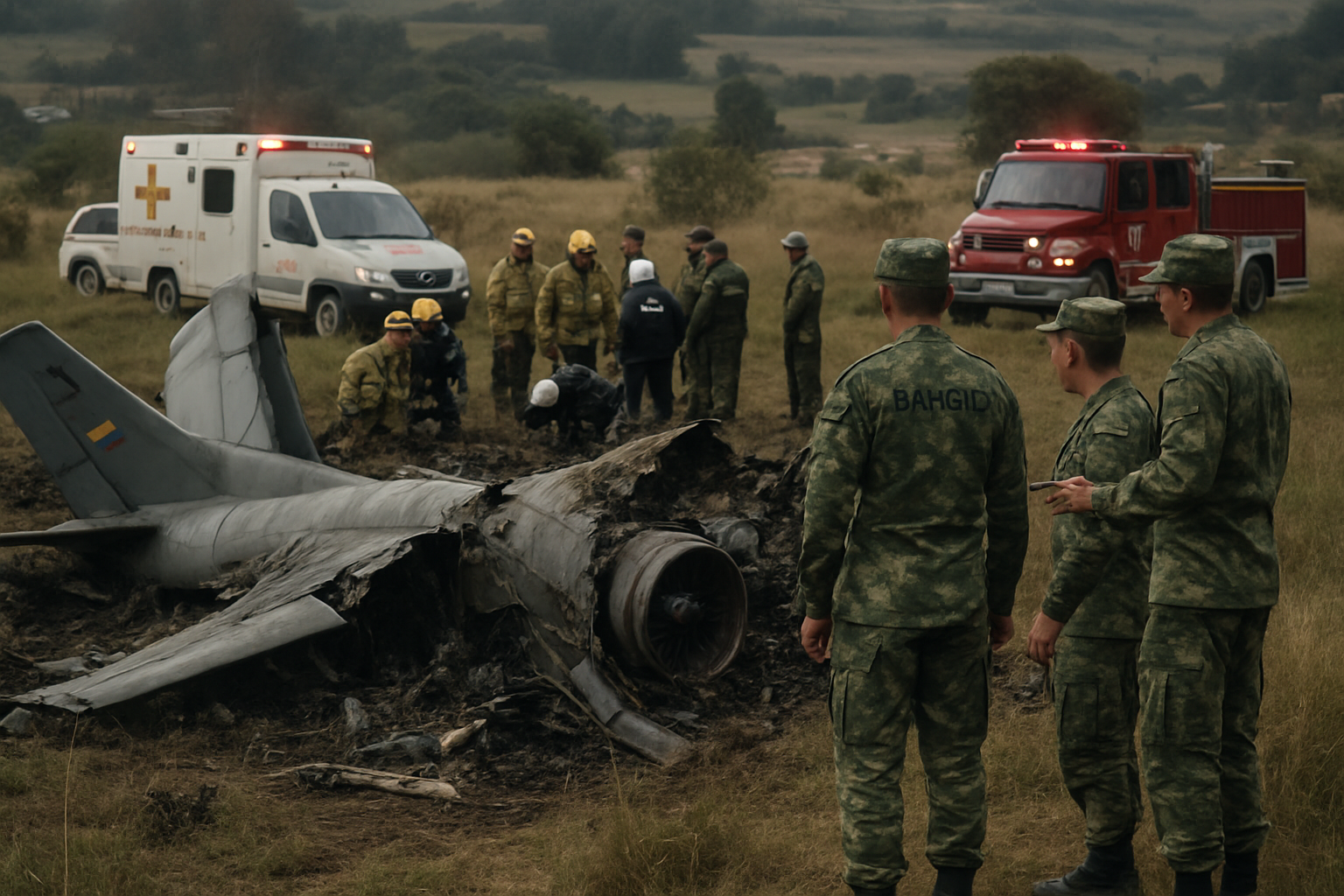
A Colombian Air Force transport aircraft crashed during takeoff in Putumayo province, killing 69 people and injuring 57 others in one of the deadliest military aviation disasters in recent Colombian history.
The tragic incident occurred on March 24, 2026, near Puerto Leguízamo airport in Putumayo department, located in the Amazon region close to the Ecuador border. The aircraft was carrying 128 personnel on a routine military transport mission when it crashed shortly after takeoff at approximately 10:00 AM local time.
Human Stories Behind the Tragedy
Among the victims was a young soldier from La Guajira who had requested permission for his wedding scheduled for Thursday, March 26. The soldier, who leaves behind two children with his fiancée, represents one of many personal tragedies within this larger disaster. His story, reported by Colombian media, highlights the human cost of military service and the families forever changed by this catastrophe.
The casualties included 114 Army soldiers, 11 Air Force crew members, and 2 police officers, all participating in what Colombian officials described as a routine transport operation in a region where road transportation is often impractical due to security concerns and challenging terrain.
Operational Context and Challenges
Puerto Leguízamo airport serves as a crucial logistics hub for counter-narcotics and territorial control operations in the Amazon region. The area's strategic importance stems from its location near Ecuador and Peru borders, where Colombian forces conduct operations against rebel groups and narcotics trafficking networks.
The remote location presented immediate challenges for emergency response efforts. Despite the difficult terrain and limited infrastructure, Colombian military units, civil protection agencies, and medical personnel were quickly deployed to the crash site to coordinate rescue operations and provide medical assistance to survivors.
"This represents a significant loss for our military forces operating in challenging conditions to maintain territorial control and combat illegal activities in the Amazon region."
— Defense Ministry Official
Aviation Safety in Challenging Environments
This incident marks the third major Colombian aviation accident in 2026, highlighting persistent challenges facing military aviation operations in Latin America. The pattern follows a February 2026 Bolivian Air Force C-130 Hercules crash at El Alto Airport that killed 22 people, demonstrating broader regional issues with aging aircraft fleets operating in demanding geographic and climatic conditions.
Military transport operations in the Amazon present unique risks due to high humidity, tropical conditions, limited runway capacity, and challenging emergency response infrastructure. These factors combine to create complex operational environments that test even reliable aircraft like the C-130 Hercules, which has served as the backbone of military transport operations worldwide.
Investigation and Response
Colombian Air Force Commander Carlos Fernando Silva Rueda immediately established a comprehensive Accident Investigation Board to examine mechanical systems, weather conditions, pilot procedures, and airport infrastructure. The investigation is expected to take several months, similar to other major military aviation incidents in the region.
Defense Minister Pedro Sánchez activated comprehensive support protocols for victims and their families, while President Gustavo Petro was informed of the incident immediately. The response demonstrates Colombia's commitment to supporting military families during this difficult time.
The investigation will focus particularly on the operational challenges specific to Amazon region flying, including infrastructure limitations at remote airports and the demanding conditions faced by military transport aircraft in tropical environments.
Regional Aviation Pattern
This tragedy occurs within a concerning pattern of military aviation accidents across Latin America in 2026. The similarities between this incident and the February Bolivian crash highlight common challenges facing developing nations operating aging military aircraft fleets in demanding geographic conditions.
Both incidents involved reliable C-130 aircraft operating in challenging environments - Bolivia's at extreme altitude and Colombia's in tropical Amazon conditions. These cases demonstrate how even proven aircraft can face significant risks when operating in demanding environments with limited emergency response infrastructure.
Strategic Implications
The loss significantly impacts Colombian military aviation capabilities in the Amazon region, where aircraft provide essential connectivity between remote outposts and major cities. Military transport in this region serves not only defense purposes but also delivers essential services to remote communities where ground transportation is dangerous or impossible.
The incident may accelerate discussions about fleet modernization and enhanced safety measures for military aviation operations in challenging environments. The investigation findings could influence Colombian military aviation protocols and potentially impact regional safety standards throughout Latin America.
International Response
The tragedy has drawn extensive international attention and condolences from the United States, Latin American countries, the United Nations, and nations including Jordan and Saudi Arabia. This global response demonstrates the international recognition of the tragedy's scale and solidarity with Colombia during this difficult time.
The broad international support also reflects Colombia's important role in regional security operations and the recognition that military aviation safety challenges affect broader international cooperation in combating transnational threats.
Looking Forward
As Colombia mourns the loss of 69 service members, the focus now turns to supporting survivors and families while conducting a thorough investigation to prevent future tragedies. The findings from this investigation will be crucial for improving safety protocols and may influence military aviation policies throughout Latin America.
The incident serves as a stark reminder of the risks faced by military personnel serving in remote and challenging environments, and the need for continued investment in aviation safety and emergency response capabilities in these critical regions.
The investigation's conclusions will likely have far-reaching implications for military transport operations in challenging environments, potentially leading to enhanced pilot training, improved safety measures, and renewed focus on the infrastructure needed to support military operations in remote areas of Latin America.