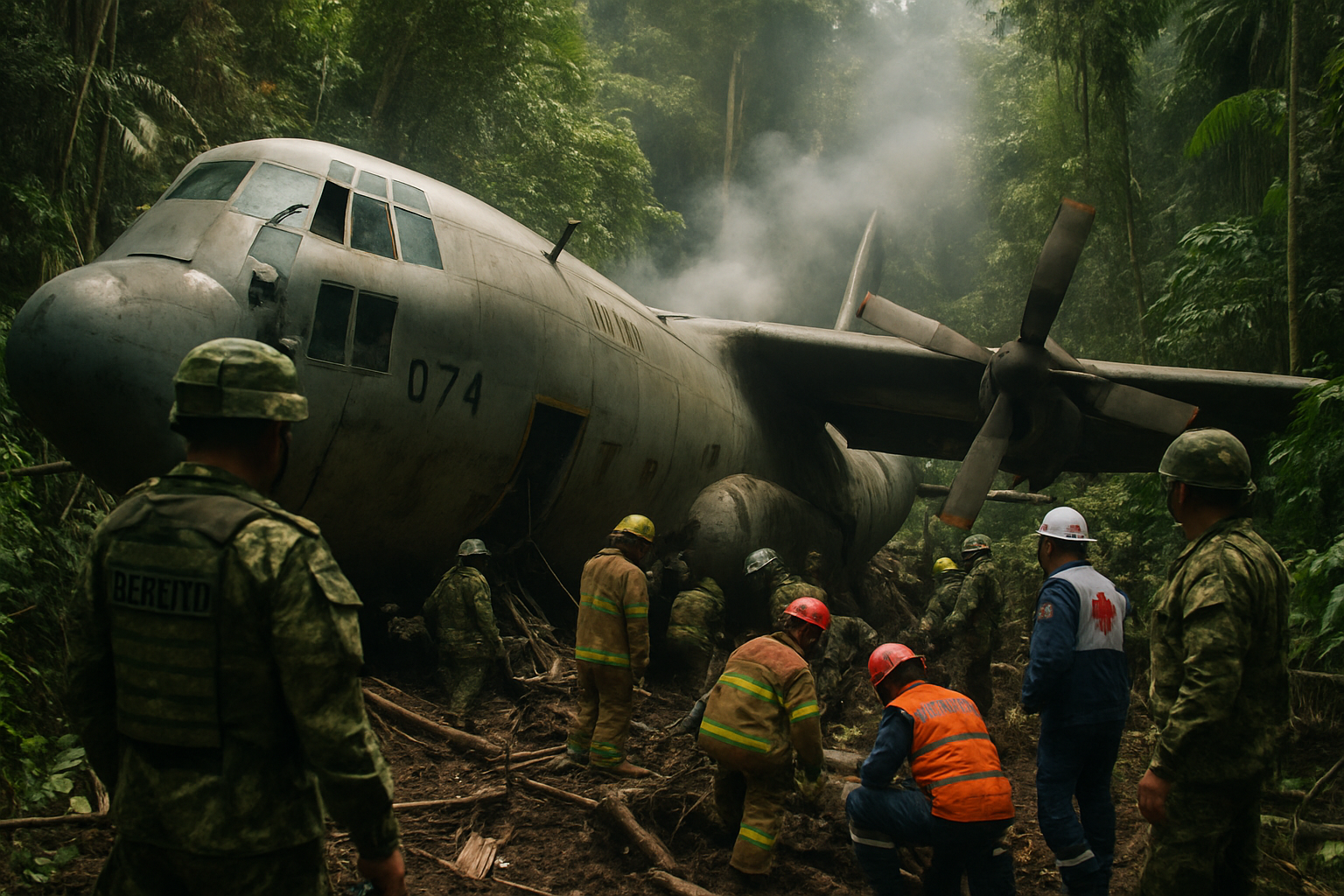
A Colombian Air Force C-130 Hercules transport aircraft crashed shortly after takeoff in the Amazon region of Putumayo province, killing at least 66 people and injuring 81 others in one of the country's deadliest military aviation disasters in recent history.
The aircraft, carrying 121 people including mostly soldiers, crashed near Puerto Leguízamo airport on Monday morning during what authorities described as a routine military transport mission. The tragedy has prompted a comprehensive investigation as rescue operations continue in the challenging terrain of Colombia's southern border region.
Escalating Casualty Reports
Initial reports from Colombian authorities indicated 34 fatalities, but the death toll has steadily risen throughout the day as rescue teams work through the wreckage. International news sources, including France 24 and German broadcaster Tagesschau, now report 66 confirmed deaths with 81 people injured.
Putumayo Governor confirmed that 70 people were injured in the crash, with multiple casualties in critical condition requiring immediate medical evacuation. The discrepancy in casualty figures reflects the ongoing nature of the rescue operation and the challenges of accessing the remote crash site.
"It was very difficult to reach and find the young people,"
— Juan Guillermo Torres, Rescue Worker
Carlos Claros, a Puerto Leguízamo municipal official, revealed that several soldiers were critically injured and that some personnel "jumped before the collision," suggesting the crew may have attempted emergency evacuation procedures as the aircraft went down.
Aircraft and Mission Details
The crashed aircraft was a C-130 Hercules, a four-engine turboprop transport plane that has served as the backbone of military logistics operations worldwide for over six decades. These aircraft typically accommodate around 100 soldiers and are extensively used for troop transport, cargo delivery, and logistics missions in challenging environments.
The flight was conducting a routine military transport mission when it crashed shortly after takeoff from Puerto Leguízamo airport. The aircraft was carrying predominantly Colombian Army personnel along with Air Force crew members, according to multiple sources.
Puerto Leguízamo airport serves as a crucial logistics hub for counter-narcotics operations and territorial control missions in Colombia's Amazon region, an area known for the presence of rebel groups and narcotics trafficking operations near the Ecuador border.
Emergency Response and Rescue Operations
Colombian authorities immediately deployed military units, civil protection teams, and medical personnel to the crash site. The remote location in the Amazon rainforest has complicated rescue efforts, with limited infrastructure and challenging terrain hampering emergency response operations.
Defense Minister Pedro Sánchez confirmed that comprehensive support protocols have been activated for victims and their families, with President Gustavo Petro being immediately informed of the tragedy.
Medical facilities in the region are treating the injured, with the most critical cases being airlifted to hospitals in Bogotá and other major cities. The bodies of victims have been taken to the town's morgue for identification procedures.
Investigation Launched
The Colombian Air Force has established an Accident Investigation Board to examine the circumstances surrounding the crash. Colombian Air Force Commander Fernando Silva confirmed the passenger and crew numbers, emphasizing that a comprehensive investigation will examine mechanical systems, weather conditions, pilot procedures, and airport infrastructure.
Authorities stress that they are still investigating the cause of the crash, with the investigation expected to take several months similar to other military aviation accidents in the region. Community members reportedly captured video footage of the accident, which may provide crucial evidence for investigators.
Regional Aviation Safety Concerns
This tragedy represents the third major aviation accident in Colombia during 2026, highlighting broader challenges facing Latin American military aviation operations. The crash follows a February 2026 Bolivian C-130 Hercules crash at El Alto Airport that killed 22 people, demonstrating a concerning pattern of military transport accidents in the region.
The incident underscores persistent vulnerabilities in military aviation operations in developing regions, where aging aircraft fleets operate in demanding geographic and climatic conditions. The Amazon region presents particular operational challenges including high humidity, tropical weather conditions, and limited emergency response infrastructure.
Aviation experts note that while the C-130 Hercules has a strong overall safety record and remains a reliable military transport workhorse, complex operations in remote areas present unique risks that require specialized training and maintenance protocols.
Geographic and Strategic Context
The crash occurred in Putumayo province, a strategically important region in Colombia's ongoing efforts to maintain territorial control and combat narcotics trafficking. The area near the Ecuador border has been a focal point for counter-narcotics operations and faces challenges from rebel groups that rejected the 2016 peace agreement with FARC.
Puerto Leguízamo's airport infrastructure limitations and the region's remote location have complicated evacuation efforts, highlighting the challenging conditions under which Colombian military forces operate in the Amazon basin. The airport serves as a vital link for military logistics in a region where road transportation is often impractical or dangerous.
Implications for Military Aviation
The investigation findings are expected to influence Colombian military aviation protocols and potentially impact regional military aviation safety standards throughout Latin America. This incident may accelerate discussions about fleet modernization, enhanced safety measures, and improved pilot training for operations in challenging tropical and remote environments.
The tragedy highlights the ongoing need for adequate investment in military aviation infrastructure, maintenance capabilities, and emergency response systems in regions where military forces operate under demanding conditions far from major population centers.
As rescue operations continue and the investigation unfolds, this incident serves as a stark reminder of the risks faced by military personnel conducting essential operations in Colombia's remote regions, and the need for continued vigilance in military aviation safety protocols.