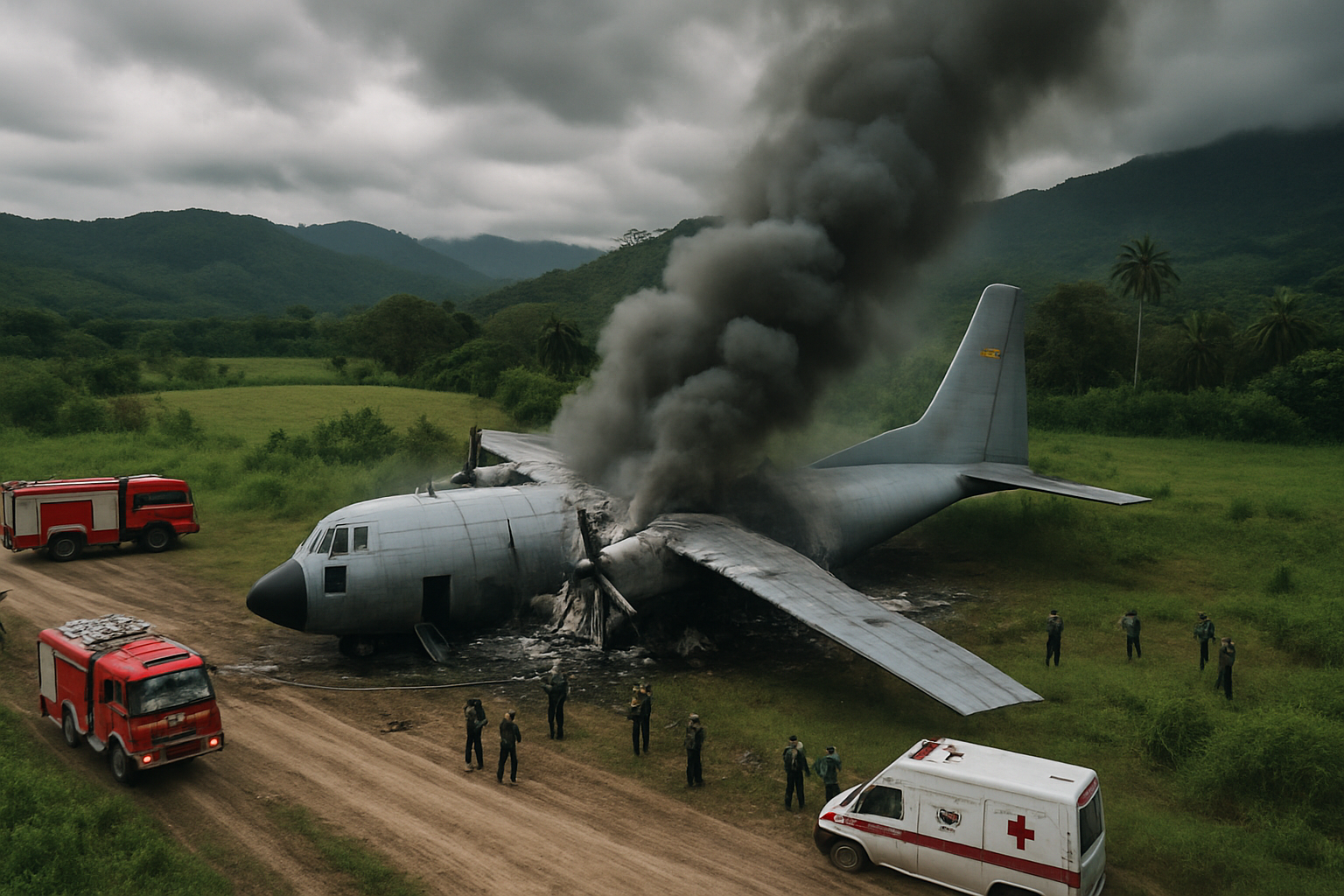
A Colombian Air Force C-130 Hercules transport aircraft crashed shortly after takeoff in Puerto Leguízamo, Putumayo department, on Monday morning, killing at least 8 people and injuring 83 others among the 125 personnel aboard.
The aircraft, carrying 114 passengers—primarily Army personnel—and 11 crew members, went down at approximately 10:00 AM local time (15:00 GMT) near the small Amazon region airport close to Ecuador's border. Colombian Air Force Commander Fernando Silva confirmed the casualty figures, while authorities have launched a comprehensive investigation into the crash causes.
Casualties and Emergency Response
Governor of Putumayo, Jhon Gabriel Molina, reported 8 fatalities and 83 injured, with 14 people in critical condition requiring immediate medical attention. The passengers included 112 Colombian Army personnel, 2 police officers, and 11 Air Force crew members on what officials described as a routine military transport mission.
"The airport [in Puerto Leguízamo] is small and there are great difficulties" for evacuating victims, Governor Molina said in a Facebook video, highlighting the logistical challenges posed by the remote location's limited infrastructure.
"We are deeply saddened by what happened with this aircraft and, above all, for the families of those who were on board."
— Alejandro Eder, Mayor of Cali
Emergency response teams, including military units, civil protection, and medical personnel, were immediately deployed to the crash site. The challenging Amazon terrain and limited runway capacity at Puerto Leguízamo airport complicated rescue operations, though authorities successfully evacuated the injured to medical facilities for treatment.
Regional Context and Security Challenges
The crash occurred in Putumayo department, a region known for significant security challenges including the presence of rebel groups and extensive coca cultivation for narcotics trafficking. The area serves as a crucial logistics hub for Colombian military counter-narcotics operations and territorial control missions.
Defense Minister Pedro Sánchez expressed profound sadness over the incident and confirmed that comprehensive support protocols had been activated for victims and their families. President Gustavo Petro was immediately informed of the tragedy, with national emergency response mechanisms activated.
Aviation Safety Concerns in Latin America
This incident represents the third major aviation accident in Colombia during 2026, following earlier crashes involving civilian aircraft. The tragedy occurs against a broader pattern of military aviation challenges across Latin America, where aging aircraft fleets operate in demanding geographic and climatic conditions.
The crash follows a February 2026 C-130 Hercules accident in Bolivia that killed 22 people at El Alto International Airport, highlighting persistent vulnerabilities in regional military aviation operations. These incidents underscore ongoing challenges with aging aircraft fleets, high-altitude operations, and complex operational environments throughout the region.
C-130 Hercules Aircraft Profile
The C-130H Hercules has served as a reliable military transport workhorse for decades, typically accommodating around 100 soldiers and used extensively for troop transport, cargo delivery, and logistics in challenging environments. While the aircraft maintains a strong overall safety record, complex operations in remote areas present unique risks requiring constant attention to maintenance schedules, pilot training, and safety procedures.
Investigation and Implications
The Colombian Air Force has established an Accident Investigation Board to examine all aspects of the incident, including mechanical systems, weather conditions, pilot procedures, and airport infrastructure. The investigation is expected to take several months, similar to protocols for other regional military aviation accidents.
Aviation experts note that this incident emphasizes persistent challenges in military aviation throughout Latin America, where aging equipment combines with demanding tropical and remote operational environments. The investigation findings are expected to influence Colombian military aviation protocols and potentially regional military aviation safety standards.
The crash site's proximity to areas with active illegal armed groups and drug trafficking operations adds complexity to the investigation and recovery efforts, though authorities maintain comprehensive security for personnel working at the scene.
Looking Forward
This tragedy demonstrates ongoing vulnerabilities in military aviation operations in developing regions where aging equipment operates under challenging geographic and climatic conditions. The investigation's findings will be crucial for preventing similar incidents and may accelerate discussions about fleet modernization, enhanced safety measures, and improved pilot training for challenging operational environments.
The incident serves as a sobering reminder of the risks faced by military personnel conducting essential operations in remote and challenging environments, particularly in regions where security and counter-narcotics missions require frequent air transport operations.