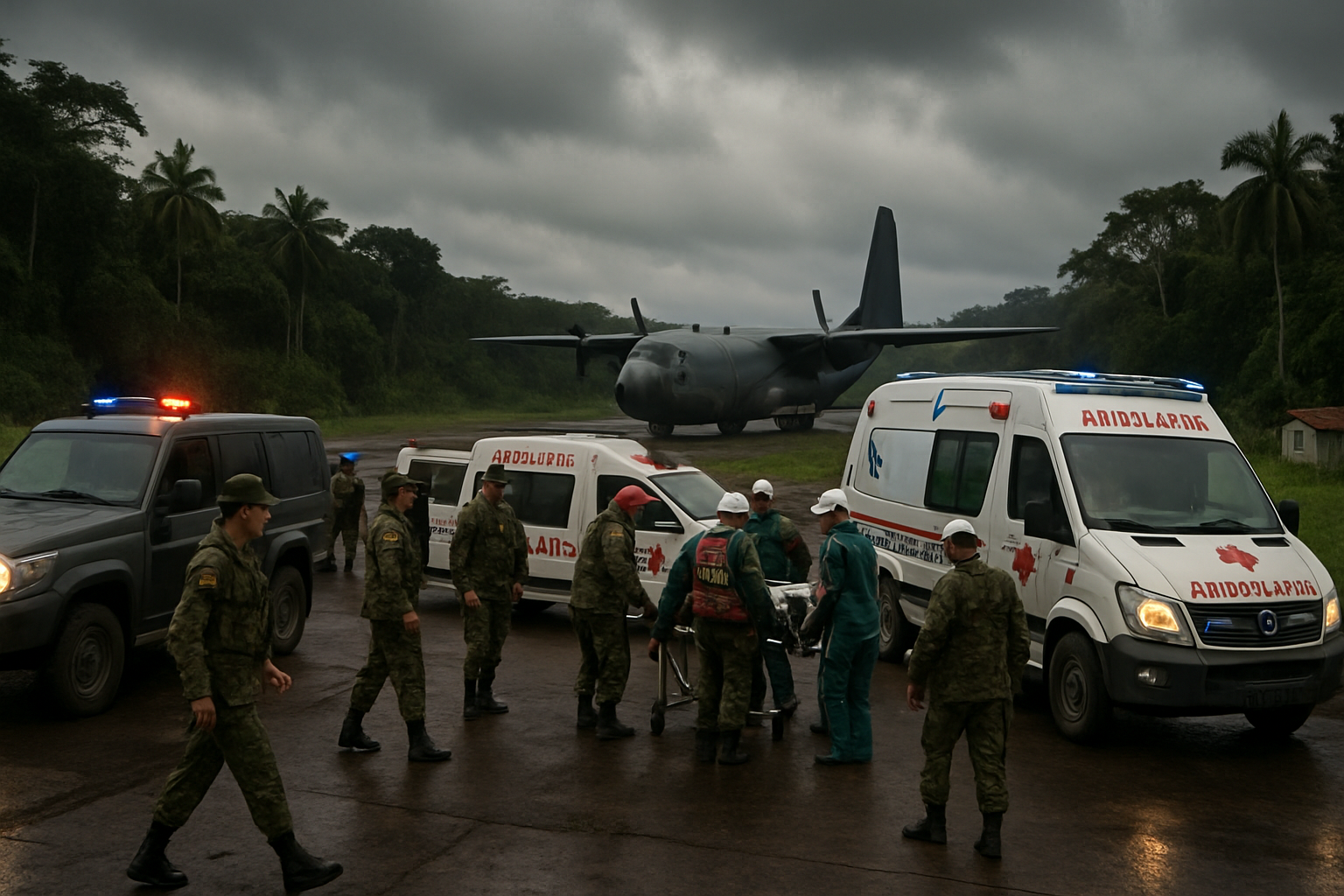
A Colombian Air Force C-130 Hercules transport aircraft crashed during takeoff near Puerto Leguízamo in Putumayo province on March 24, 2026, killing 66 people and injuring 58 others in one of Colombia's deadliest military aviation disasters in recent history.
The crash occurred in the Amazon region near the borders with Ecuador and Peru, involving 128 personnel aboard the military transport aircraft - including 114 soldiers, 11 crew members, and 2 police officers on what authorities described as a routine military transport mission.
Colombian Air Force Commander Carlos Fernando Silva Rueda confirmed the casualty figures and announced the establishment of an Accident Investigation Board to examine mechanical systems, weather conditions, pilot procedures, and airport infrastructure. The investigation is expected to extend several months, similar to other military aviation accidents in the region.
International Condolences Pour In
The tragedy prompted an outpouring of international sympathy, with countries across the Americas, Europe, and the Middle East expressing solidarity with Colombia. The United Nations joined several Latin American nations in lamenting the loss of life, according to Colombian media reports.
Jordan's Ministry of Foreign Affairs and Expatriates expressed "sincere condolences to the government and people of the friendly Republic of Colombia for the victims of the Colombian military aircraft crash," with official spokesperson Ambassador Fuad al-Majali confirming the Kingdom's full solidarity with Colombia during this difficult time.
Saudi Arabia's coverage highlighted the international attention the incident has received, with multiple countries offering support to Colombia as rescue and recovery operations continue in the challenging Amazon terrain.
Challenging Rescue Operations
The remote location near Puerto Leguízamo presented significant challenges for emergency responders. One survivor, identified through family testimony, managed to contact his partner Natalia Micanquer to describe the chaotic scenes inside the aircraft during the emergency. "They were trampling me," the soldier reportedly said, describing the desperate moments as passengers struggled to evacuate.
Puerto Leguízamo airport serves as a crucial logistics hub for counter-narcotics and territorial control operations in the Amazon region, where road transportation is often impractical due to security conditions and challenging terrain. The airport's limitations and the remote location complicated both the accident response and evacuation of the injured.
Regional Aviation Safety Concerns
This incident represents the latest in a concerning pattern of military aviation accidents affecting Latin America in 2026. The crash follows similar tragedies, including a February 2026 Bolivian Air Force C-130 Hercules crash at El Alto Airport that killed 22 people, highlighting broader challenges facing aging military aircraft fleets operating in demanding geographic and climatic conditions.
The C-130 Hercules, while generally considered a reliable military transport workhorse with decades of service worldwide, faces particular operational challenges in the Amazon region. High humidity, tropical conditions, limited runway capacity, and remote emergency response infrastructure create unique risks for military aviation operations.
"This tragedy demonstrates the persistent vulnerabilities facing military aviation operations in developing regions, where aging equipment must operate in challenging geographic conditions."
— Aviation Safety Analysis, Regional Pattern Assessment
Investigation and Safety Implications
The Colombian Air Force's comprehensive investigation will focus on multiple factors that may have contributed to the accident. Given the challenging operational environment, investigators will examine weather conditions specific to the Amazon region, mechanical systems of the aging aircraft fleet, pilot training and procedures for remote operations, and the adequacy of airport infrastructure at Puerto Leguízamo.
The findings are expected to influence Colombian military aviation protocols and potentially impact regional military aviation safety standards throughout Latin America. This accident, combined with other recent incidents, may accelerate discussions about fleet modernization and enhanced safety measures for military operations in challenging tropical and remote environments.
Broader Context of Military Operations
The aircraft was conducting operations in a region known for its strategic importance to Colombia's security apparatus. The Amazon border area with Ecuador and Peru presents ongoing challenges related to territorial control, counter-narcotics operations, and the presence of illegal armed groups. Military transport missions like this one are essential for maintaining government presence and supporting security operations in areas where traditional transportation methods are limited.
Defense Minister Pedro Sánchez activated comprehensive support protocols for the victims' families and confirmed that President Gustavo Petro was immediately informed of the tragedy. The government's response reflects the serious nature of the incident and its implications for Colombia's military aviation capabilities.
Looking Forward
As rescue operations conclude and the investigation begins, this tragedy underscores the inherent risks faced by military personnel conducting essential operations in Colombia's challenging geographic regions. The loss of 66 lives represents not only a human tragedy but also a significant blow to Colombia's military capabilities in the region.
The international community's response demonstrates the global recognition of these challenges and the solidarity with Colombia during this difficult period. The investigation's findings will be crucial for preventing similar tragedies and improving safety protocols for military aviation operations throughout the region.
The Colombian Air Force confirmed that support will continue for the families of those lost and injured in this tragic accident, while the broader implications for military aviation safety in Latin America continue to be assessed by regional authorities and international aviation experts.