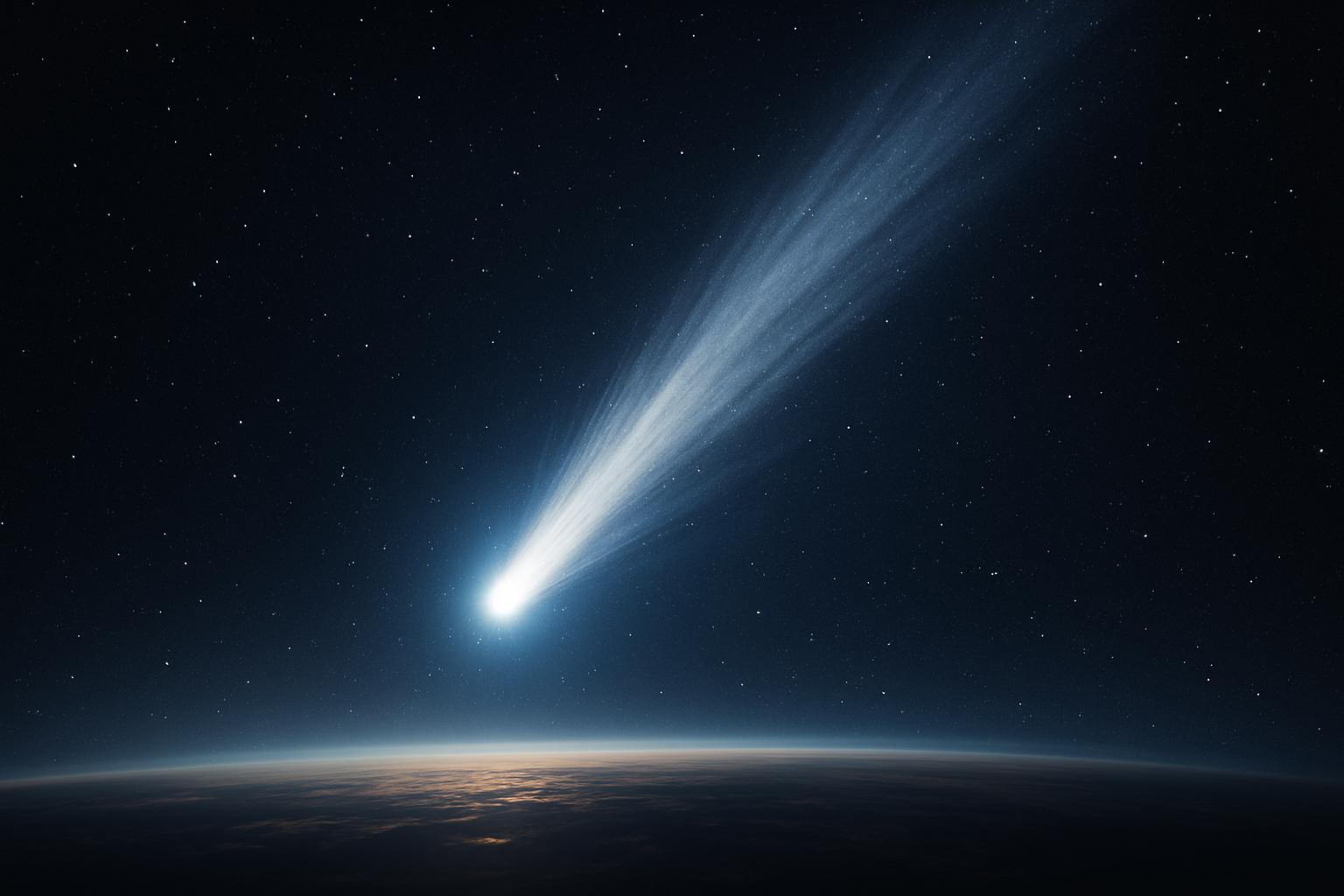
Comet C/2026 A1 (MAPS), currently on a collision course with the Sun, is set to become visible to the naked eye in the coming months, offering stargazers a spectacular celestial display before its dramatic demise, according to astronomical reports from Azerbaijan.
The comet, designated C/2026 A1 and bearing the identifier "MAPS," represents a rare astronomical phenomenon that combines both the beauty of a visible comet with the scientific intrigue of a sun-grazing trajectory. As it approaches its final destination, the comet is expected to brighten significantly, potentially becoming one of the most notable celestial events of 2026.
A Collision Course with Destiny
Unlike many comets that follow elliptical orbits around the Sun and return periodically, Comet C/2026 A1 is on what astronomers call a "collision course" with our nearest star. This trajectory classifies it as a member of the Kreutz sungrazer family, a group of comets that pass extremely close to the Sun, often resulting in their complete destruction.
The comet's path will bring it increasingly closer to the Sun over the coming months, causing its icy nucleus to sublimate at an accelerated rate. This process creates the characteristic glowing coma and tail that make comets visible from Earth, with the brightness typically increasing as the comet approaches perihelion—its closest point to the Sun.
The Golden Age of Astronomical Observation
The discovery and tracking of Comet C/2026 A1 occurs during what many astronomers are calling a "golden age of space observation." This period has been marked by unprecedented international cooperation, advanced technology deployment, and remarkable astronomical discoveries that have reshaped our understanding of the cosmos.
Recent months have witnessed extraordinary astronomical events, including the discovery of Comet C/2024 E1 with its distinctive emerald glow that challenged conventional solar system formation theories. This Polish-discovered comet, featuring unusual concentrations of diatomic carbon and rare earth elements, demonstrated how modern space observation capabilities can reveal previously unknown characteristics of celestial objects.
"We are witnessing an unprecedented convergence of natural cosmic phenomena with advanced human space capabilities, establishing the foundation for a mature space age," observed Dr. Heidi Haviland, NASA planetary scientist at Marshall Space Flight Centre.
— Dr. Heidi Haviland, NASA Marshall Space Flight Centre
Scientific Significance and Observation Opportunities
The approach of Comet C/2026 A1 provides scientists with valuable opportunities to study the composition and behavior of comets as they interact with solar radiation and the solar wind. Advanced telescopes, including the James Webb Space Telescope and ground-based observatories worldwide, are expected to conduct detailed spectroscopic analysis of the comet's composition.
International collaboration, a hallmark of modern astronomical research, will likely coordinate observations across multiple time zones and wavelengths. This comprehensive approach has proven successful in recent discoveries, including the detection of cosmic rays in distant nebulae and the identification of complex organic molecules in interstellar space.
The comet's sungrazing trajectory also offers unique research opportunities. As it approaches the Sun, scientists will be able to observe how extreme solar radiation and magnetic fields affect cometary material, potentially providing insights into early solar system conditions and the formation of planetary bodies.
Naked-Eye Visibility and Viewing Conditions
One of the most exciting aspects of Comet C/2026 A1 is its potential for naked-eye visibility. As the comet approaches the Sun and its nucleus becomes increasingly active, it should develop a bright coma—the glowing atmosphere around the comet's nucleus—and potentially a visible tail.
Optimal viewing conditions will depend on several factors, including the observer's location, local weather conditions, and light pollution levels. Rural areas with dark skies typically provide the best viewing opportunities for comets, while urban observers may need binoculars or small telescopes to clearly see the celestial visitor.
The timing of visibility will be crucial, as observers will have a limited window to witness the comet before its final approach to the Sun. Historical examples of sun-grazing comets suggest that the most spectacular displays often occur in the weeks or months leading up to perihelion, when the comet is bright enough to see but still far enough from the Sun to be observable during evening or pre-dawn hours.
The Legacy of Sun-Grazing Comets
Comet C/2026 A1 joins a distinguished lineage of sun-grazing comets that have captivated human imagination throughout history. The most famous member of this group was Comet Ikeya-Seki in 1965, which became so bright it was visible in broad daylight as it passed close to the Sun.
These dramatic encounters between comets and our star represent some of nature's most spectacular displays, combining the raw power of solar radiation with the ancient ice and rock of objects formed in the outer reaches of our solar system billions of years ago.
Technology and Traditional Observation
The observation of Comet C/2026 A1 exemplifies the marriage of cutting-edge technology with traditional astronomical methods. While professional astronomers will employ sophisticated instruments and space-based telescopes, citizen scientists and amateur astronomers worldwide will contribute valuable observations using conventional telescopes and even smartphone cameras.
Recent advances in consumer technology have democratized astronomical photography, with NASA even certifying Apple smartphones for space mission documentation. This accessibility ensures that the comet's approach will be documented by observers across the globe, creating a comprehensive visual record of this celestial event.
Preparing for the Spectacle
As Comet C/2026 A1 continues its fateful journey toward the Sun, astronomers and stargazers alike are preparing for what promises to be one of the year's most memorable astronomical events. The comet's visible approach offers a rare opportunity to witness the dynamic processes that have shaped our solar system for billions of years.
For those planning to observe the comet, experts recommend staying informed about the latest predictions for visibility, optimal viewing times, and safety considerations. As with any astronomical observation, patience and dark skies will be key to experiencing the full majesty of this celestial visitor.
The dramatic finale awaiting Comet C/2026 A1 serves as a reminder of the dynamic and sometimes violent nature of our solar system. While its collision with the Sun marks the end of this particular celestial wanderer, the scientific knowledge gained from observing its final journey will contribute to our ongoing understanding of these ancient messengers from the outer reaches of space.