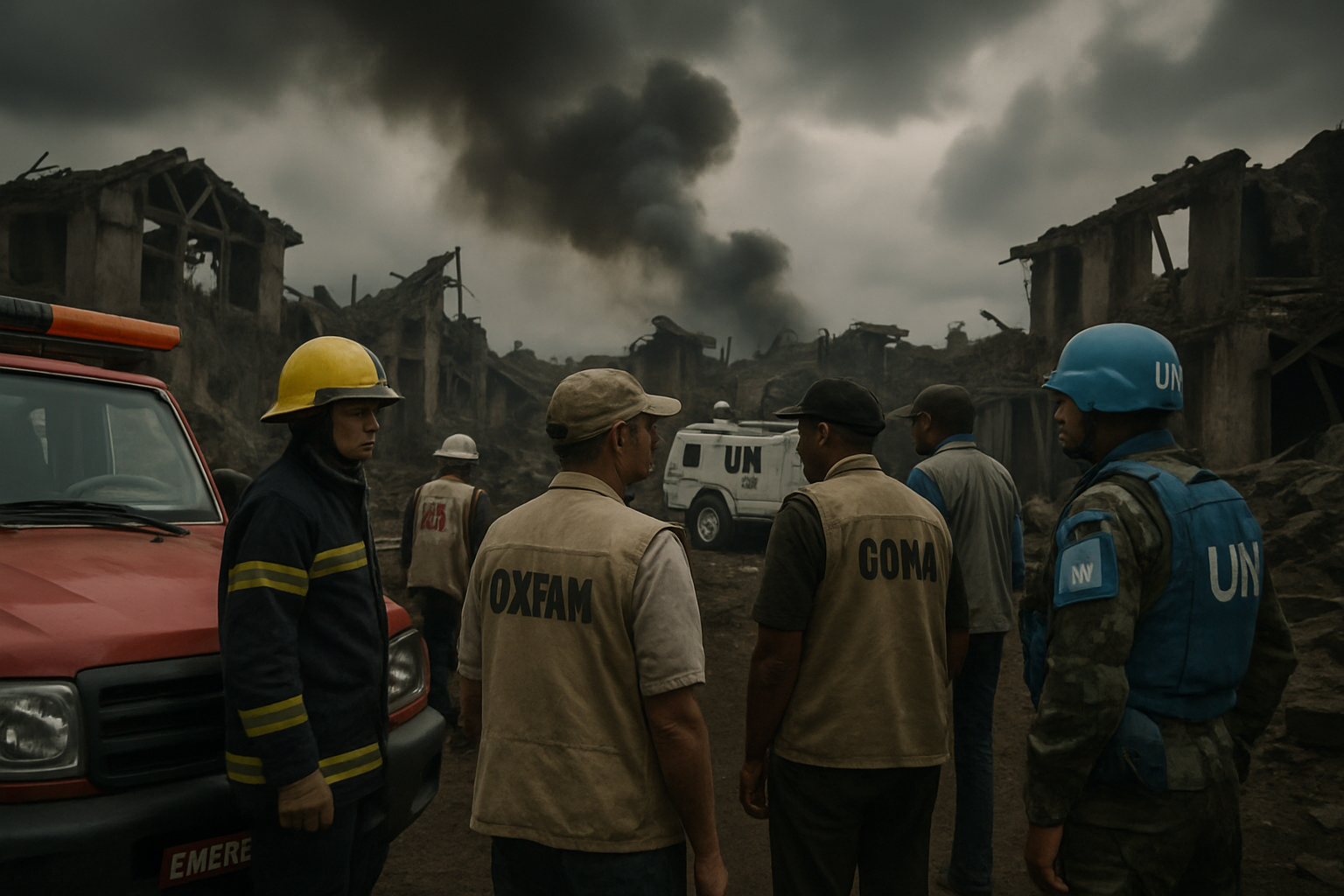
Three people were killed in two separate drone strikes that targeted the eastern Democratic Republic of Congo city of Goma on Wednesday, March 11, marking the first direct attack on a non-peripheral neighborhood since the M23 rebel group took control of the strategic provincial capital.
According to a statement from MONUSCO (United Nations Organization Stabilization Mission in the Democratic Republic of the Congo), the victims included one UN staff member and two civilians. The strikes also caused significant material damage to buildings and infrastructure in the affected areas.
The attacks represent a dangerous escalation in the ongoing conflict that has plagued eastern DRC for months, with drone warfare technology increasingly being deployed in a region already devastated by multiple armed groups and humanitarian crises.
M23 Control and Regional Instability
Goma, the capital of North Kivu province, has been under the control of the Alliance of Congolese Forces (AFC)-M23 coalition since January 2025, following intense fighting that displaced hundreds of thousands of civilians. The city serves as a crucial hub for international humanitarian operations and houses significant UN peacekeeping infrastructure.
The drone strikes mark the first time that central Goma neighborhoods have been directly targeted since the city fell under M23 occupation. Previous attacks had been limited to peripheral areas, making Wednesday's strikes particularly concerning for both residents and international organizations operating in the region.
Historical context reveals the complexity of the situation. M23, which stands for the March 23 Movement, first emerged in 2012 following a failed peace agreement. The group has been accused by the DRC government and international observers of receiving support from Rwanda, leading to severe diplomatic tensions in the Great Lakes region.
Escalating Drone Warfare Technology
The deployment of drone technology in eastern DRC represents a significant evolution in the conflict's dynamics. Earlier in 2026, the region witnessed sophisticated drone attacks on critical infrastructure, including the February 1 attack on Bangboka International Airport in Kisangani using kamikaze drones loaded with submunitions, which the Tshopo provincial government attributed to Rwandan Defense Forces (RDF) and M23.
These technological developments have fundamentally altered the nature of combat in the region, lowering the threshold for conducting targeted strikes while complicating defensive efforts for both government forces and international peacekeepers.
The introduction of advanced unmanned systems has created new vulnerabilities for civilian populations and humanitarian workers, who previously found relative safety in urban centers away from traditional frontlines.
International Response and Diplomatic Tensions
Hours after the Goma attacks, the Congolese government reaffirmed its commitment to collaborate with the United Nations and international partners to establish the facts surrounding the incidents. This response comes amid broader diplomatic efforts to address the root causes of eastern DRC's instability.
The attacks occurred against the backdrop of recent U.S. sanctions imposed on March 2, 2026, against the Rwandan Defense Forces and four senior military officers for alleged "direct operational support to M23 and affiliates in eastern DRC." These sanctions marked the most significant punitive action against Rwanda since the 1994 genocide era, despite a December 2025 peace accord between Presidents Félix Tshisekedi (DRC) and Paul Kagame (Rwanda) mediated by former President Donald Trump in Washington.
"The government commits to working with the UN and all partners to establish the facts and ensure accountability for these attacks against innocent civilians."
— Congolese Government Statement
The timing of the drone strikes is particularly significant, occurring just days before a scheduled East African Community (EAC) Heads of State Summit in Arusha, Tanzania, where Presidents Kagame and Tshisekedi were expected to address regional security concerns directly.
Humanitarian Crisis Context
The Goma attacks compound an already devastating humanitarian situation in eastern DRC. The region has experienced multiple catastrophic events in recent months, including two deadly mine collapses at the Rubaya coltan mine in North Kivu that killed over 500 people in 2026 alone. The mine, which produces 15-30% of the world's coltan supply essential for electronics manufacturing, has been under M23 control since May 2024.
French aid worker networks confirmed that one of their colleagues was among the victims in Wednesday's strikes, highlighting the risks faced by international humanitarian personnel operating in conflict zones. France 24 reported the incident as part of broader regional violence affecting aid operations across the Great Lakes region.
The targeting of UN personnel particularly concerns international observers, as it represents a direct attack on peacekeeping efforts that have been crucial for protecting civilian populations in the region. MONUSCO has maintained a significant presence in eastern DRC for over two decades, working to stabilize the region amid persistent armed group activities.
Regional Security Implications
The Goma drone strikes occur within a broader pattern of escalating violence across eastern DRC. Recent military operations have seen intense fighting between M23 forces and local Wazalendo militias in Masisi territory, blocking critical supply routes for more than five days and paralyzing transportation networks that provide employment for thousands of motorcycle taxi drivers.
The strategic importance of Goma cannot be overstated. As the capital of North Kivu province, the city serves as a crucial gateway for international aid, regional commerce, and diplomatic efforts. Its fall to M23 control has fundamentally altered the security landscape of the Great Lakes region.
Intelligence reports suggest that the drone technology employed in recent attacks represents a significant advancement in capabilities available to non-state actors in the region. The sophistication of the systems used raises questions about external support networks and the potential for further escalation.
Economic and Resource Dimensions
The conflict in eastern DRC is inextricably linked to control of the region's vast mineral wealth. The area contains critical reserves of coltan, cobalt, lithium, and other minerals essential for global technology supply chains. The recent mining disasters at Rubaya, combined with ongoing armed conflict, have disrupted international efforts to establish responsible supply chains for conflict minerals.
The DRC's potential participation in the U.S.-EU-Japan Critical Minerals Partnership, aimed at challenging China's dominance in mineral processing, has been complicated by the deteriorating security situation and questions about regulatory oversight in M23-controlled territories.
Mining Minister Louis Watum Kabamba recently expressed "deep consternation" over safety standards at mining sites, acknowledging systemic failures that have contributed to both industrial accidents and conflict dynamics in the region.
International Legal and Accountability Questions
The targeting of UN personnel and civilians in Goma raises serious questions under international humanitarian law. The deliberate targeting of peacekeepers and aid workers constitutes a war crime under the Rome Statute, potentially triggering international legal proceedings.
Previous incidents in the region, including what some sources describe as broader patterns of civilian targeting, have prompted calls for enhanced accountability mechanisms. The Congolese government's commitment to work with UN investigators represents a crucial step toward establishing facts and ensuring justice for victims.
The international community's response will be closely watched as a test of commitment to protecting humanitarian workers and upholding international legal standards in conflict zones worldwide.
Looking Forward
The Goma drone strikes represent a concerning escalation in eastern DRC's long-running conflict, introducing new technological dimensions that complicate both military and diplomatic responses. The targeting of UN personnel and civilians in non-peripheral neighborhoods marks a significant departure from previous conflict patterns.
As regional leaders prepare for crucial diplomatic meetings in the coming weeks, the international community faces urgent decisions about how to address the technological evolution of warfare in the region while protecting vulnerable civilian populations and humanitarian operations.
The incident underscores the complex intersection of local grievances, regional dynamics, and global resource competition that continues to fuel instability in one of Africa's most strategically important regions. Resolving these challenges will require sustained international engagement and innovative approaches to addressing root causes of conflict while protecting those most vulnerable to its consequences.