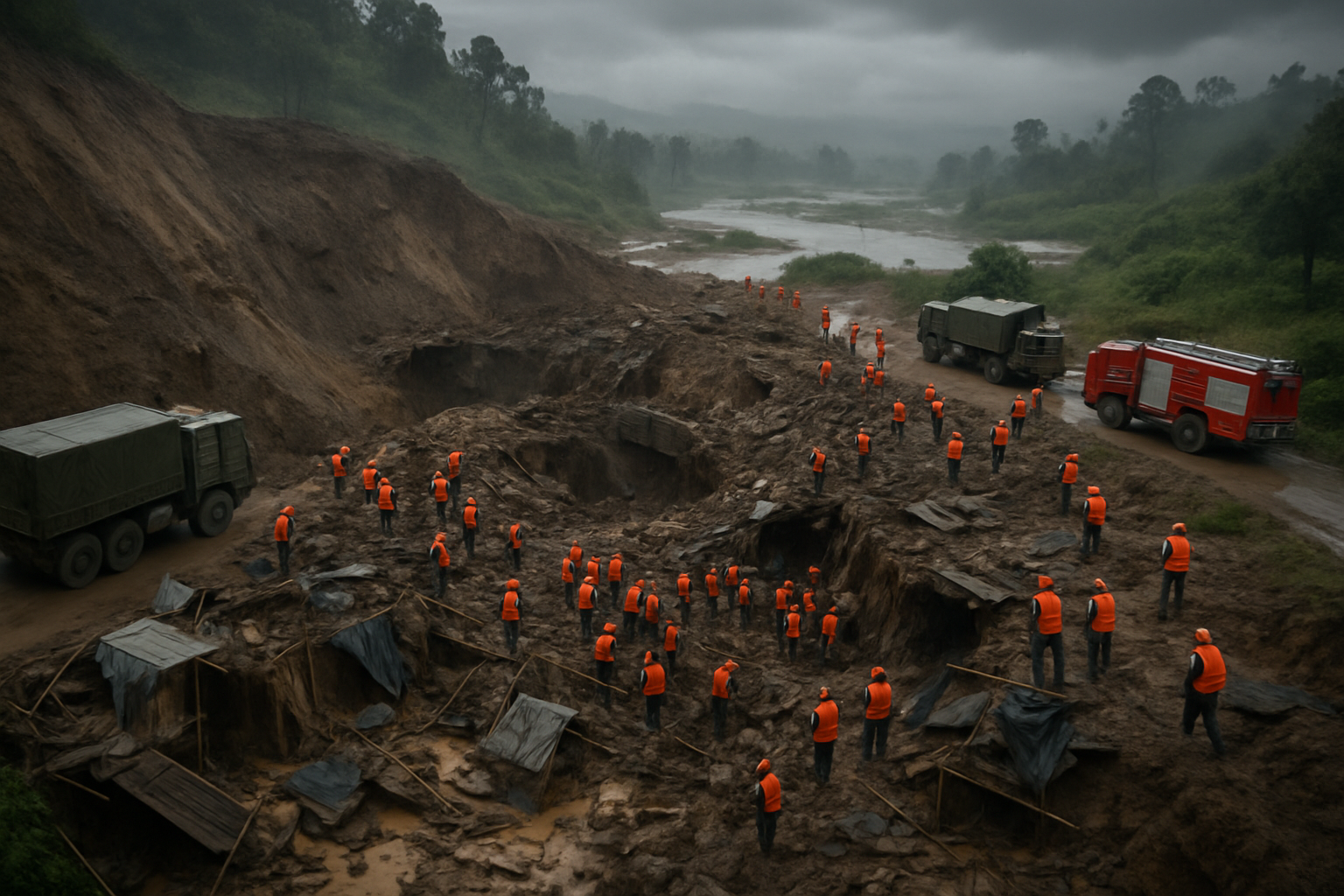
More than 200 people died Tuesday when heavy rains triggered a devastating landslide at the Rubaya coltan mine in eastern Democratic Republic of Congo, making it the second catastrophic mining disaster at the same location within five weeks.
The death toll from the landslide in North Kivu province was confirmed by the DRC's mines ministry on Wednesday, with approximately 70 children among the victims according to Danish media reports. The tragedy occurred at one of the world's most important coltan mining sites, which produces an estimated 15-30% of the global supply of the mineral essential for smartphone and electronics manufacturing.
The Rubaya mine has been under the control of the M23 rebel movement since May 2024, adding layers of complexity to rescue operations and highlighting the dangerous working conditions in the region's conflict minerals sector. Women and children are known to work regularly at the site in precarious conditions, often without basic safety protections.
Second Disaster in Five Weeks
This latest catastrophe comes barely one month after a similar landslide at the same Rubaya mine on February 1, 2026, which killed approximately 300 people. The February disaster was also attributed to heavy rains that destabilized the mine's slopes, creating what experts have described as one of the deadliest mining disasters in the region's history.
The recurring tragedies at Rubaya underscore the persistent safety challenges facing artisanal mining operations in eastern DRC, where basic infrastructure and safety protocols are often absent despite the site's global economic importance. The February disaster prompted international concern, with Pope Leo XIV offering prayers for the victims and renewed calls for improved mining safety standards.
Local authorities report that rescue operations are ongoing, though the remote location and ongoing security concerns in North Kivu province have complicated relief efforts. The M23 rebel group's control of the area since mid-2024 has further limited access for humanitarian organizations and mining safety inspectors.
Global Supply Chain Implications
The Rubaya mine's strategic importance extends far beyond the DRC's borders. Coltan, short for columbite-tantalite, is a crucial component in capacitors used in virtually all electronic devices, from smartphones to electric vehicles. The mine's output represents a significant portion of global supply, making disruptions at the site a matter of international concern.
The repeated disasters at Rubaya occur amid broader efforts to diversify critical mineral supply chains away from Chinese dominance. Seven African countries, including the DRC, recently joined the US-EU-Japan Critical Minerals Partnership, which aims to challenge China's control of 60% of global critical mineral production and 90% of refining capacity.
However, the safety crisis at sites like Rubaya highlights the challenges facing efforts to establish alternative supply chains while maintaining responsible mining standards. International buyers increasingly demand Environmental, Social, and Governance (ESG) compliance, but artisanal operations like those at Rubaya often lack the resources to implement comprehensive safety measures.
Regional Mining Safety Crisis
The Rubaya tragedies are part of a broader pattern of mining safety challenges across Africa. In February 2026, a mining disaster in Guinea killed 10 women at an artisanal gold operation in Kondianakoro village, while South Africa has experienced multiple mining accidents affecting diamond and other mineral operations.
Despite record investment in African mining—with the African Finance Corporation reporting $29.5 trillion in mineral reserves continent-wide—safety standards at many artisanal operations remain far below international norms. The contrast is stark between modern, technology-integrated mining projects and traditional artisanal operations where basic safety infrastructure is often absent.
Recent regulatory actions, including the DRC government's suspension of Congo Dongfang Mining for environmental violations, demonstrate increasing government oversight of the sector. However, enforcement remains challenging in remote areas, particularly those under rebel control like the Rubaya mine.
Humanitarian Response Challenges
The humanitarian response to the Rubaya disaster faces multiple complications beyond the immediate challenge of accessing victims in the landslide debris. The mine's location in a region controlled by the M23 rebel movement has limited access for international humanitarian organizations and specialized rescue teams.
The presence of women and children among the victims highlights the complex social dynamics of artisanal mining in eastern DRC, where entire families often depend on mining activities for survival. The dangerous work is frequently the only available source of income in a region plagued by decades of conflict and limited economic alternatives.
Weather conditions continue to pose challenges for rescue operations, with the rainy season traditionally lasting from November through April. The same heavy rains that triggered the landslide are hampering efforts to reach potential survivors and recover victims.
International Pressure for Reform
The recurring disasters at Rubaya have intensified international pressure for comprehensive reform of the DRC's mining sector. The tragedies occur as the country seeks to position itself as a key partner in global supply chain diversification efforts, requiring a delicate balance between meeting international demand and ensuring worker safety.
The timing is particularly significant given ongoing discussions about the DRC's role in the US-EU-Japan Critical Minerals Partnership. While the country's vast mineral wealth makes it an attractive alternative to Chinese-dominated supply chains, repeated safety failures could complicate efforts to attract responsible international investment.
Mining industry experts emphasize that sustainable development of the DRC's mineral resources requires not just technological advancement but fundamental improvements in safety infrastructure, worker protections, and regulatory oversight. The Rubaya disasters serve as a stark reminder that the human cost of mineral extraction cannot be ignored in the rush to secure critical material supplies.
Path Forward
As rescue operations continue at the Rubaya mine, the focus is shifting toward long-term solutions to prevent future tragedies. International development partners and mining industry stakeholders are calling for comprehensive safety reforms that address both immediate hazards and the underlying conditions that make such disasters possible.
The challenge lies in implementing meaningful safety improvements in a region affected by ongoing conflict, limited infrastructure, and economic desperation that drives dangerous mining practices. Success will require sustained international cooperation, adequate funding for safety infrastructure, and political solutions to the security challenges that complicate oversight and regulation.
The Rubaya mine disasters of February and March 2026 may ultimately serve as a watershed moment for mining safety reform in the DRC, but only if the international community and local authorities commit to the substantial investments and political changes needed to prevent future tragedies. For now, the focus remains on the immediate humanitarian crisis and the more than 200 families mourning loved ones lost in Tuesday's devastating landslide.