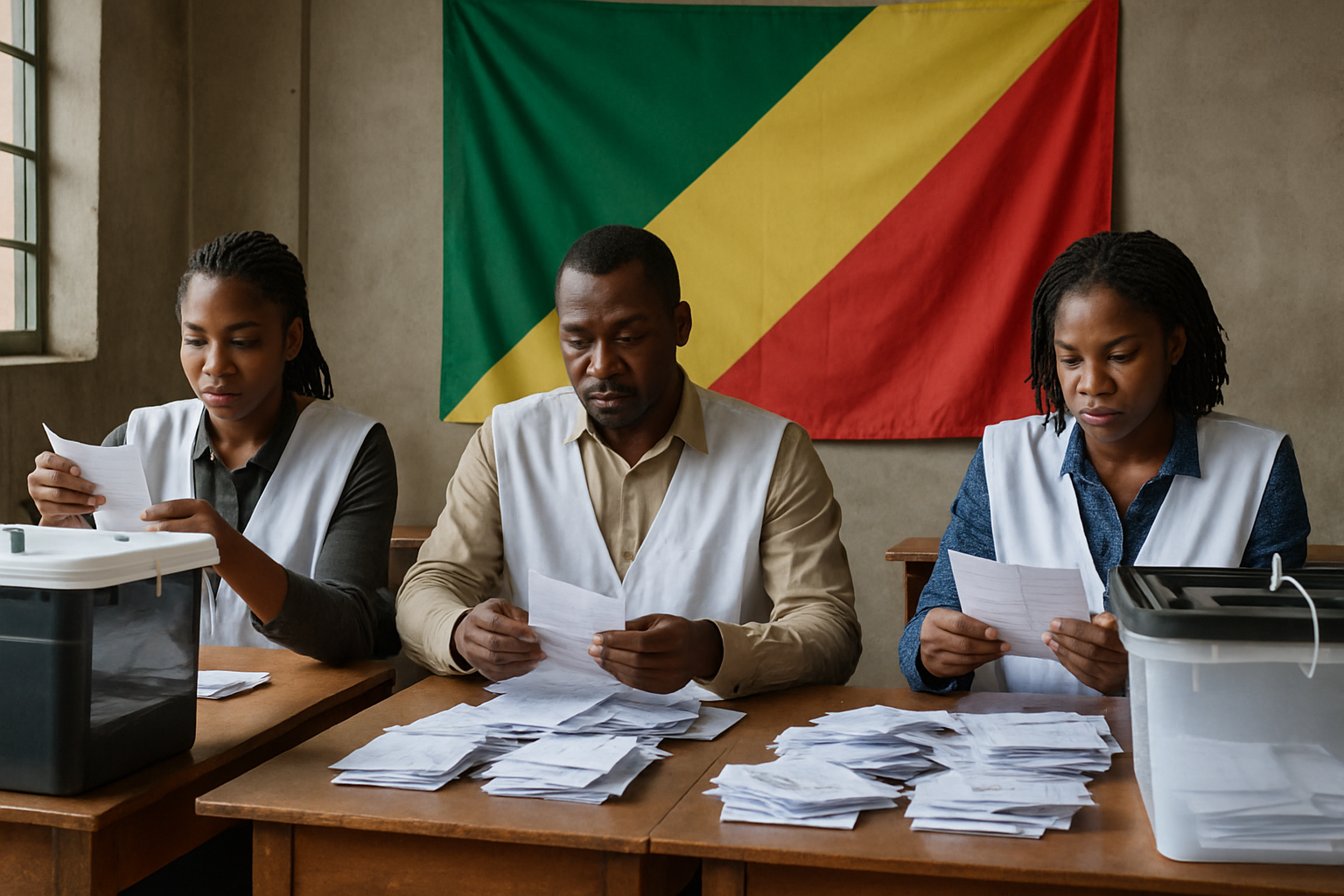
Vote counting has begun across the Republic of Congo following Sunday's presidential election, where 82-year-old President Denis Sassou N'Guesso seeks an unprecedented fifth consecutive term in power, extending his rule that spans over four decades.
Nearly 2.5 million registered voters were called to the polls on March 15, 2026, in an election that has drawn international attention for both its political significance and concerning reports of low voter turnout. Seven candidates competed in the uninominal two-round system, though the spotlight remained firmly fixed on the incumbent president, whom supporters affectionately call "the patriarch."
The Long March to Power
Denis Sassou N'Guesso first assumed power in 1997, marking the beginning of what would become one of Africa's longest-serving presidencies. His political career, however, stretches back even further – he previously governed Congo-Brazzaville from 1979 to 1992, making his total time in power span over four decades when including his current tenure.
Should he secure victory in this election, Sassou N'Guesso would cement his position among Africa's most enduring political figures, alongside leaders such as Paul Biya of Cameroon and Teodoro Obiang Nguema Mbasogo of Equatorial Guinea. This continuity reflects a broader pattern across the continent of long-serving African leaders maintaining their grip on power well into their advanced years.
Electoral Context and Turnout Concerns
Despite the high stakes, election observers noted a concerning pattern of low voter participation across polling stations. Multiple sources on the ground reported significantly reduced turnout compared to previous electoral cycles, raising questions about citizen engagement and the perceived legitimacy of the electoral process.
The incumbent's campaign has focused heavily on his track record of maintaining stability in a region often marked by political turbulence. Sassou N'Guesso's supporters point to Congo-Brazzaville's relative calm compared to neighboring nations as evidence of effective governance, while critics argue that decades of rule by the same individual stifles democratic development.
"The president has maintained peace and stability for over two decades. This continuity is what Congo needs in these uncertain times."
— Local Sassou N'Guesso supporter
Opposition Challenges and Democratic Space
While opposition parties attempted to mobilize their bases ahead of the election, they faced significant structural disadvantages. The political landscape in Congo-Brazzaville has been dominated by Sassou N'Guesso's Congolese Labour Party (PCT) for decades, with limited space for meaningful opposition activity.
The opposition's efforts to present a unified challenge were hampered by fragmentation and resource constraints. Despite these limitations, several candidates persevered in their campaigns, attempting to offer voters an alternative vision for the country's future.
Regional and International Implications
The election results carry significance beyond Congo-Brazzaville's borders. As Africa grapples with questions of democratic governance and peaceful transfers of power, the outcome will be closely watched by regional observers and international partners alike.
The African Union and other regional bodies have increasingly emphasized the importance of term limits and democratic transitions. However, enforcement of these principles remains inconsistent across the continent, with several leaders successfully extending their time in office through constitutional changes or electoral victories.
Economic and Development Challenges
Congo-Brazzaville, despite its oil wealth, faces significant economic challenges that the next administration will need to address. Youth unemployment remains high, and there are growing calls for economic diversification beyond the petroleum sector that has long dominated the national economy.
The country's development trajectory over the coming years will largely depend on how effectively the government can leverage its natural resources for broad-based economic growth. This election represents a critical juncture for determining whether Congo-Brazzaville can chart a more inclusive development path.
Historical Context of African Leadership
Sassou N'Guesso's potential fifth term reflects broader continental patterns regarding political longevity. Across Africa, numerous leaders have served for decades, often adapting constitutions or electoral systems to extend their tenure. This phenomenon raises important questions about democratic development and the institutionalization of peaceful power transfers.
The international community has generally moved toward supporting term limits as a cornerstone of democratic governance. However, the practical implementation of this principle varies significantly across African nations, with some countries successfully instituting regular leadership changes while others maintain long-serving administrations.
Vote Counting and Results Timeline
As vote counting proceeds across Congo-Brazzaville's polling stations, election officials are working to tabulate results from the Sunday ballot. The electoral commission is expected to announce preliminary results in the coming days, with final certification following standard verification procedures.
Given the potential for a second round if no candidate achieves an absolute majority, Congolese voters may return to the polls within weeks. However, most observers expect Sassou N'Guesso's extensive political machinery and incumbent advantages to deliver a first-round victory.
International Observer Presence
Various international organizations deployed election observation missions to monitor the electoral process. These observers will assess the technical conduct of the election, adherence to democratic standards, and overall credibility of the results.
Their findings will influence how the international community responds to the election outcome and may affect future diplomatic and development cooperation with whichever administration emerges victorious.
Looking Ahead: Congo's Future Direction
Regardless of the final results, this election represents a defining moment for Congo-Brazzaville's political trajectory. The winner will face the challenge of addressing citizen concerns about economic development, youth employment, and political participation while navigating an increasingly complex regional and international environment.
For President Sassou N'Guesso, a fifth-term victory would provide an opportunity to solidify his legacy while addressing critics who argue that fresh leadership is essential for national progress. For the opposition, the election serves as a crucial test of their ability to present viable alternatives and build the political infrastructure necessary for future electoral success.
The outcome will also influence broader discussions about democratic governance in Central Africa, where several nations are grappling with similar questions about leadership transitions and political renewal. As vote counting continues, Congo-Brazzaville stands at a crossroads that will shape its development for years to come.