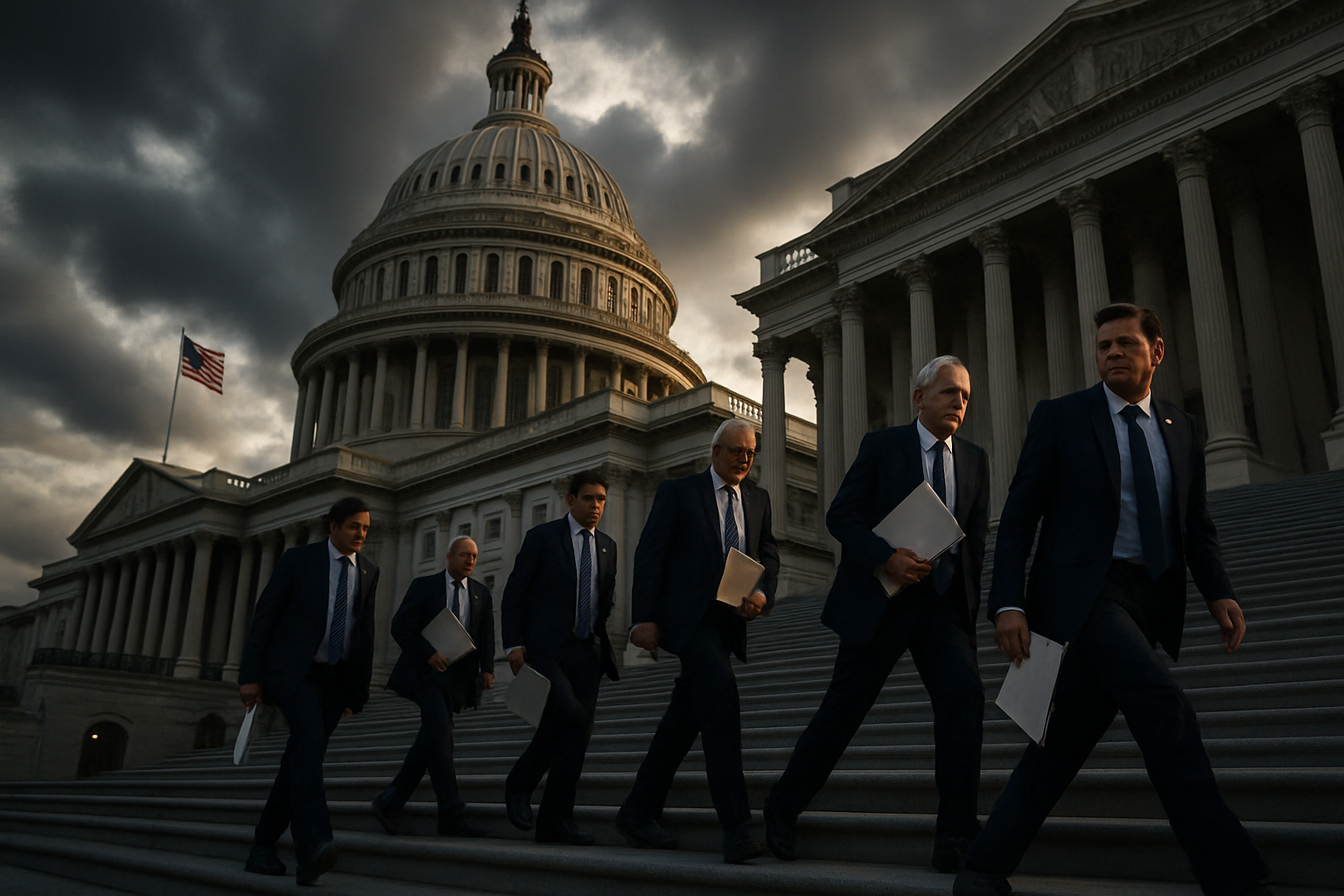
Democratic lawmakers have filed articles of impeachment against President Donald Trump over his Iran policy and escalatory rhetoric, while simultaneously demanding the immediate revocation of his war powers in what represents the most significant congressional challenge to his presidency since returning to office in January 2025.
Representative John Larson filed 13 articles of impeachment against Trump, citing his actions and threats against Iran as grounds for removal from office. The move comes amid mounting bipartisan concern over the president's handling of what has become the most dangerous international crisis since the Cold War ended.
"Donald Trump has blown past every requirement to be removed from office. And it's getting worse," Larson said in a statement announcing the impeachment articles. The Connecticut Democrat's action follows weeks of escalating tensions as Trump's Iran policy has drawn criticism from across the political spectrum.
Unprecedented Congressional Opposition
The impeachment filing represents just one facet of broader congressional resistance to Trump's Iran approach. Dozens of Democratic lawmakers have raised alarm over the president's increasingly inflammatory rhetoric toward Tehran, with many expressing concerns about potential war crimes and the targeting of civilian infrastructure.
According to sources from NPR and international media outlets, Democratic senators have voiced particular concern following classified briefings about the administration's Iran strategy. Senator Richard Blumenthal has repeatedly stated he is "more concerned than ever" about the prospect of ground troops being deployed to the region.
The congressional opposition has taken on added urgency as Operation Epic Fury, the largest U.S.-Israeli military operation since the 2003 Iraq invasion, has extended far beyond its initial 4-6 week timeline. Pentagon officials now project operations continuing through September 2026, with costs already exceeding $11.3 billion in the first week alone.
War Powers Resolution Challenge
Beyond the impeachment articles, congressional Democrats are pushing for immediate action to curtail Trump's military authority through the War Powers Resolution. The effort represents a direct challenge to executive authority during active military operations.
The push to limit Trump's war powers comes as public support for the Iran conflict has reached historically low levels. Recent polling shows only 25% of Americans support the military strikes against Iran, with 56% believing Trump is "too willing to use military force" - including nearly a quarter of Republican voters.
This unprecedented level of opposition to military action so early in a conflict reflects broader concerns about the president's decision-making process and the lack of clear objectives or exit strategy for the Iran engagement.
Trump Supporters Begin to Defect
Perhaps most striking has been the emergence of criticism from some of Trump's traditional supporters. Australian media reports indicate that even some of the president's "most ardent supporters have turned on him" over his Iran rhetoric.
Conservative media figures who typically align with Trump have begun expressing reservations about the administration's approach. The president's recent comment that "a whole civilization will die tonight, never to be brought back again" has been particularly controversial, drawing condemnation from religious leaders and foreign policy experts across the political spectrum.
The fracturing of Trump's base over foreign policy represents a significant political development, potentially complicating his ability to maintain support for sustained military operations.
International Diplomatic Crisis
The congressional opposition occurs against the backdrop of the most serious NATO diplomatic crisis since the alliance's formation. European allies have delivered a comprehensive rejection of Trump's requests for military support, with Germany's Defense Minister Boris Pistorius questioning what "a handful of European frigates" could accomplish that the powerful U.S. Navy cannot.
Spain has escalated its opposition by closing its airspace to U.S. military aircraft involved in Iran operations, going beyond previous denials of military base access. The move represents the most serious challenge to U.S.-European relations in decades and has prompted Trump to threaten cutting off all trade with Madrid.
These international tensions add weight to congressional arguments that Trump's approach is isolating America from its allies at a critical moment when international cooperation is essential.
Constitutional Crisis Deepening
The impeachment articles and war powers challenges represent more than routine political opposition. Constitutional scholars note that the combination of unprecedented international isolation, historically low public support, and escalating military commitments creates a template-setting moment for 21st-century governance.
The crisis tests fundamental questions about executive authority in foreign policy, congressional oversight responsibilities, and the balance of powers during military operations. Legal experts point to the 1973 War Powers Resolution's requirement for congressional authorization of military operations beyond 60 days, with current Pentagon projections extending well beyond that timeframe.
Danish and Italian reports suggest that the constitutional confrontation is being closely watched internationally as a test of American democratic institutions' ability to provide checks and balances on executive power during foreign crises.
Economic and Humanitarian Consequences
The congressional opposition has gained urgency as the economic and humanitarian costs of the Iran conflict continue to mount. The Strait of Hormuz remains closed due to Iranian mining operations, affecting 40% of global oil transit and pushing energy prices to crisis levels.
Aviation disruptions have reached COVID-scale proportions, with over 18,000 flights cancelled worldwide. The humanitarian toll includes confirmed civilian casualties, with Pentagon acknowledgment of an elementary school strike that killed between 165-185 students due to what officials described as "outdated targeting data."
These consequences have strengthened congressional arguments for immediate action to constrain presidential war-making authority and have provided additional justification for the impeachment effort.
Political Implications for 2026
The congressional resistance to Trump's Iran policy comes as the November 2026 midterm elections approach, adding electoral considerations to the constitutional crisis. Democratic lawmakers are positioning their opposition as defending both institutional norms and American interests against what they characterize as reckless presidential decision-making.
The historically low support for military action, combined with growing criticism from traditional Trump allies, suggests potential political vulnerabilities that could affect Republican candidates in competitive districts. The economic disruptions from the Iran crisis, including rising energy costs and supply chain disruptions, may further complicate the political landscape.
Serbian and other international sources note that the domestic political crisis is being viewed globally as a test of American democratic resilience during international emergencies.
Looking Forward
The impeachment articles filed by Representative Larson are unlikely to result in Trump's removal, given Republican control of the House and the high bar for Senate conviction. However, the effort serves as a formal statement of congressional disapproval and may influence future military policy decisions.
More immediately impactful may be the ongoing efforts to constrain Trump's war powers through legislative action. While such measures would likely face presidential veto, they represent growing institutional pressure on the administration to reconsider its Iran strategy.
The confluence of international isolation, domestic opposition, economic disruption, and constitutional challenges represents what UN Secretary-General António Guterres has called "the greatest test of multilateral cooperation in the modern era." How Congress navigates its oversight responsibilities while American forces remain engaged in the Middle East will likely establish precedents for executive-legislative relations that extend far beyond the current crisis.
As the Iran situation continues to evolve, congressional opposition appears likely to intensify, setting up a protracted political and constitutional battle over presidential authority in foreign policy that could reshape American governance for years to come.