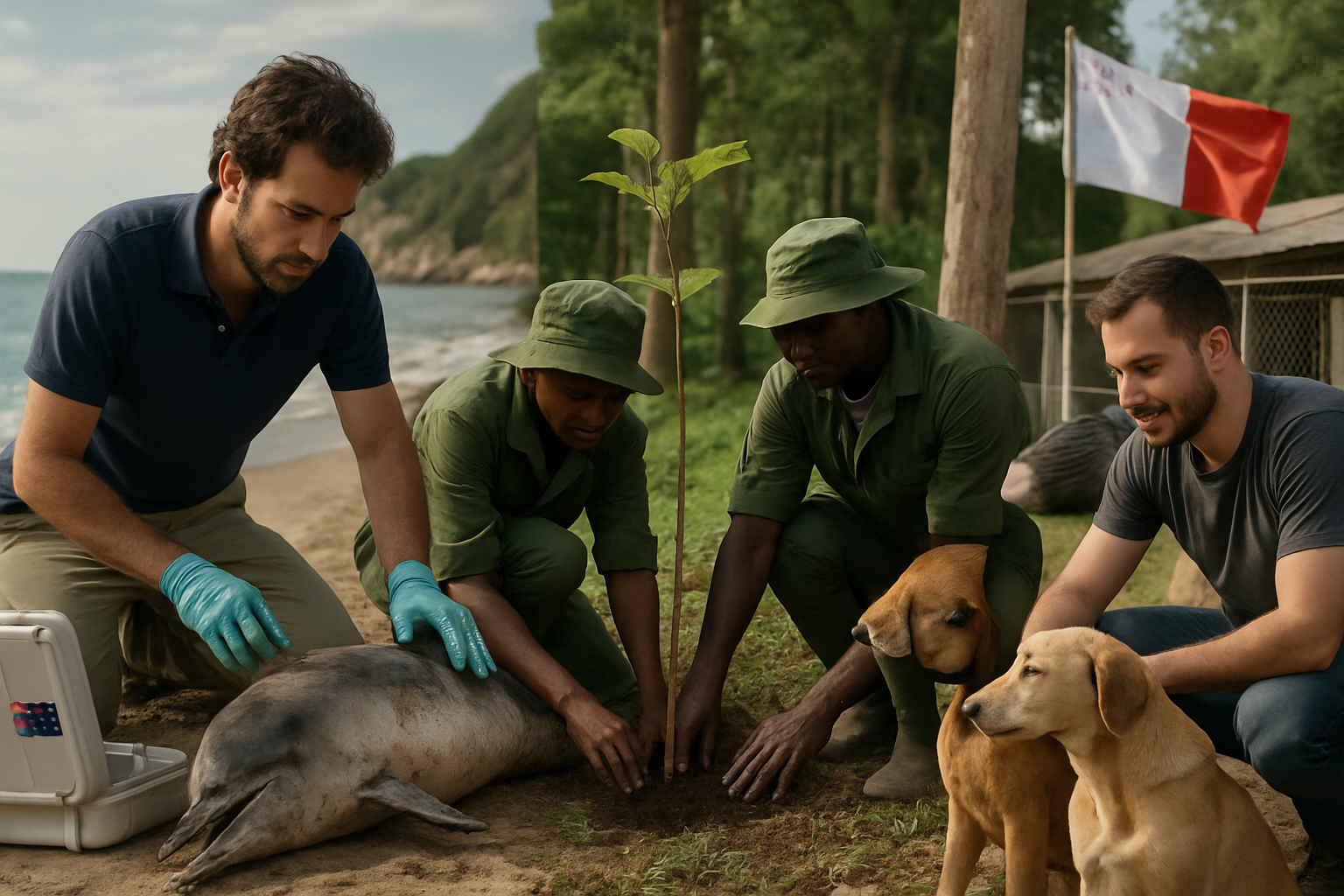
Croatia has officially declared its 13th nature park in the mountainous Zagorje region, while New Zealand celebrates the first shore plover fledgling born on Pitt Island in 150 years, and Uganda positions women at the forefront of environmental transformation—three developments that exemplify a global conservation renaissance during Earth's most environmentally challenging period.
These coordinated environmental initiatives emerge during the 19th consecutive month of global temperatures exceeding 1.5°C above pre-industrial levels, demonstrating that effective conservation is not only possible during climate crisis but essential for planetary sustainability. The convergence of these three distinct conservation approaches provides crucial insights into the evolution of 21st-century environmental protection strategies.
Croatia's Zagorske Gore: Europe's Newest Protected Landscape
On March 8, 2026, the Croatian Parliament adopted a decision that elevated the country's environmental protection profile significantly. The new Zagorske Gore (Zagorje Mountains) Nature Park encompasses pristine northern Croatian highlands, stretching across Krapina-Zagorje and neighboring counties to become the nation's 13th nature park alongside 8 national parks.
This achievement represents more than territorial expansion—it demonstrates Croatia's strategic commitment to ecosystem connectivity and biodiversity corridors. The timing proves particularly significant as European nations face mounting pressure to meet ambitious conservation targets amid accelerating climate change. Croatia's decision comes during a period when environmental protection increasingly functions as economic development infrastructure rather than regulatory burden.
"Croatia officially received its 13th nature park, and it's in Zagorje. It is called Zagorje Mountains (Zagorske gore), stretching through two counties."
— Croatian Parliament Declaration, March 2026
The Zagorje Mountains protection aligns with broader European conservation momentum documented throughout 2026, where nations have consistently demonstrated that environmental protection attracts sustainable investment, supports eco-tourism, and creates specialized employment opportunities. Croatia's approach integrates advanced monitoring technology with traditional ecological knowledge, positioning the country as a regional leader in sophisticated conservation methodologies.
New Zealand's Conservation Triumph: Shore Plover Recovery on Pitt Island
Perhaps no single conservation success story captures the power of persistent, science-based species recovery efforts like New Zealand's shore plover breakthrough. After 150 years of absence—eliminated by feral cats in the 1870s—the first shore plover fledgling has successfully hatched on Pitt Island, marking a historic milestone in one of the world's most intensive species reintroduction programs.
The shore plover (Thinornis novaeseelandiae) represents one of the world's rarest shorebirds, with fewer than 250 individuals remaining globally. New Zealand's systematic approach to species recovery demonstrates the sophisticated integration of genetic analysis, predator-proof sanctuary management, and community-based conservation that characterizes modern environmental protection.
This success builds on decades of meticulous conservation work, including the establishment of predator-free island sanctuaries, comprehensive breeding programs, and advanced monitoring systems using environmental DNA sampling and satellite tracking. The shore plover recovery exemplifies how coordinated conservation can achieve remarkable results even for critically endangered species when supported by sustained scientific commitment and community engagement.
New Zealand's broader conservation philosophy emphasizes precautionary approaches to environmental protection, as demonstrated by the recent rejection of seabed mining proposals and the implementation of comprehensive marine protected areas. This integrated strategy treating environmental protection as essential infrastructure has positioned New Zealand as a global leader in conservation innovation.
Uganda's Women-Led Environmental Revolution
In Uganda, a transformative narrative is unfolding that positions women as the driving force behind the country's environmental transformation. As the nation observes International Women's Day 2026 under the theme "Give to Gain," environmental analyst Jeremiah Nyagah highlights a crucial reality: women are already spearheading the environmental and economic transformation Uganda urgently requires.
Ugandan women serve as the backbone of agriculture and environmental stewardship, managing 75% of subsistence farming and playing critical roles in natural resource management across rural communities. Their traditional ecological knowledge, combined with innovative approaches to sustainable agriculture and conservation, positions them as essential leaders in climate adaptation strategies.
"Women are already leading the transformation our environment and economy urgently need. The question is whether we are doing enough to support them."
— Jeremiah Nyagah, Environmental Analyst
This recognition comes at a critical juncture when environmental challenges intersect with gender equality imperatives. Uganda's women have consistently demonstrated sophisticated understanding of ecosystem management, from wetland conservation to sustainable farming practices that maintain biodiversity while supporting community livelihoods.
The emphasis on women's environmental leadership reflects broader global patterns where community-based conservation shows superior long-term effectiveness compared to top-down regulatory approaches. Women's traditional roles in resource management, combined with contemporary environmental science, create powerful frameworks for sustainable development that addresses both immediate community needs and long-term environmental protection.
Technology-Tradition Integration: The New Conservation Paradigm
Across all three nations, successful conservation demonstrates a critical evolution: the sophisticated integration of cutting-edge technology with traditional ecological knowledge and community-based management. Croatia combines satellite monitoring and environmental DNA analysis with centuries of mountain forest stewardship. New Zealand employs genetic screening and predator detection technology alongside Māori environmental principles. Uganda integrates modern agricultural science with women's traditional resource management wisdom.
This synthesis represents a fundamental departure from the either-or approaches that characterized previous conservation eras. Modern environmental protection recognizes that technology alone cannot address complex ecosystem challenges spanning biological, physical, and human systems. Similarly, traditional practices, while invaluable, require enhancement through contemporary scientific tools to address unprecedented environmental pressures.
The success factors consistently identified across these three initiatives include community ownership and engagement, transparent governance frameworks, economic incentives that make conservation financially viable, and the integration of traditional ecological knowledge with modern conservation science.
Economic Development Through Environmental Protection
A striking commonality across Croatia, New Zealand, and Uganda is the recognition that environmental protection functions as economic development strategy rather than regulatory constraint. Croatia's new nature park enhances the country's eco-tourism appeal and positions it for sustainable investment. New Zealand's species recovery programs support a multi-billion-dollar conservation economy that includes eco-tourism, research partnerships, and environmental technology development. Uganda's women-led environmental initiatives create employment in sustainable agriculture, environmental services, and community-based conservation.
This economic dimension proves particularly crucial during the current climate crisis. Countries implementing comprehensive environmental protection consistently demonstrate greater economic resilience, attract sustainable investment, and develop adaptive capacity for climate change impacts. The environmental protection economy now encompasses sectors from green technology manufacturing to climate-adapted agriculture, creating millions of jobs globally.
Environmental degradation costs—including healthcare expenses from pollution, infrastructure damage from extreme weather, and tourism losses from ecosystem destruction—typically exceed investments required for proactive environmental protection. The comprehensive protection strategies demonstrated by Croatia, New Zealand, and Uganda provide templates for converting environmental challenges into economic opportunities.
Climate Context: Conservation During Planetary Emergency
These conservation achievements occur during an unprecedented period of global environmental stress. January 2026 marked the hottest month in recorded history, extending a remarkable streak of 19 consecutive months with temperatures exceeding 1.5°C above pre-industrial levels. This sustained warming demonstrates that human-induced climate change has fundamentally altered Earth's atmospheric systems beyond natural recovery mechanisms.
The persistence of extreme temperatures creates additional stress on vulnerable ecosystems while disrupting traditional conservation approaches. Species migration patterns shift, breeding cycles alter, and habitat boundaries change rapidly. Traditional seasonal management must adapt to unpredictable weather patterns and compound environmental effects.
Yet rather than discouraging conservation efforts, the climate emergency appears to be catalyzing innovative approaches. The conservation renaissance of 2026 demonstrates that environmental challenges, however severe, can stimulate human adaptive capacity and international cooperation when supported by appropriate policy frameworks, community engagement, and technological tools.
International Cooperation: Essential Infrastructure for Global Conservation
The success of conservation initiatives across Croatia, New Zealand, and Uganda highlights the critical importance of international cooperation frameworks. Environmental challenges cross political boundaries through ocean currents, atmospheric systems, and species migrations, making unilateral conservation efforts insufficient regardless of local dedication or resources.
Croatia benefits from European Union conservation networks, funding mechanisms, and shared expertise while contributing innovations that other member nations can adapt. New Zealand's species recovery programs rely on international research partnerships, genetic databases, and conservation technology developed through global collaboration. Uganda's women-led environmental transformation connects to international networks supporting community-based conservation and gender-inclusive environmental governance.
The diversity of approaches provides resilience against single-solution dependencies. Multiple conservation pathways—from mountain ecosystem protection to species reintroduction to community-based natural resource management—create comprehensive frameworks for addressing complex environmental challenges that no single methodology could address effectively.
International cooperation has evolved from traditional North-South aid relationships toward peer-to-peer knowledge sharing where developing nations emerge as environmental solution providers. Uganda's community-based approaches inform conservation strategies globally. New Zealand's predator-free island techniques support species recovery worldwide. Croatia's ecosystem connectivity models provide templates for European landscape conservation.
Implementation Challenges and Success Factors
Despite remarkable achievements, conservation initiatives face persistent implementation challenges that require sustained attention. Funding sustainability remains critical, particularly for developing nations where immediate economic pressures can override long-term environmental considerations. Technical capacity building requires sustained investment in education, training, and institutional development across multiple sectors.
Climate change disrupts project timelines and operational conditions, requiring adaptive management approaches that can respond rapidly to changing circumstances. Traditional conservation planning assumed relatively stable environmental conditions, but accelerating climate change demands flexible strategies that can adjust to unpredictable ecological shifts.
However, successful programs consistently demonstrate specific success factors. Community ownership and engagement proves essential—conservation initiatives fail without tangible local benefits and community participation in decision-making processes. Transparent governance frameworks ensure accountability to both local communities and international partners. Economic incentives must make conservation financially viable for local participants.
The integration of traditional ecological knowledge with modern conservation science creates culturally sensitive approaches that respect community autonomy while leveraging contemporary technological capabilities. This synthesis requires patience, cultural sensitivity, and sustained commitment to relationship-building across knowledge systems.
Strategic Significance: A Critical Juncture for Planetary Conservation
March 2026 represents a critical juncture for global environmental protection. The choice between reactive crisis management and proactive ecosystem service management may determine whether conservation efforts can keep pace with accelerating environmental change during this decisive climate action decade.
The environmental action window is narrowing rapidly as ecological systems approach critical thresholds that could trigger irreversible changes. However, the coordinated conservation initiatives across Croatia, New Zealand, and Uganda demonstrate that the tools, knowledge, and cooperation frameworks exist for comprehensive environmental protection if implemented with sufficient speed and coordination.
The conservation renaissance emerging in 2026 provides both warning and hope. Environmental challenges have reached unprecedented scales and complexity, but human adaptive capacity and international cooperation offer pathways for protecting essential environmental systems that human prosperity and planetary sustainability depend upon.
Success requires sustained international cooperation, enhanced multi-sector coordination, and increased financial commitments that recognize environmental protection as essential infrastructure rather than optional expenditure. The window for effective action continues narrowing, but the experiences of Croatia, New Zealand, and Uganda provide practical templates for scaling environmental protection efforts globally.
Future Implications: Scaling the Conservation Renaissance
The coordinated environmental initiatives of March 2026 may prove decisive in determining the trajectory of global environmental protection for decades ahead. These three case studies provide practical demonstrations that effective conservation is achievable across diverse geographic, economic, and cultural contexts when supported by appropriate policy frameworks, community engagement, and international cooperation.
Croatia's nature park expansion demonstrates that even economically constrained European nations can implement ambitious conservation programs that enhance rather than compromise economic competitiveness. New Zealand's species recovery success proves that apparently hopeless conservation challenges can be addressed through sustained scientific commitment and innovative approaches. Uganda's women-led environmental transformation shows that community-based conservation can drive broader economic and social development.
The implications extend far beyond these three nations. The conservation methodologies, policy frameworks, and international cooperation mechanisms developed through these initiatives create templates that other countries can adapt to their specific contexts. The synthesis of traditional knowledge and contemporary technology offers approaches that respect cultural autonomy while leveraging global scientific capabilities.
Perhaps most significantly, the conservation renaissance of 2026 demonstrates that environmental protection during climate crisis is not only possible but can become a catalyst for broader social, economic, and technological innovation. The challenge now lies in scaling these approaches rapidly enough to address environmental changes that continue accelerating despite conservation successes.
The future trajectory of global environmental protection may well depend on whether the international community can build upon the foundations established by initiatives like those in Croatia, New Zealand, and Uganda, transforming isolated conservation successes into coordinated global action matching the scale and urgency of planetary environmental challenges.