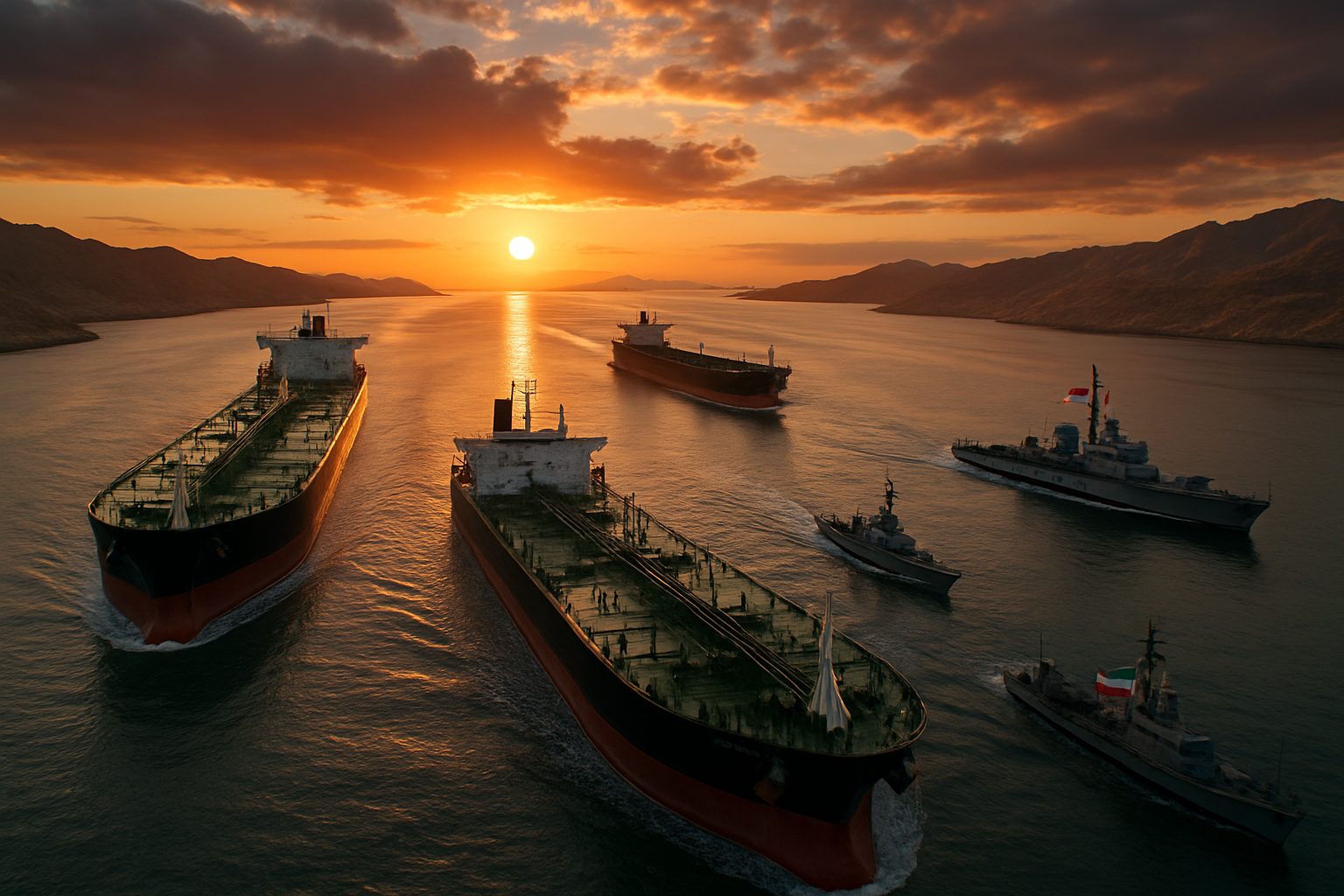
Multiple container vessels remain stranded in the strategic Strait of Hormuz as US naval forces begin unprecedented mine clearance operations in the 21-mile waterway that handles 40% of global oil transit, marking the latest development in an ongoing maritime crisis that has disrupted international shipping for weeks.
US warships have successfully begun transiting the strait as part of what President Trump described as clearing operations, telling allies that American forces are working to reopen the critical chokepoint "as a favor to countries all over the world." The President claimed via social media that "all of Iran's minelaying ships have been sunk and are lying at the bottom of the sea," though Iranian officials dispute these assertions.
Filipino Shipping Industry Sounds Alarm
The crisis has particularly impacted Philippine shipping operations, with Association of International Shipping Lines (ASIL) president Patrick Ronas reporting that approximately 130 container ships are trapped within the strait, with very few able to navigate through safely.
"Aside from that, you also have your general cargo ships and a few tankers that will have to maneuver or find a way as to how they get out of that strait," Ronas told the Senate agriculture panel on Wednesday.
The shipping executive explained that vessels carrying Philippine exports face significant risks of not reaching their destinations due to the maritime security situation. "Because of the vessels being trapped in the strait, a diversion of services is being done, reassessment of the network is also being done, as well as containers being offloaded to other ports," he said.
US Military Operations Escalate
American naval operations have intensified dramatically, with Trump describing the mission as setting conditions to clear the waterway. US forces report destroying multiple Iranian mine-laying vessels, though the exact number remains disputed between American and Iranian accounts.
The crisis stems from Iran's Revolutionary Guard deployment of an estimated 2,000-6,000 naval mines throughout the strategic waterway since March 2026, effectively creating what experts describe as a "toll booth" regime requiring coordination with Iranian authorities for vessel passage.
"We're now starting the process of clearing out the Strait of Hormuz as a favor to countries all over the world."
— Donald Trump, US President
Global Economic Impact
The ongoing crisis has triggered the most severe energy disruption since the 1970s oil shocks. Oil prices have surged past $100 per barrel for the first time since 2022, with Brent crude reaching peaks of $119.50 and WTI hitting record single-day jumps of 18.98% to $108.15.
The International Energy Agency has deployed its largest strategic petroleum reserve release in 50 years, releasing 400 million barrels from 32 countries to stabilize global markets. Japan has contributed 80 million barrels from its reserves, marking its first major deployment since the 2011 Fukushima disaster.
Aviation has been equally affected, with over 18,000 flights cancelled worldwide – the most extensive disruption since the COVID-19 pandemic. Eight Middle Eastern countries have maintained simultaneous airspace closures, creating what analysts describe as an "aviation black hole" severing critical Europe-Asia flight corridors.
Diplomatic Breakdown Context
The maritime crisis emerged following the complete collapse of US-Iran nuclear negotiations, despite what diplomats described as a "broad agreement on guiding principles" achieved in Geneva talks – the most progress since the 2018 JCPOA breakdown.
The diplomatic framework crumbled over fundamental disagreements about scope, with Iran excluding ballistic missiles and proxy groups as "red lines," while the US demanded comprehensive coverage including armed groups and human rights issues. This led to Operation Epic Fury, the largest coordinated US military operation since 2003, followed by Iranian retaliation through the strait closure.
Regional Coalition Under Strain
The crisis has severely tested regional alliances, with the unprecedented Saudi-UAE-Qatar-Egypt diplomatic consensus under strain due to Iranian retaliation targeting coalition member territories. Egypt's President Sisi has condemned attacks on "sisterly countries" while warning of "comprehensive chaos" spreading across the region.
The UAE reported one civilian killed in Abu Dhabi, Kuwait suffered 32 injured in airport strikes, and Qatar sustained eight wounded while intercepting 65 missiles and 12 drones with Patriot defense systems. The attacks represent the most direct challenge to regional security architecture in decades.
European Security Implications
In an unprecedented escalation, Iranian drones struck RAF Akrotiri in Cyprus – marking the first attack on European territory since World War II. This prompted an immediate multinational naval response, with HMS Dragon leading British forces alongside Spanish, Italian, French, Dutch, and Greek vessels in the largest European maritime coalition deployment in decades.
The European Union activated its ESTIA crisis mechanism for the first time in the bloc's history, coordinating the evacuation of Cyprus and demonstrating how the Middle Eastern crisis has expanded beyond regional boundaries to directly affect European security.
Mine Clearance Challenges
Military analysts note that mine clearance operations in the Strait of Hormuz present extraordinary technical challenges. The 21-mile waterway, with depths ranging from 27 to 170 meters, contains an estimated 2,000-6,000 mines deployed by Iran's Revolutionary Guard using small vessels and coastal positions.
Iran lacks sufficient mine-clearing capabilities to rapidly neutralize the explosives it has deployed, while US forces face the complex task of clearing mines in one of the world's busiest shipping lanes without disrupting the maritime traffic they aim to restore.
Economic Architecture Vulnerabilities
The crisis has exposed catastrophic vulnerabilities in global energy architecture, with the narrow Strait of Hormuz representing a single-point failure in modern logistics systems. The waterway's closure affects not only energy supplies but also consumer goods, industrial materials, and manufacturing supply chains worldwide.
Major shipping companies Maersk and MSC have suspended Persian Gulf operations entirely, with over 150 oil and LNG tankers stranded, representing billions of dollars in cargo value. Alternative routing through the Arabian Peninsula lacks adequate capacity and involves significant time and cost penalties.
Template-Setting Crisis
UN Secretary-General António Guterres has described the situation as "the greatest test of multilateral cooperation in the modern era," highlighting how the crisis affects regional war prevention, global energy security, nuclear governance credibility, and international law enforcement simultaneously.
The maritime emergency occurs against the backdrop of broader nuclear governance challenges, including the February 2026 expiration of the New START treaty – the first time in over 50 years without US-Russia nuclear constraints – and Iran's continued uranium enrichment to 60% purity with over 400 kilograms of weapons-grade material.
Recovery Timeline Uncertain
Unlike weather-related disruptions, the recovery timeline for Strait of Hormuz operations depends entirely on military and diplomatic developments rather than predictable factors. Aviation industries cannot engage in long-term scheduling while security remains volatile, and energy markets continue experiencing unprecedented volatility with critical transit routes blocked.
Expert analysis suggests that traditional monetary policy has limited effectiveness against structural geopolitical disruptions of this magnitude, with financial markets serving as "the ultimate constraint" on prolonged conflict escalation.
Long-Term Implications
The crisis represents a watershed moment requiring fundamental transformation of global energy security planning to reduce dependence on strategic chokepoints. While strategic petroleum reserves have provided temporary stability, the underlying vulnerability of critical supply routes necessitates years or decades of supply diversification and renewable energy transitions.
Success in containing the crisis could provide a framework for 21st-century nuclear dispute resolution, strengthening diplomatic precedents for future conflicts. Failure risks accelerating military solutions over diplomatic approaches, potentially encouraging nuclear proliferation globally while undermining international diplomatic credibility.
As mine clearance operations continue and diplomatic efforts persist through Pakistan mediation, the Strait of Hormuz crisis remains the most dangerous international confrontation since the Cold War's end, with implications extending far beyond current events to shape international conflict resolution approaches for decades to come.