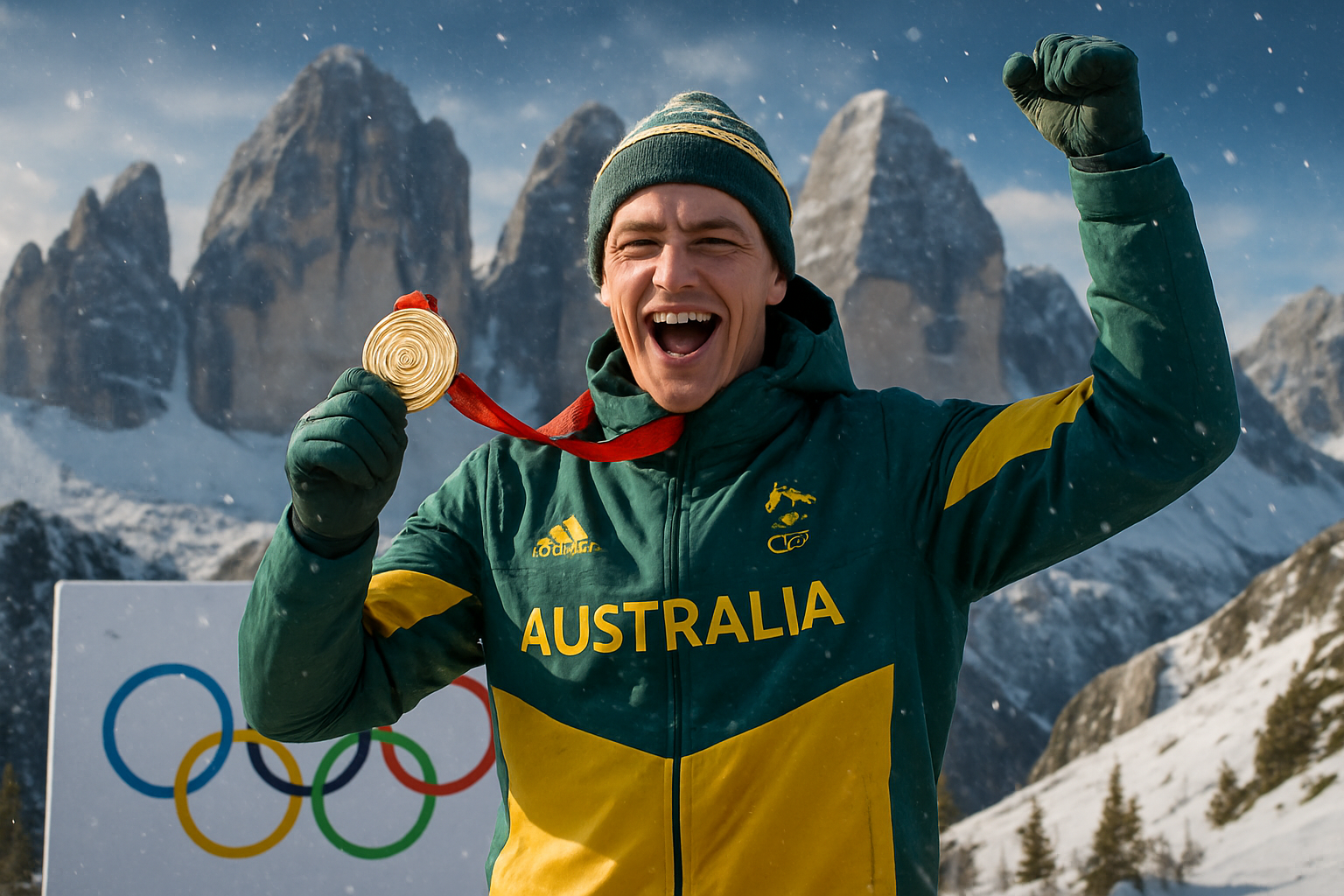
Cooper Woods has delivered Australia's first gold medal at the Milano Cortina 2026 Winter Olympics, claiming a stunning victory in men's moguls skiing that has elevated the 25-year-old to instant national hero status and marked a watershed moment for Australian winter sports.
Competing at Livigno Snow Park on February 12, Woods delivered a masterful performance to defeat defending two-time Olympic champion Mikaël Kingsbury of Canada, who settled for silver, while Japan's Ikuma Horishima claimed bronze. The victory represents not only a personal triumph for Woods but a historic achievement that places Australia ahead of winter sports powerhouses Canada and China on the official Olympic medal tally.
A Career-Defining Performance
Woods rose to the occasion against an elite field that included some of the greatest moguls skiers in Olympic history. His victory came after what observers described as an "insane" super final at the Livigno venue, where the Australian demonstrated the technical precision and aerial mastery that has made him one of the sport's rising stars.
The 25-year-old's triumph was particularly remarkable given the caliber of his competition. Kingsbury, widely regarded as the greatest moguls skier of all time with two Olympic gold medals and multiple World Cup titles, entered the competition as the heavy favorite. Horishima, meanwhile, represented Japan's formidable moguls tradition and was considered a strong medal contender.
"This is something you dream of your whole life, representing Australia and to do it on the biggest stage in winter sports - it's incredible."
— Cooper Woods, Olympic Champion
Australia's Winter Sports Breakthrough
Woods becomes only the seventh Australian ever to win Winter Olympic gold, joining an exclusive club that includes alpine skiing champion Alisa Camplin-Warner, who welcomed Woods to the "gold medal club" following his victory. The achievement represents a significant breakthrough for Australian winter sports, demonstrating the nation's growing competitiveness in disciplines traditionally dominated by Northern Hemisphere countries.
The victory was celebrated across Australia, with particular enthusiasm at the Pambula Top Pub, Woods' hometown venue, where supporters had gathered to watch his qualifying runs. The pub's crowd had provided emotional inspiration for Woods' path to the final, highlighting the grassroots support that has fueled his Olympic journey.
Former Wallabies captain John Eales, who has served as Woods' mentor, was among those celebrating the historic achievement. The connection between Australia's rugby union legend and the moguls champion exemplifies the cross-sport support that has characterized Woods' development.
Olympic Drama Across Multiple Disciplines
Woods' gold medal was part of a dramatic day of competition across the Milano Cortina 2026 Games, which continue to showcase the success of the most geographically dispersed Winter Olympics in history. The dual-city hosting model, spanning over 400 kilometers across northern Italy's spectacular alpine venues, has proven viable despite initial logistical concerns.
The day also featured significant developments in other sports, including ice hockey action where Latvia faced the United States in Group C competition. The Latvians, despite protests over disputed goals in the first period, ultimately fell 1-5 to the star-studded American lineup, highlighting the global reach and competitive depth of these Games.
In short track speed skating, the Netherlands' Xandra Velzeboer captured gold in the women's 500m, while Italy's Arianna Fontana added to her legendary medal collection with silver, claiming her 13th Olympic medal - just one short of the all-time record.
Technical Excellence and Global Competition
The moguls competition exemplified the technical evolution of freestyle skiing, where athletes must navigate a challenging course featuring moguls (bumps) while performing aerial maneuvers and maintaining speed. Woods' victory demonstrated mastery across all elements - technical skiing through the moguls, amplitude and execution in aerial sections, and the speed necessary to compete at the highest level.
The global nature of the podium - featuring athletes from Australia, Canada, and Japan - reflects the international expansion of winter sports beyond traditional European and North American strongholds. This democratization has been a hallmark of the Milano Cortina Games, with breakthrough performances emerging from nations across multiple continents.
Challenges and Controversies
The Milano Cortina Games have not been without controversy, including reports of medal quality issues where Olympic medals have been detaching from ribbons and suffering damage during athlete celebrations. Organizers have acknowledged the manufacturing defects and promised comprehensive investigations and repairs for affected athletes.
Additionally, the Games have faced infrastructure challenges, including incomplete cable car systems in the Cortina region and power outages affecting some venues. However, competition has proceeded successfully across the revolutionary dual-city hosting model, which represents a new paradigm for sustainable Olympic hosting.
Looking Ahead
Woods' victory positions him as a face of Australian winter sports' future, with his breakthrough performance likely to inspire a new generation of athletes in a nation where winter sports participation has historically been limited by geographic and climatic factors. At 25, Woods is entering his prime competitive years, suggesting potential for continued success on the international stage.
The Milano Cortina 2026 Games continue through February 22, with competition across 16 sports featuring nearly 3,000 athletes from 92 countries. The Games have successfully integrated advanced technology, including AI-powered broadcasting systems and sustainable hosting practices, while maintaining the Olympic values of athletic excellence and international cooperation.
For Australia, Woods' gold medal represents more than individual achievement - it symbolizes the nation's growing winter sports ambitions and the global democratization of Olympic competition. As celebrations continue from the Italian Dolomites to the pubs of Pambula, Cooper Woods has secured his place in Australian sporting history while inspiring dreams of future Winter Olympic success.