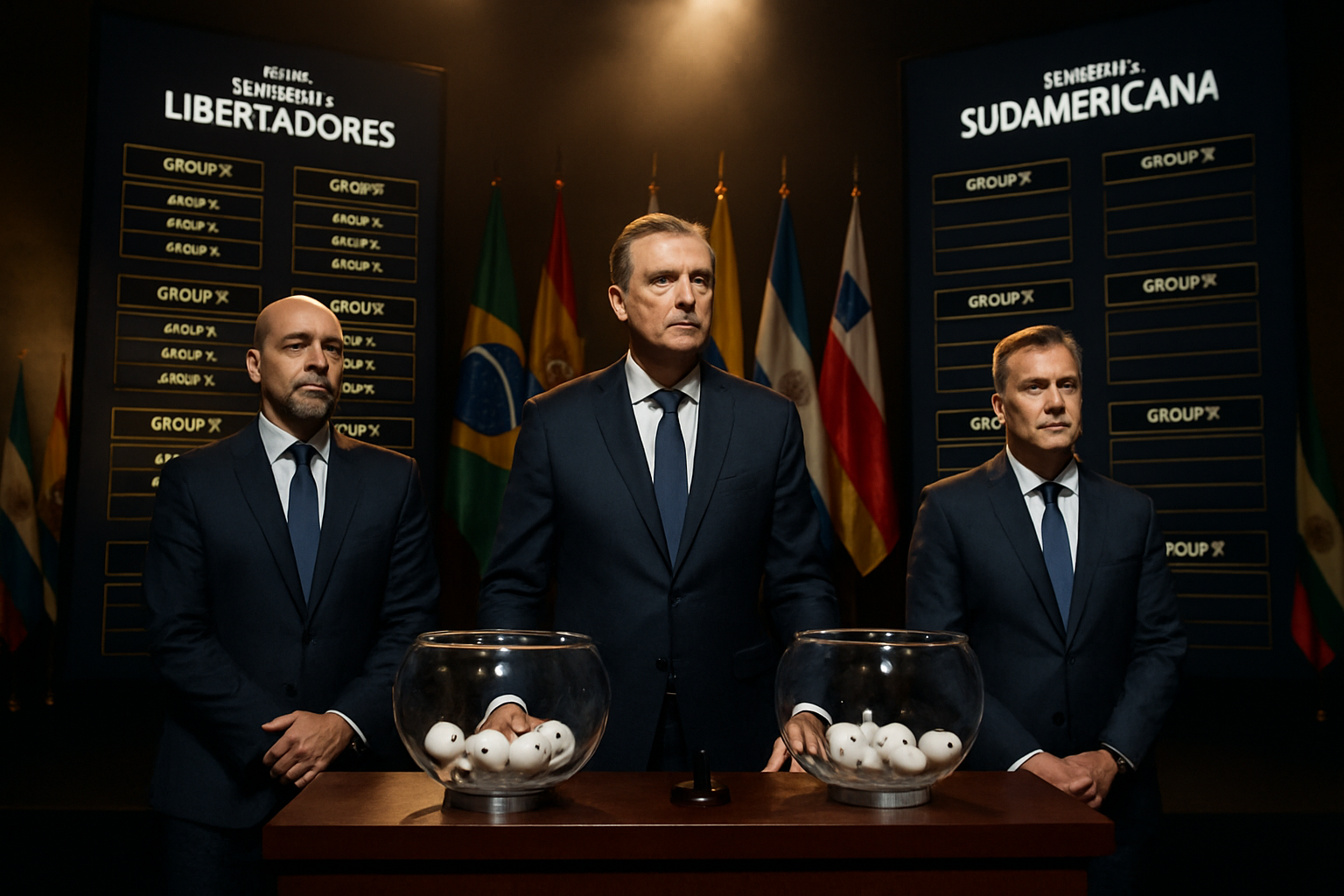
CONMEBOL has dramatically increased prize money for the 2026 Copa Libertadores and Sudamericana tournaments, with champions set to receive $25 million and $10 million respectively, as Thursday's group stage draws revealed challenging paths for several South American clubs.
The announcement, made by CONMEBOL President Alejandro Domínguez during the draw ceremony at the confederation's headquarters, represents a substantial investment in South American football's premier continental competitions. The prize increase reflects the growing commercial value and global reach of these tournaments, which have become increasingly competitive and prestigious over recent years.
Bolivian Clubs Face Challenging Group Stage Draw
The draw ceremony, conducted by former players Felipe Melo of Brazil and Argentina's 1986 World Cup champion Óscar Ruggeri, revealed both opportunities and challenges for the participating clubs. Ruggeri, reflecting on the tension of the moment, noted that "it's better to be on the pitch than at the draws, here there's more nerves and tension."
Bolívar, one of Bolivia's most prestigious clubs and historically ranked among the top 10 teams in Copa Libertadores history, was drawn into Group C alongside Brazilian powerhouse Fluminense FC, Venezuelan side Deportivo La Guaira, and Argentine club Independiente Rivadavia. The group presents both challenges and opportunities for the Bolivian champions, who will need to leverage their continental experience to secure advancement to the knockout stages.
Always Ready, representing El Alto, received a demanding Group G assignment facing Liga Deportiva Universitaria de Quito from Ecuador, Argentine side Lanús, and Brazilian newcomers Mirassol. The "Millonario" will begin their campaign at home against Liga de Quito between April 7-9, followed by consecutive away fixtures that could prove decisive for their tournament hopes.
Sudamericana Assignments Present Equal Challenges
In the Copa Sudamericana, Bolivian representation faces equally demanding assignments. Blooming was placed in Group H alongside the legendary River Plate of Argentina, Red Bull Bragantino from Brazil, and Venezuela's Carabobo FC. The cruceño team will have the honor of hosting River Plate in their opening match, presenting both an opportunity and significant test against one of South America's most successful clubs.
"This is a group with famous rivals like the Brazilian [Fluminense] and respectable ones like the others; however, the Academy can make its pedigree count and impose its power to achieve passage to the round of 16."
— La Razón sports analysis on Bolívar's chances
Independiente completes the Bolivian contingent in Sudamericana Group E, where they will face Racing Club of Argentina, Caracas FC from Venezuela, and Botafogo of Brazil. The "Matador" will have the opportunity to face Racing Club, managed by Gustavo Costas, the former coach of Bolivia's national team, adding an intriguing subplot to the competition.
Tournament Format and Schedule
The group stage will commence in early April, with matches scheduled between April 7-9 for the opening round. The tournament format maintains its traditional structure, with the top two teams from each group advancing to the knockout stages. The increased prize money structure creates additional incentives for clubs to invest in their squads and pursue deeper tournament runs.
For Copa Libertadores, the tournament structure includes significant financial rewards at each stage, culminating in the historic $25 million prize for the champion. The Sudamericana, while offering a smaller but still substantial $10 million top prize, provides crucial opportunities for clubs to gain international experience and financial resources for squad development.
Historical Context and Continental Significance
These tournaments represent the pinnacle of South American club football, with Copa Libertadores being equivalent to Europe's Champions League in prestige and importance. Bolívar's inclusion among the historically top 10 teams in Copa Libertadores demonstrates the club's continental pedigree and ambitions for the 2026 edition.
The presence of traditional powerhouses like River Plate, Fluminense, and Racing Club in the draw underscores the competitive nature of both tournaments. These established clubs bring decades of continental experience and substantial resources, creating challenging environments for emerging clubs and those from smaller footballing nations.
The tournament structure also provides opportunities for clubs from different South American countries to test themselves against varied playing styles and tactical approaches. Venezuelan clubs like Deportivo La Guaira and Carabobo FC represent the growing strength of football in that nation, while Brazilian participation continues to demonstrate the depth and quality of their domestic league system.
Prize Money Impact on South American Football
The substantial increase in prize money reflects CONMEBOL's commitment to elevating the profile and competitiveness of South American football. The $25 million Copa Libertadores prize represents one of the largest rewards in continental club competition globally, potentially enabling winners to retain top talent and attract international players.
For clubs like Bolivia's representatives, strong tournament performances could provide crucial financial resources for infrastructure development, youth academy investments, and squad strengthening. The television revenue and commercial opportunities associated with deep tournament runs can be transformative for clubs from smaller markets.
Looking Ahead to April
As teams prepare for the April kick-off, the draw results create multiple compelling storylines across both tournaments. Always Ready's consecutive away fixtures in April against Lanús and Mirassol will test their squad depth and adaptability, while Blooming's opening match against River Plate offers an immediate opportunity to make a statement on the continental stage.
The tournaments will unfold against the backdrop of South American football's continued evolution, with clubs balancing domestic league commitments against continental aspirations. The increased prize money creates additional pressure but also greater rewards for success, potentially raising the overall quality of competition across both tournaments.
With the group stage set to begin in just weeks, teams will be finalizing their tactical preparations and squad adjustments for what promises to be one of the most financially significant editions of these prestigious South American competitions. The combination of traditional powerhouses and ambitious challengers, enhanced by record prize money, sets the stage for compelling football drama across the continent.