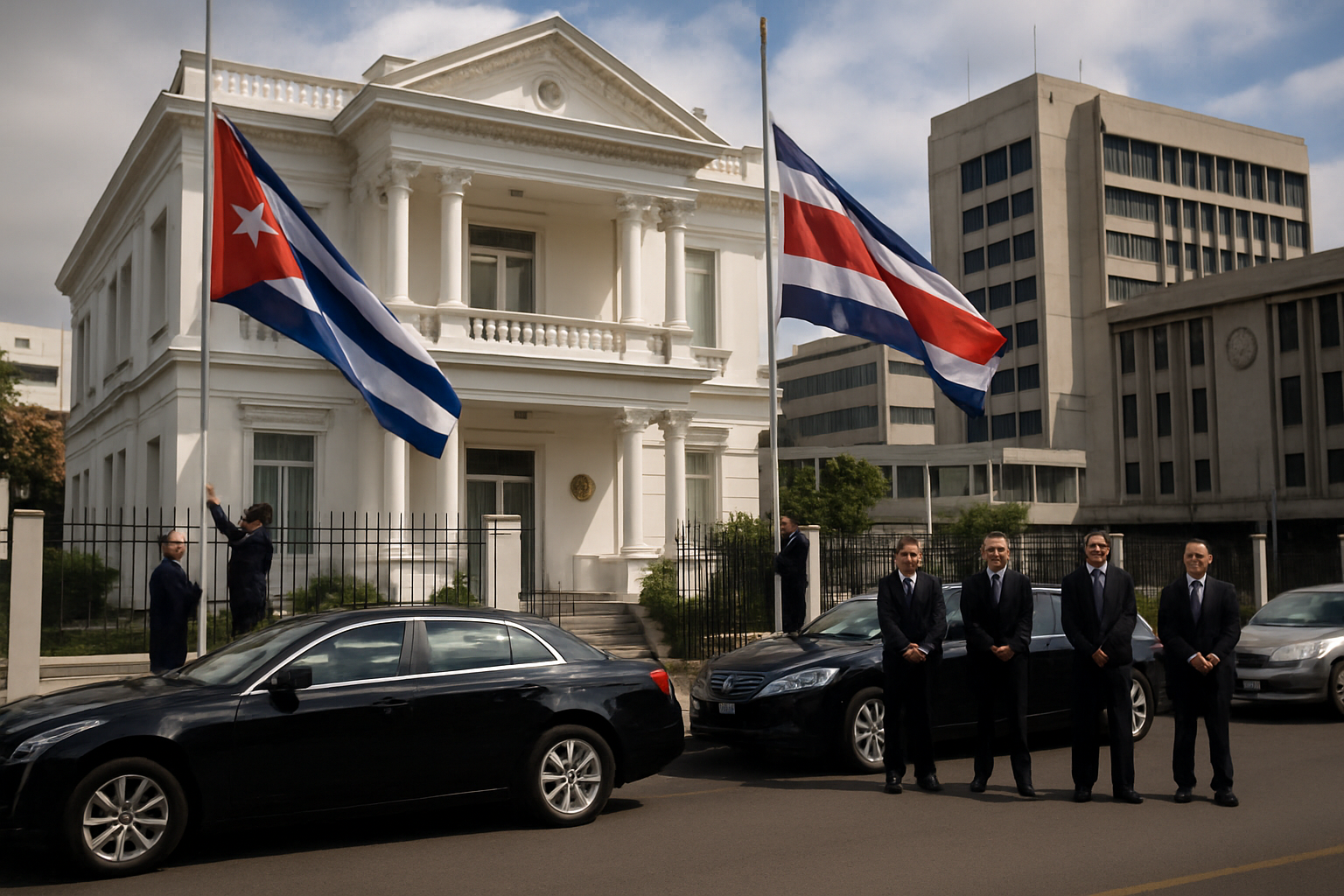
Costa Rica announced Wednesday the closure of its embassy in Havana and formally requested Cuba to withdraw its diplomatic personnel from San José, marking a significant rupture in bilateral relations as the island nation faces its worst humanitarian crisis since the 1990s Special Period.
Foreign Minister Arnoldo André communicated the decision during the weekly Casa Presidencial conference on March 18, linking the diplomatic break to Cuba's deteriorating political and social situation. The move makes Costa Rica the second Latin American country in recent weeks to escalate from verbal criticism to concrete diplomatic action against the Cuban government.
Diplomatic Justification and Timeline
André cited the "worsening of restrictions on fundamental freedoms" in Cuba, specifically highlighting limitations on freedom of expression, association, and peaceful demonstration. The foreign minister referenced various reports from international organizations and civil society testimonies documenting harassment and pressure against critics of the Cuban regime.
The decision comes as Cuba experiences unprecedented infrastructure collapse, with the National Electric System suffering its sixth major blackout since late 2024, affecting over 10 million inhabitants. The island has been under complete aviation isolation, with zero jet fuel available at all airports from February 10 through March 11, forcing the evacuation of over 25,000 foreign tourists.
Costa Rica will maintain consular services, allowing for continued assistance to Costa Rican citizens in Cuba and basic administrative functions. However, full diplomatic relations between the two nations are now severed.
Regional Diplomatic Realignment
The Costa Rican decision follows Ecuador's March 5 expulsion of Cuban Ambassador and 22 embassy officials, giving them a 48-hour deadline to leave the country. Both moves reflect a broader regional reassessment of relationships with Cuba amid the island's deepening economic and political crisis.
Cuba's Foreign Ministry has not yet issued an official response to the Costa Rican announcement, but earlier responses to similar diplomatic actions have characterized them as following U.S. pressure campaigns. The Cuban regime previously denounced Costa Rica's "historic subordination to United States policy" when addressing regional criticism.
The timing of these diplomatic breaks coincides with Cuba experiencing what international observers have characterized as a "deliberately engineered humanitarian emergency" through comprehensive economic pressure campaigns that have achieved near-total energy supply severance.
Cuba's Unprecedented Crisis Context
Cuba's current crisis exceeds the severity of the 1990s Special Period through systematic rather than external collapse. The island faces critical oil reserves lasting only 15-20 days, with domestic production having collapsed from 3 million to 700,000 barrels daily. Venezuelan crude shipments have been completely halted, and Mexico suspended petroleum deliveries despite humanitarian concerns.
The humanitarian impact has been devastating. Fifty-one percent of Cuba's population (approximately 5.5 million people) experience scheduled blackouts, while emergency measures include four-day government work weeks, hospital surgery suspensions, and the closure of 90% of gas stations. The healthcare system faces particular strain with medical evacuation capabilities eliminated and power outages threatening critical equipment and medicine storage.
"The situation has reached a level of humanitarian concern that cannot be ignored by the international community."
— Senior diplomatic source, speaking on condition of anonymity
Tourism, traditionally a crucial economic lifeline, has collapsed entirely. Major international hotel chains including Meliá, Iberostar, and Blue Diamond have closed their Varadero and northern coast facilities. Canada issued its second-highest travel warning, classifying Cuba under "serious and potentially life-threatening risks."
Civil Unrest and Government Response
The crisis has sparked unprecedented civil unrest, including the historic storming of Communist Party headquarters in Morón, Ciego de Ávila, on March 13-14. Protesters chanted "¡Libertad!" (Freedom!) while burning party materials, marking the first successful attack on a major party facility since the 1959 revolution.
The Cuban government has shifted its priorities to "defense of internal order," acknowledging the severity of domestic tensions. Widespread "cacerolazos" (pot-banging protests) have spread across multiple cities, representing the most significant domestic challenge to government authority in decades.
International Response and Diplomatic Isolation
The international community remains divided on how to respond to Cuba's crisis. Russia has condemned what it terms "economic strangulation" and pledged oil aid, though no specific timeline or volumes have been provided. China has demanded the cessation of pressure campaigns, while European officials have expressed concern about collective punishment affecting civilian populations.
Mexico maintains humanitarian assistance, deploying naval vessels carrying 814 tons of supplies, but has suspended oil shipments to avoid economic retaliation. Former UK Labour leader Jeremy Corbyn has announced an international flotilla challenging what he characterizes as an illegal blockade.
The diplomatic isolation extends beyond recent embassy closures. Cuba's aviation crisis forced the cancellation of high-profile international engagements, including Cuban bishops' meetings with Vatican officials and the Festival del Habano, further limiting the country's international connections.
Strategic Implications for Regional Relations
Costa Rica's diplomatic break represents more than bilateral tensions; it signals a potential realignment of Latin American foreign policy toward Cuba. The decision tests regional solidarity principles that have traditionally guided Caribbean and Central American approaches to the island nation.
The move also reflects the challenging balance many regional governments face between ideological sympathy for Cuba's sovereignty and practical concerns about human rights and humanitarian conditions. Costa Rica's historically moderate foreign policy approach makes this diplomatic rupture particularly significant.
For Cuba, losing diplomatic relations with Costa Rica eliminates another avenue for international engagement during a period when the government desperately needs foreign support and investment to address its economic crisis.
Looking Forward: Diplomatic Resolution Prospects
The restoration of Costa Rica-Cuba diplomatic relations will likely require significant changes in Cuba's domestic situation and international positioning. Foreign Minister André indicated that the decision was not taken lightly and reflected sustained concerns about human rights and political freedoms that have only intensified during the current crisis.
The international community faces a complex challenge in responding to Cuba's situation, balancing humanitarian concerns with diplomatic and political considerations. The coming weeks will be critical in determining whether diplomatic engagement can provide pathways out of the crisis or if Cuba faces sustained isolation.
As Cuba enters its third month of unprecedented economic crisis with no clear resolution timeline, the Costa Rican diplomatic break serves as both a response to current conditions and potentially a harbinger of further international pressure. The situation represents a template for how economic crises can translate into diplomatic isolation, with implications extending far beyond bilateral relationships to questions of territorial sovereignty, humanitarian protection, and international law in the 21st century.