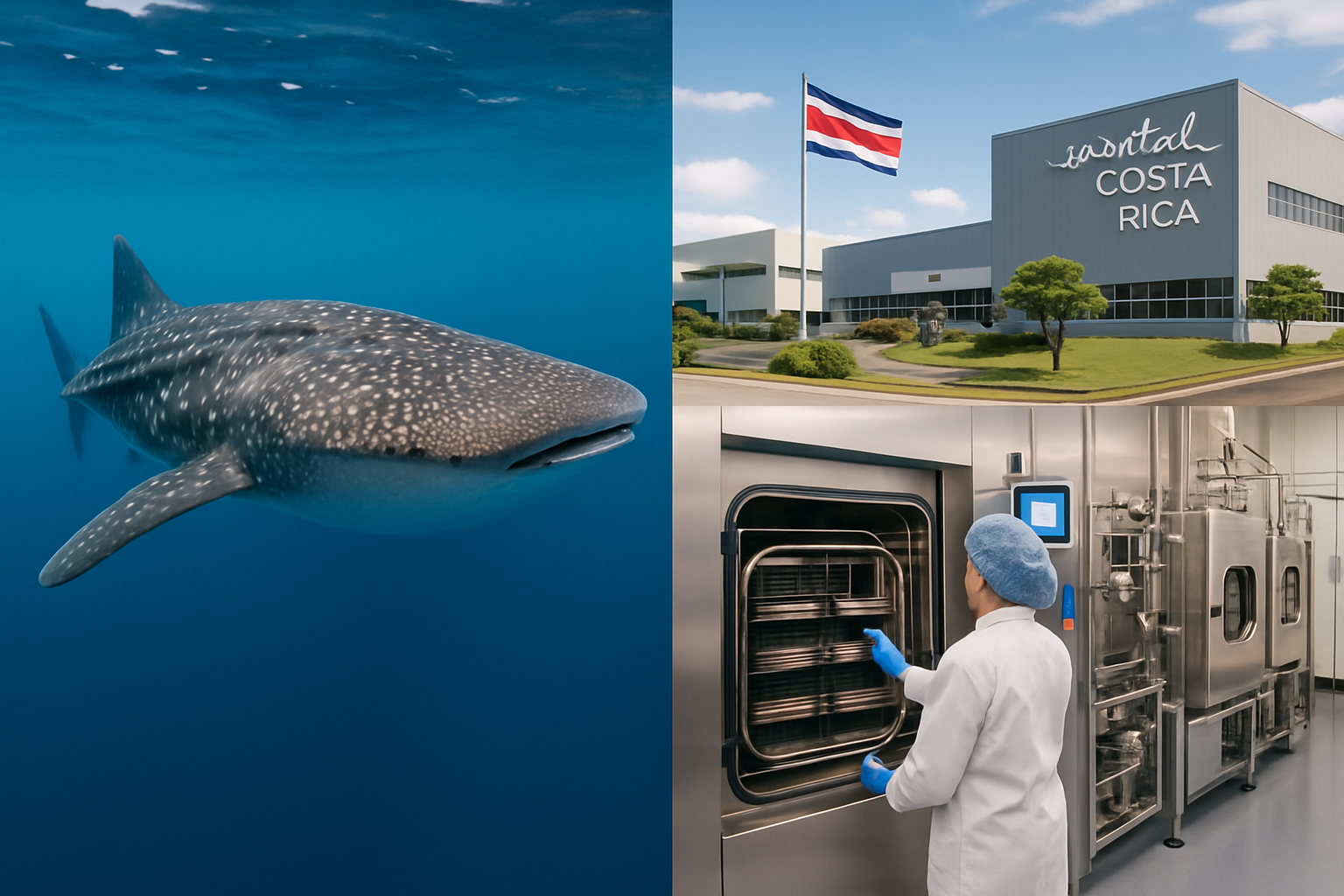
Costa Rica has achieved three groundbreaking milestones that showcase the nation's commitment to environmental conservation, healthcare innovation, and sustainable economic development, positioning itself as a regional leader in the global transition toward sustainable prosperity.
Historic Marine Conservation Breakthrough
On March 13, 2026, Costa Rica reached a remarkable conservation milestone when the organization Misión Tiburón successfully attached a satellite tracking device to a whale shark in Costa Rican waters for the first time in the country's history. The achievement represents a major advancement in marine science and conservation efforts in Central American waters.
The whale shark, named "Chorotega" in honor of Guanacaste province where this historic feat was accomplished, marks a significant opportunity for national science and marine ecosystem understanding. While Costa Rican scientists have previously successfully attached tracking devices to other shark species, achieving this breakthrough with the world's largest fish species represents an unprecedented scientific achievement.
This success comes during what marine biologists are calling a "global conservation renaissance," occurring during the 21st consecutive month of global temperatures exceeding 1.5°C above pre-industrial levels. The timing makes this achievement particularly significant, as marine ecosystems face mounting pressure from climate change, with rising ocean temperatures and acidification disrupting traditional migration routes and breeding cycles.
Revolutionary Healthcare Infrastructure
Costa Rica has taken another significant step toward modernizing its healthcare services with the inauguration of Central America's first Outsourced Sterilization Services Center. This groundbreaking initiative introduces a specialized system for the comprehensive management of medical and surgical instruments, representing a paradigm shift in regional healthcare infrastructure.
The new facility offers a centralized solution that encompasses everything from washing and disinfection to sterilization and detailed tracking of every item used in clinical procedures. The project's primary goal is to enhance the quality and safety of medical care while reducing operational costs for healthcare institutions throughout the region.
This development aligns with the broader "Therapeutic Revolution of 2026," a global healthcare transformation emphasizing prevention-first strategies over reactive treatment models. Countries implementing comprehensive prevention programs are reporting enhanced community resilience, reduced emergency care demands, and improved workforce productivity, creating economic multiplier effects that justify prevention infrastructure investments.
Economic Development Through Sustainability
The La Lima Free Trade Zone has been granted the prestigious Essential COSTA RICA Country Brand license, strengthening its position to attract foreign investment and expand its economic impact in Cartago. This recognition comes as a result of the zone's unwavering focus on sustainability, innovation, and job creation.
Over more than a decade of operation, the park has created more than 10,000 direct jobs and attracted 19 multinational companies from six countries, generating over $817 million in annual exports. The Essential COSTA RICA brand recognition positions the free trade zone as a model for sustainable economic development that balances growth with environmental responsibility.
The timing of this recognition is particularly significant as it occurs within the context of global supply chain diversification efforts. With recent concerns about over-dependence on single-source suppliers for critical materials, Costa Rica's commitment to sustainable manufacturing and its strategic geographic position make it an attractive alternative for companies seeking to diversify their operations.
Integration of Conservation and Development
These three achievements demonstrate Costa Rica's sophisticated approach to balancing environmental protection with economic development. The successful whale shark tracking represents the country's commitment to marine conservation science, while the sterilization center showcases innovation in healthcare infrastructure, and the free trade zone expansion proves that sustainable business practices can drive economic growth.
The convergence of these milestones reflects a broader evolution in Costa Rica's development strategy. Rather than viewing environmental protection as a constraint on economic growth, the country has positioned conservation and sustainability as competitive advantages that attract international investment, research partnerships, and tourism revenue.
International Implications
Costa Rica's achievements come at a critical time for global environmental and economic cooperation. As countries worldwide grapple with the challenges of climate change, supply chain vulnerabilities, and healthcare system pressures, Costa Rica's integrated approach offers valuable lessons for sustainable development.
The whale shark tracking project contributes to international understanding of marine ecosystems during a period of unprecedented ocean warming. The healthcare sterilization center could serve as a model for regional cooperation in medical infrastructure. Meanwhile, the sustainable free trade zone demonstrates that economic growth and environmental responsibility can be mutually reinforcing.
Future Outlook
These developments position Costa Rica as a leader in what experts are calling the "conservation renaissance" of 2026. The country's ability to achieve breakthroughs in marine science, healthcare innovation, and sustainable economic development simultaneously suggests a mature approach to 21st-century challenges that other nations may seek to emulate.
As global temperatures continue to exceed critical thresholds and traditional approaches to development face increasing scrutiny, Costa Rica's integrated strategy of combining scientific excellence, technological innovation, and environmental stewardship may prove to be a template for sustainable prosperity in an interconnected and climate-challenged world.
The success of these initiatives depends on sustained international cooperation, enhanced coordination between sectors, and continued financial commitments to environmental protection as essential infrastructure for human prosperity and planetary sustainability. Costa Rica's achievements demonstrate that such coordination is not only possible but can yield remarkable results when properly implemented.