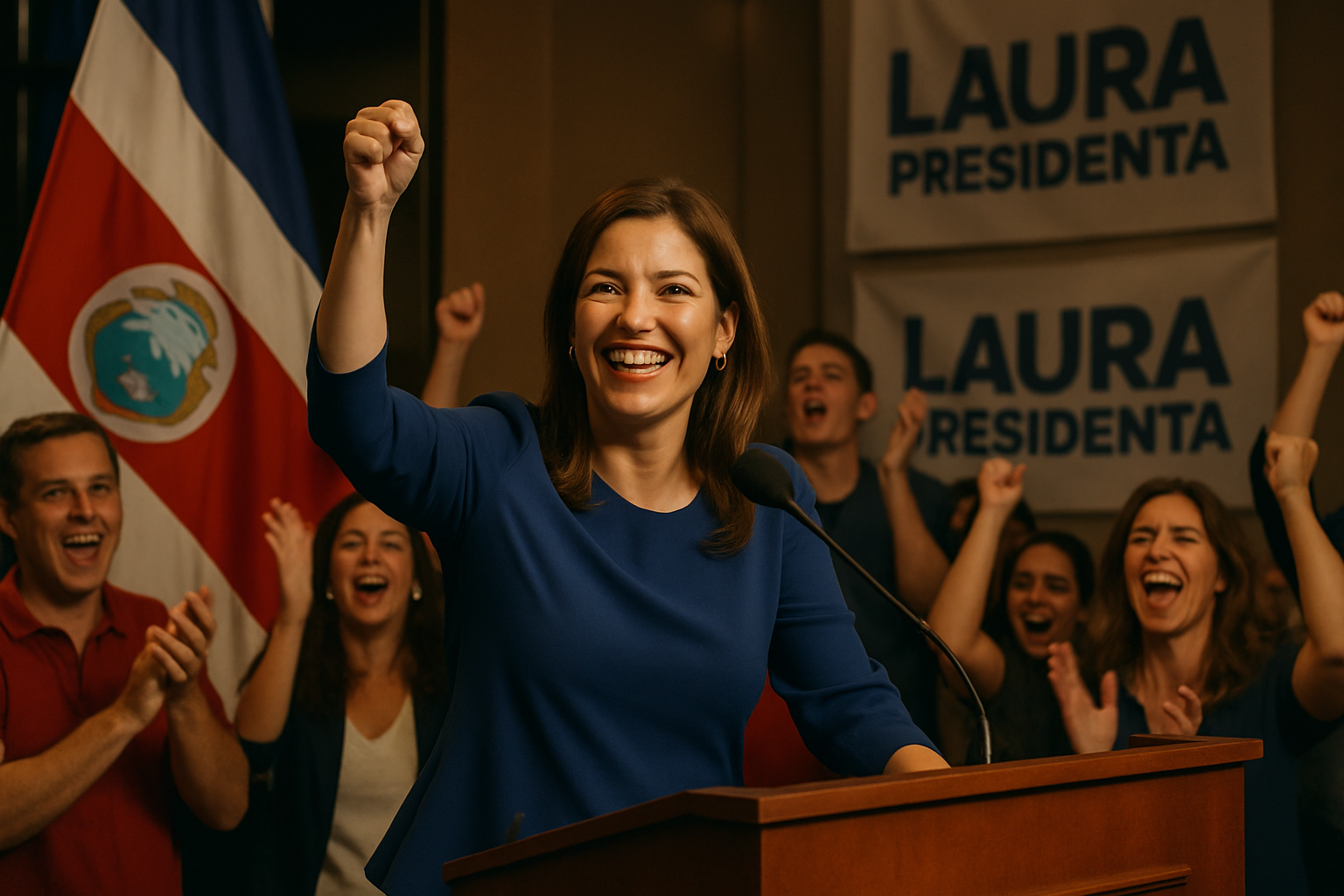
Political scientist Laura Fernández secured a decisive first-round victory in Costa Rica's presidential election on February 1, 2026, capturing nearly 50% of the vote to become the nation's second female president and leader of a major conservative shift in Central American politics.
The 39-year-old candidate of the Sovereign People's Party (PPS) eliminated the need for a runoff election by surpassing the 40% threshold required for outright victory. According to the Tribunal Supremo de Elecciones (TSE), with over 93% of polling stations reporting, Fernández secured approximately 48.5% of valid votes from Costa Rica's 3.7 million registered voters.
Her nearest rival, economist Álvaro Ramos of the National Liberation Party (PLN), trailed significantly with just over 32% of the vote. Other candidates, including Claudia Dobles of the Citizen Action Party, finished far behind in what became a clear mandate for Fernández's conservative populist agenda.
Regional Diplomatic Recognition
The victory has already drawn international attention, with neighboring Nicaragua among the first to congratulate the president-elect. Nicaragua's government sent an official message of congratulations to "Doña Laura Fernández," emphasizing regional unity and diplomatic cooperation between the Central American neighbors.
The congratulatory message from Managua signals potential improvements in Costa Rica-Nicaragua relations, which have faced periodic tensions over border disputes and migration issues in recent years. This diplomatic outreach reflects the broader regional significance of Fernández's victory in reshaping Central American political dynamics.
Historic Electoral Achievement
Fernández's victory marks a watershed moment in Costa Rican politics, making her only the second woman to lead the nation after Laura Chinchilla (2010-2014). However, unlike Chinchilla's more centrist approach, Fernández represents a dramatic rightward shift that aligns Costa Rica with broader conservative movements across Latin America.
The election results delivered not only the presidency but also a stunning legislative victory for the PPS. The party captured an absolute majority in the Legislative Assembly with 31 of 57 seats, a remarkable increase from just 8 seats in the previous legislature. This legislative dominance will enable Fernández to implement her ambitious reform agenda without significant parliamentary opposition.
Campaign Platform and Security Focus
Fernández's campaign was built on a "mano dura" (iron fist) security platform, responding directly to Costa Rica's unprecedented crime crisis. The traditionally peaceful nation has experienced a 38% increase in homicides in 2023, largely attributed to the infiltration of international drug trafficking organizations.
Her victory represents voter endorsement of tough-on-crime policies that would have been unthinkable in Costa Rica just a decade ago. The president-elect has promised constitutional reforms to expand police powers and has not ruled out potential suspensions of certain civil liberties to combat organized crime.
This security-first approach follows the model established by outgoing President Rodrigo Chaves, whose administration Fernández served and whose policies she pledges to continue and expand. Chaves, constitutionally barred from immediate reelection, maintained approval ratings above 50% throughout his term, largely due to his hardline stance on security issues.
Electoral Dynamics and Turnout
The election drew 69.5% voter turnout among Costa Rica's 3.7 million eligible voters, reflecting high public engagement with the country's most consequential presidential race in decades. Voting took place across 7,154 polling stations from 6 AM to 6 PM local time on February 1.
Ramos conceded gracefully on election night as results confirmed Fernández's insurmountable lead, promising to serve as "constructive opposition" in the new political landscape. His PLN, historically one of Costa Rica's dominant parties, suffered its worst electoral defeat in modern history, capturing only a fraction of its traditional support base.
The campaign was notably influenced by Costa Rica's changing demographics, including over 50,000 naturalized Nicaraguan citizens eligible to vote. This population, having experienced political repression in their homeland, showed strong support for Fernández's law-and-order message.
Economic and Constitutional Reform Agenda
Beyond security, Fernández has outlined an ambitious agenda of constitutional reforms aimed at modernizing Costa Rica's institutional framework. Her proposals include restructuring the judiciary, reforming public sector employment, and potentially revising the country's approach to international relations.
The president-elect has signaled intentions to review Costa Rica's traditional neutrality doctrine, particularly regarding regional security cooperation. This could mark a significant departure from the country's historic role as a peaceful mediator in Central American conflicts.
Economic policy will focus on attracting foreign investment while maintaining Costa Rica's successful high-tech and tourism sectors. However, Fernández has indicated willingness to take a more nationalist approach to trade negotiations and international economic agreements.
Regional and International Implications
Fernández's victory contributes to a broader rightward trend across Latin America, joining leaders like El Salvador's Nayib Bukele in adopting authoritarian-populist approaches to governance. This alignment could reshape regional diplomatic and security cooperation frameworks.
International congratulations poured in from regional leaders, including those who have implemented similar security-focused policies. The victory is seen as validation of the "Bukele model" of democratic authoritarianism that prioritizes security over traditional civil liberties.
Her administration will take office in May 2026 amid significant challenges, including managing the ongoing security crisis while maintaining Costa Rica's democratic institutions. The international community will closely monitor how she balances her tough-on-crime agenda with the country's strong democratic traditions.
Looking Ahead
As Costa Rica prepares for this historic transition, Fernández faces the complex task of implementing her security agenda while maintaining the democratic norms that have made the country a regional exception. Her legislative majority provides unprecedented power to enact reforms, but also raises questions about potential concentration of authority.
The new administration will inherit ongoing challenges including drug trafficking infiltration, economic inequality, and regional migration pressures. How Fernández addresses these issues while preserving Costa Rica's democratic character will define not only her presidency but the country's future trajectory in Central America.
Her victory speech emphasized unity and democratic governance, promising to be "president of all Costa Ricans" while maintaining her commitment to the security reforms that propelled her to power. The coming months will reveal whether she can successfully balance these sometimes competing priorities in one of Latin America's most stable democracies.