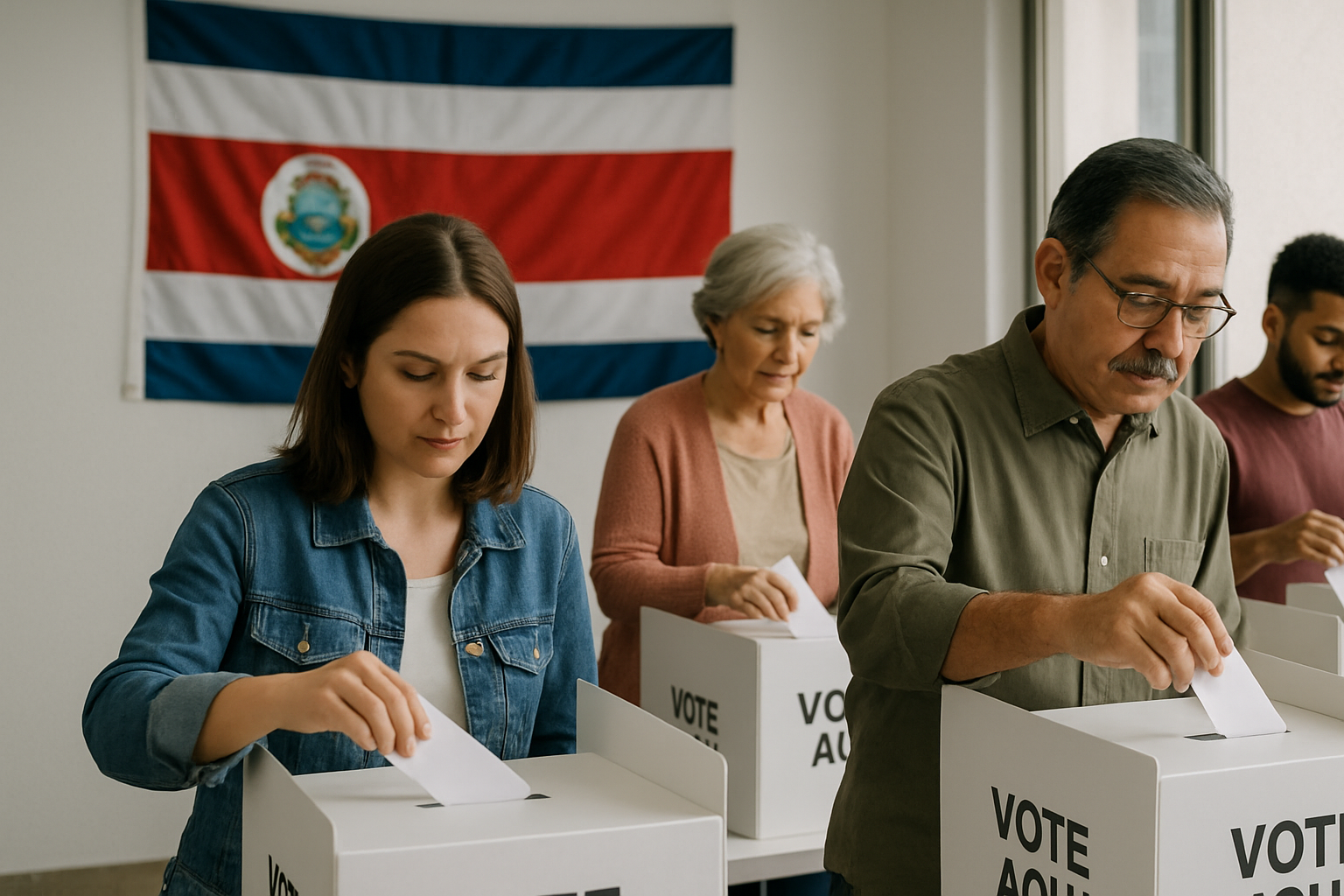
Costa Ricans went to the polls on February 1, 2026, to elect a new president and 57 members of the Legislative Assembly for the 2026-2030 term, in an election dominated by security concerns and the growing threat of drug-related violence that has transformed the campaign discourse in this traditionally peaceful Central American nation.
The electoral process, which began at 6:00 AM local time (12:00 GMT), will see 3.7 million registered voters decide between continuity of current policies or a change of direction for what is considered Latin America's most stable democracy. Voting centers remained open for 12 hours until 6:00 PM local time (midnight GMT Monday), with 7,154 voting stations established primarily in public educational centers across the country.
Leading Candidates and Electoral Landscape
Right-wing candidate Laura Fernández of the Sovereign People's Party (PPS) leads polls with approximately 40% voting intention, backed by the strong approval rating of outgoing President Rodrigo Chaves, who maintains over 50% public support but is constitutionally barred from immediate reelection. Fernández's campaign has focused heavily on promises of a firm hand against criminality, particularly drug-related violence that has become the population's primary concern.
Following Fernández in the polls is Álvaro Ramos of the National Liberation Party (PLN) with less than 10% support, while other candidates including Claudia Dobles (CAC), Fabricio Alvarado (NR), and Ariel Robles (FA) each poll between 3% and 5%. The significant gap between the frontrunner and other candidates suggests a possible first-round victory for Fernández, though final results will determine if a runoff election is necessary.
Security Crisis Transforms Political Discourse
The electoral campaign has been distinctly marked by discussions of insecurity related to drug trafficking, identified by the population as the country's principal problem. This represents a dramatic shift for Costa Rica, which has historically been known for its peaceful reputation and stable democratic institutions in a region often plagued by violence and political instability.
The rise of drug violence has fundamentally altered the political conversation, with candidates forced to address security concerns that were previously secondary issues in Costa Rican politics. This transformation reflects the growing influence of international drug trafficking operations in Central America, which have increasingly affected countries previously considered safe havens.
"The dictatorships of privilege have their days numbered," Fernández has stated regarding state powers, while rejecting accusations that her firm stance would lead to authoritarianism.
— Laura Fernández, PPS Presidential Candidate
Constitutional and Political Context
The current election takes place under the constitutional prohibition that prevents President Rodrigo Chaves from seeking immediate reelection. However, Chaves, described as a populist conservative, has spoken about potentially returning to office in future electoral cycles, while expressing concerns about maintaining his immunity during the interim period.
The Chaves administration has maintained relatively high approval ratings despite constitutional limitations on his reelection, contributing significantly to Fernández's favorable polling position as the continuity candidate. This dynamic has created a unique electoral situation where the outgoing president's popularity directly benefits his chosen successor.
Electoral Process and Democratic Participation
The Supreme Electoral Tribunal (TSE) guaranteed that Sunday's elections would proceed with high security standards, ensuring the democratic process's integrity. Special voting arrangements were made for various populations, including 10,730 inmates in correctional facilities, elderly residents in care homes, and other special circumstances.
The electoral system's inclusivity extends to naturalized citizens, with over 50,000 naturalized Nicaraguans eligible to participate in the voting process, reflecting Costa Rica's role as a destination for regional migration and its commitment to democratic participation regardless of origin.
Regional and International Implications
The election results will have significant implications for Central America, particularly given Costa Rica's role as the region's democratic anchor. The country's approach to addressing drug violence and security concerns could influence regional strategies for confronting similar challenges.
International observers are watching closely to see whether Costa Rica's democratic institutions can effectively address security challenges without compromising the democratic principles that have distinguished the country in the region. The election represents a test of whether democratic governance can successfully respond to the security threats posed by organized crime and drug trafficking.
Economic and Social Challenges
Beyond security concerns, the incoming administration will inherit various economic and social challenges typical of post-pandemic recovery periods. These include employment generation, healthcare system improvements, and educational development, all while maintaining fiscal responsibility and democratic governance standards.
The election also reflects broader regional trends toward candidates promising firm security measures, though Costa Rica's democratic traditions and institutional strength provide a different context compared to other Central American nations that have experienced democratic backsliding.
Looking Ahead
As vote counting begins, Costa Rica faces a pivotal moment in determining whether its democratic model can adapt to address contemporary security challenges while maintaining its reputation as a stable democracy. The election outcome will signal the direction of Costa Rican politics for the next four years and potentially influence regional approaches to similar challenges.
The strong polling position of the continuity candidate suggests voter confidence in the current administration's approach, though final results will ultimately determine whether Costa Ricans have chosen to maintain the current political direction or opt for change in addressing their most pressing concerns.