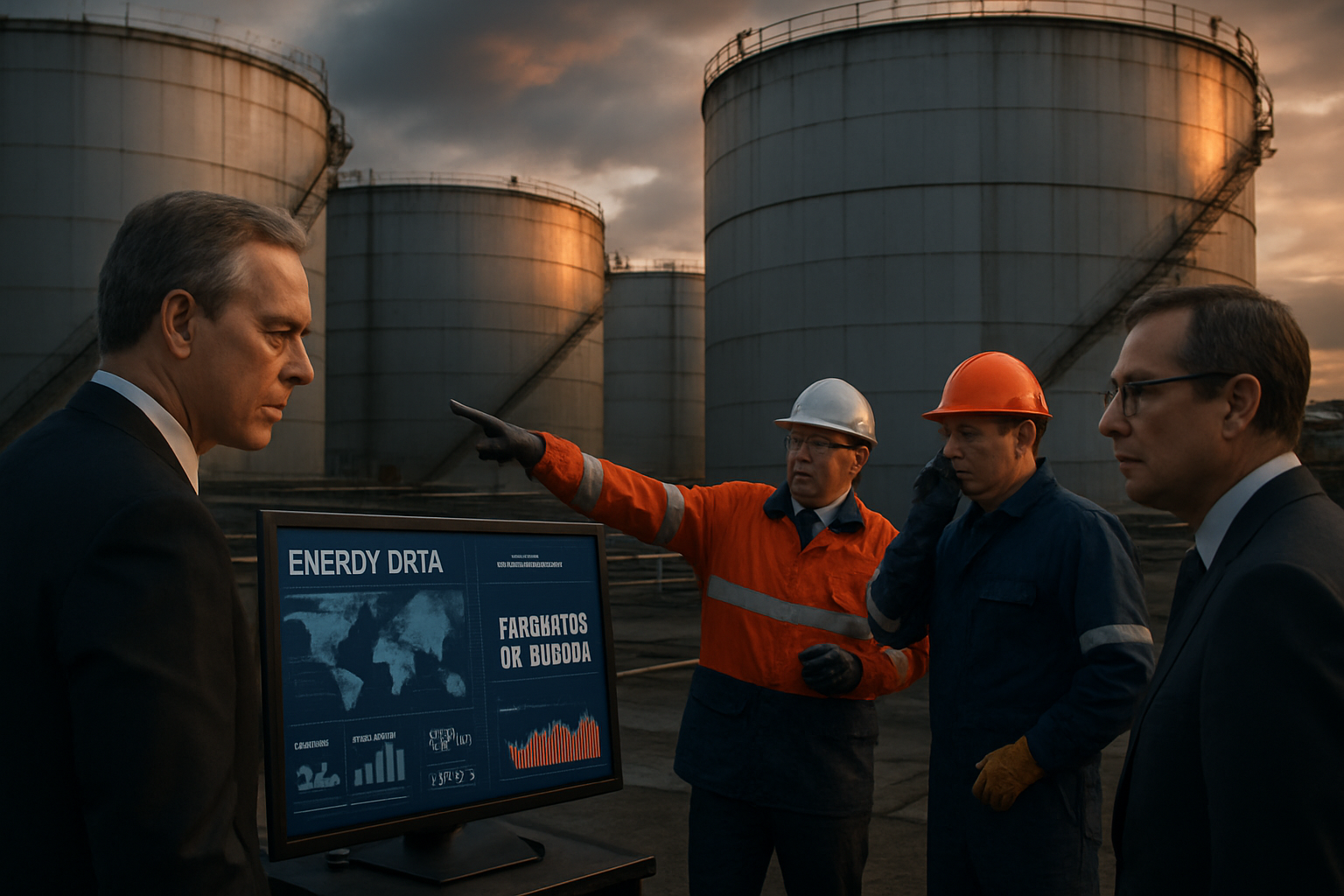
In an unprecedented coordinated response to the most severe global energy crisis in decades, nations worldwide are deploying strategic oil reserves and implementing emergency measures as oil prices surge past $100 per barrel, driven by Iran's closure of the critical Strait of Hormuz waterway.
The International Energy Agency (IEA) announced the largest emergency oil reserve release in its 50-year history on March 13, 2026, mobilizing 400 million barrels from 32 member countries—more than double the 182.7 million barrels released during the 2022 Ukraine crisis. This historic deployment comes as the Strait of Hormuz, through which 40% of global seaborne oil transits, remains effectively closed following Iran's Revolutionary Guard declaring it "unsafe for shipping."
Strategic Reserve Deployments Reach Record Scale
Japan leads individual country contributions with an 80 million barrel release starting March 16—the first deployment since the 2011 Fukushima disaster. This represents a critical decision for Japan, which relies on the Middle East for 95% of its oil supplies, with 70% transiting through the now-blocked Strait of Hormuz.
Germany has confirmed participation in the coordinated release, with Economy Minister Katherina Reiche emphasizing the strategic importance of collective action. The United States is expected to contribute the largest volume, with Energy Secretary Christopher Wright considering additional measures including the temporary lifting of some Russian oil sanctions to stabilize global supply.
Denmark has released 124,600 barrels of emergency oil as part of the broader international response, according to reports from Ekstra Bladet, demonstrating that even smaller nations are contributing to the collective effort to maintain energy security.
Asian-Pacific Region Implements Drastic Measures
The Philippines faces potential power price increases of 16% by April unless government intervention occurs, Energy Secretary Sharon Garin revealed to Reuters. The Southeast Asian nation is ramping down liquefied natural gas usage while increasing coal and renewable power generation to combat soaring LNG prices driven by shipping disruptions in the Gulf.
"The basic idea is to ramp down liquefied natural gas and ramp up coal and renewables,"
— Sharon Garin, Philippines Energy Secretary
The Department of Transportation has ordered reductions in passenger service charges and airport navigation fees as jet fuel prices surge from $85-90 to $150-200 per barrel—a staggering increase of up to 122%.
Japan's response extends beyond oil reserves to broader energy market regulation. Government expectations that refiners purchasing crude at lower prices won't exploit the situation by selling products at inflated prices highlight the delicate balance between market forces and crisis management.
Southeast Asian Supply Chain Disruption
Malaysia is experiencing its fuel subsidy bill rising over four-fold to $813 million monthly as the government absorbs soaring international prices to protect consumers. Finance Minister II Amir Hamzah Azizan expressed confidence in the government's ability to manage these increased costs due to fiscal reforms implemented over the past three years.
Singapore, a major regional hub, faces logistics cost increases of 30% for some goods as Persian Gulf trade routes—critical beyond just energy—suffer severe disruption. The 21-mile Strait of Hormuz has proven to be a dangerous single-point failure for modern global logistics systems.
European Response Coordinates with Global Efforts
The crisis has forced European nations to accelerate energy security measures developed during previous disruptions. Sweden predicts electricity price increases of 10-20 öre per kilowatt-hour and gasoline price rises of 1-2 kronor per liter, with the southern Malmö region most exposed due to continental European market integration.
European supply situation remains stable despite Middle East tensions, according to Danish authorities, though the coordinated strategic reserve release demonstrates the precautionary measures deemed necessary by energy officials.
Aviation Industry Bears Heavy Impact
The global aviation crisis parallels the energy emergency, with over 18,000 flights cancelled worldwide—the most extensive disruption since COVID-19. Eight Middle Eastern countries have simultaneously closed their airspace, while Dubai International Airport, the world's busiest with 86 million passengers annually, remains shut due to missile damage.
Airlines worldwide are implementing emergency fare increases to offset unsustainable fuel costs, with carriers from Norway to Thailand announcing surcharges that will be passed directly to consumers.
Financial Markets Signal Economic Strain
Global financial markets have crashed in response to the energy crisis, with Pakistan's KSE-100 index suffering its largest single-day decline in history at -8.97%. South Korea's KOSPI fell 12%, triggering circuit breakers, while the Korean won reached a 17-year low. Central banks from the European Central Bank to the Bank of Japan are coordinating emergency liquidity measures, though traditional monetary policy has limited effectiveness against structural geopolitical disruptions.
Supply Chain Vulnerabilities Exposed
The crisis has revealed dangerous over-dependence on strategic chokepoints, with the Persian Gulf serving as a critical global trade hub affecting not just energy but consumer goods and industrial materials worldwide. Major shipping companies Maersk and MSC have suspended operations, leaving over 150 oil and LNG tankers stranded in the Persian Gulf representing billions in cargo value.
China has suspended refined fuel export contracts, cancelling committed shipments and highlighting how regional conflicts rapidly cascade into global supply chain disruption. Manufacturing networks dependent on Gulf shipping routes—from automotive to electronics to textiles—face severe operational challenges.
Diplomatic Breakdown Triggers Crisis
The current emergency stems from the complete collapse of U.S.-Iran nuclear negotiations despite achieving a "broad agreement on guiding principles"—the most progress since the 2018 JCPOA breakdown. Iran's exclusion of ballistic missiles and proxy forces as "red lines" conflicted with U.S. demands for comprehensive agreements covering missiles, armed groups, and human rights concerns.
This diplomatic failure led to Operation Epic Fury, the largest U.S.-Israeli coordinated military operation since 2003, followed by Iran's massive retaliation known as Operation True Promise 4, which directly targeted regional coalition territories and infrastructure.
Long-term Energy Architecture Transformation Needed
Energy analysts warn that this crisis exposes fundamental vulnerabilities requiring years or decades to address through supply diversification and renewable energy transitions. Strategic petroleum reserves provide only temporary buffering against sustained disruptions of this magnitude.
Qatar Energy Minister Saad Al Kaabi has warned that Gulf states may be forced to declare force majeure "within weeks," potentially driving oil prices toward $150 per barrel and threatening to "bring down economies of the world." OPEC's emergency production increase of 206,000 barrels per day proves insufficient when shipping routes remain blocked.
"This represents the most severe energy security crisis in decades, exposing single-chokepoint vulnerabilities that require fundamental restructuring."
— Samuel Ciszuk, Energy Security Analyst
Nuclear Governance Context Raises Stakes
The energy crisis unfolds against a backdrop of nuclear governance breakdown, with the New START Treaty having expired on February 5—marking the first time in over 50 years without U.S.-Russia nuclear constraints. Iran continues uranium enrichment at 60% purity with over 400 kilograms of weapons-grade material, sufficient for multiple nuclear weapons.
UN Secretary-General António Guterres has described current nuclear risks as the "highest in decades," emphasizing that this crisis represents a template-setting moment for 21st-century diplomacy versus military confrontation in an increasingly multipolar world.
Recovery Timeline Remains Uncertain
Unlike weather-related disruptions with predictable patterns, recovery from this crisis depends on military operations resolution and diplomatic normalization. Aviation industries cannot maintain long-term scheduling with multiple airspaces closed, while energy markets remain volatile with critical transit routes blocked.
The crisis represents the most dangerous international situation since the Cold War's end, simultaneously affecting regional war prevention, global energy security, nuclear governance credibility, and international law enforcement principles established in the post-WWII order.
As governments worldwide deploy strategic reserves and implement emergency measures, the coming weeks will prove decisive in determining whether coordinated international action can contain what experts describe as the greatest test of multilateral cooperation in the modern era. The template-setting implications extend far beyond current events, potentially reshaping energy security policy and international crisis management for decades to come.