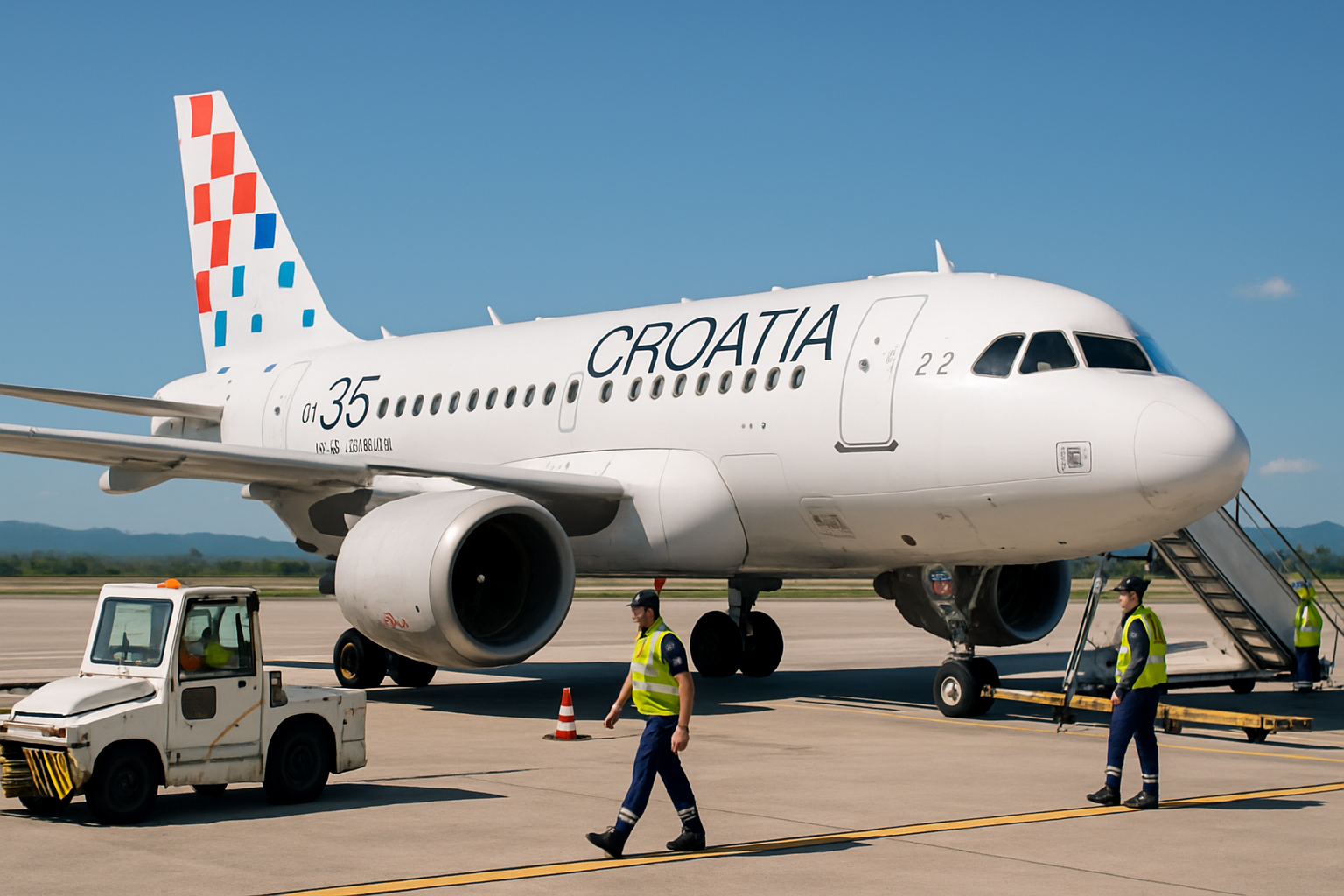
Two significant aviation milestones are capturing industry attention as Croatia Airlines celebrates its 35th anniversary amid the largest fleet modernization in company history, while Air Niugini prepares to return to New Zealand skies after nearly three decades, marking a new chapter in Pacific aviation connectivity.
Croatia Airlines: From Mail Delivery to Modern European Carrier
March 16, 2026, marks a remarkable milestone for Croatia Airlines as the national carrier celebrates 35 years of operations that have transformed it from a humble postal delivery service into what will soon be one of Europe's most modern passenger fleets. The journey has been anything but smooth—marked by war, financial struggles, debt crises, and persistent criticism—yet the airline has emerged with a comprehensive fleet renewal project that represents the largest investment in the company's history.
According to Poslovni Dnevnik's comprehensive analysis, the airline's evolution over 3.5 decades tells a story of resilience and adaptation. From operating a single mail plane in its early days, Croatia Airlines has navigated through the turbulent 1990s Yugoslav wars, joined global airline alliances, and embraced technological advances that have culminated in this historic fleet modernization.
A Turbulent But Successful Path
The Croatian national carrier's 35-year journey exemplifies the broader challenges facing European aviation. Despite facing constant criticism and being plagued by debt issues, the airline has maintained operations and passenger services through some of the most challenging periods in modern European history. The company's survival through regional conflicts, economic downturns, and most recently the COVID-19 pandemic, demonstrates the strategic importance of maintaining national aviation connectivity.
"The 35 years of Croatia Airlines have been turbulent, full of criticism, plagued by debt and in a large part—still successful."
— Total Croatia News Analysis
This fleet renewal project represents more than just aircraft replacement; it symbolizes Croatia's commitment to modernizing its tourism infrastructure and enhancing international connectivity. The investment comes as Croatia continues to position itself as a premier European destination, with the government allocating 30% additional funding for new air routes targeting Asian and North American markets.
Air Niugini's Return: Bridging the Pacific Gap
Meanwhile, in the Pacific, Air Niugini is preparing to make aviation history by returning to New Zealand after an absence of nearly 30 years. The Papua New Guinea flag carrier will operate flights between Auckland and Port Moresby three times per week, representing a significant restoration of connectivity between New Zealand and one of its closest Pacific neighbors.
This route resumption comes at a crucial time for Pacific aviation, as the region works to rebuild connectivity networks that were disrupted during the pandemic. The Auckland-Port Moresby service will provide vital links for business travelers, families with connections across the Pacific, and tourists seeking to explore Papua New Guinea's diverse cultural and natural attractions.
Industry Context: Aviation's Challenging Recovery
These developments occur against the backdrop of an aviation industry that has faced unprecedented challenges in recent years. The global travel disruptions of 2026, including the Middle East crisis that resulted in over 18,000 flight cancellations worldwide, have highlighted the importance of route diversification and operational resilience.
Croatia Airlines' modernization efforts and Air Niugini's route expansion demonstrate how carriers are adapting to new realities. Airlines are increasingly focusing on regional connectivity, reducing dependency on major hub airports that can be vulnerable to geopolitical disruptions, and investing in modern, fuel-efficient aircraft to improve operational sustainability.
Strategic Implications for Regional Aviation
The timing of these announcements is particularly significant. Croatia's fleet modernization positions the airline to better serve the growing demand for European travel, especially as tourists seek safer alternatives amid global uncertainties. The country's tourism sector has been investing heavily in infrastructure, including 62 tourist medical clinics—Europe's most extensive seasonal healthcare network—to support visitor confidence.
For the Pacific region, Air Niugini's return to New Zealand represents more than just route restoration. It signals renewed confidence in Pacific aviation markets and provides an alternative to routing through traditional Asian hubs. This is especially relevant given that approximately one-third of European travelers to New Zealand typically transit through Middle Eastern airports, which have experienced significant disruptions.
Fleet Modernization and Operational Excellence
Croatia Airlines' fleet renewal project encompasses not just new aircraft but also enhanced operational procedures, improved passenger services, and advanced technology integration. This comprehensive approach reflects industry best practices where successful carriers are balancing cost efficiency with service quality and environmental responsibility.
The modernization comes as the European aviation sector faces increasing pressure to reduce carbon emissions while maintaining competitive service levels. Modern aircraft offer significant improvements in fuel efficiency, noise reduction, and passenger comfort—factors that are becoming increasingly important for both regulatory compliance and customer satisfaction.
Pacific Aviation Renaissance
Air Niugini's return to New Zealand is part of a broader Pacific aviation renaissance. The airline has been strengthening its operations through new aircraft acquisitions and improved on-time performance as part of Papua New Guinea's aviation infrastructure modernization under the Civil Aviation Development Investment Program (CADIP) Phase 3.
This route resumption also addresses the connectivity challenges faced by Papua New Guinea, a nation of over 800 languages distributed across remote mountain valleys and scattered islands. The Auckland connection provides crucial links to international markets and supports the country's economic development objectives.
Tourism and Economic Impact
Both aviation developments carry significant tourism and economic implications. Croatia's modernized fleet will support the country's strategy to capture redirected tourism demand, particularly as travelers seek safer European alternatives. The nation has been positioning itself advantageously during recent global travel disruptions, benefiting from its reputation as a stable and attractive destination.
The Auckland-Port Moresby route will facilitate increased tourism flows between New Zealand and Papua New Guinea, supporting both countries' tourism recovery objectives. New Zealand's tourism industry, while still rebuilding from pandemic impacts with visitor spending of NZ$18.1 billion compared to dairy exports of NZ$23.1 billion, stands to benefit from improved Pacific connectivity.
Looking Forward: Industry Transformation
These developments reflect broader trends in aviation industry transformation. Carriers are increasingly focusing on operational resilience, route diversification, and sustainable growth rather than pure capacity expansion. The success of both Croatia Airlines' modernization and Air Niugini's route resumption will likely influence similar initiatives across their respective regions.
The aviation industry's evolution toward quality-focused strategies over volume approaches is evident in these announcements. Both airlines are investing in long-term competitiveness rather than short-term market share gains, recognizing that sustainable operations require careful balance of operational excellence, customer satisfaction, and financial viability.
As the global aviation sector continues recovering from recent disruptions, these examples of strategic investment and route expansion provide encouraging signals for the industry's future. They demonstrate that despite ongoing challenges, airlines willing to invest in modernization and regional connectivity can position themselves for sustainable growth in an increasingly complex operating environment.