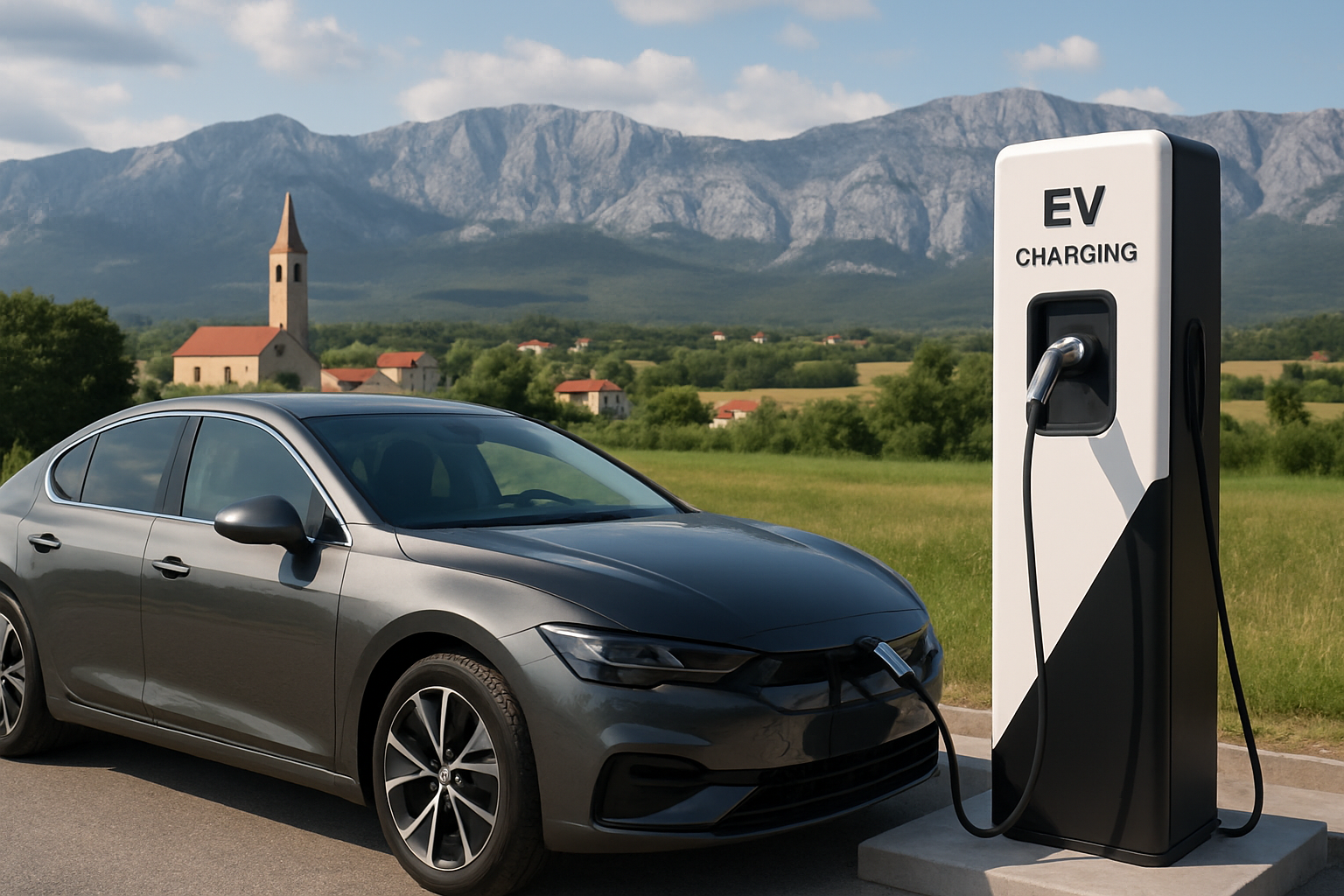
Despite surging fuel prices and growing global interest in sustainable transportation, electric vehicles remain relatively rare on Croatian roads, reflecting broader challenges facing European nations in their transition to electrified mobility.
Croatia's struggle with electric vehicle adoption comes at a critical time when the European Union is pushing aggressively toward transportation electrification to meet climate targets. While some EU nations have made significant strides - Estonia maintains 88% renewable electricity with Europe's largest battery storage network serving 90,000 households, and Austria recently doubled its EV charging infrastructure with 1,000 additional stations - Croatia's experience illustrates the uneven pace of the continent's green transportation revolution.
The Croatian Context
According to recent data from Croatia Week, electric vehicles remain uncommon despite rising conventional fuel costs that should theoretically make EVs more attractive to consumers. The country's challenges mirror those documented across developing European markets, where the promise of electric mobility often collides with practical barriers including infrastructure limitations, purchase price premiums, and consumer uncertainty about long-term viability.
Croatia's situation is particularly noteworthy given the country's otherwise strong environmental credentials and tourism economy, which would benefit significantly from reduced air pollution and quieter transportation systems in popular coastal destinations. The nation achieved a remarkable 99.25% absorption rate of EU structural funds - the highest among all member states - yet electric vehicle infrastructure remains underdeveloped compared to regional leaders.
European Infrastructure Disparities
The Croatian experience reflects broader urban-rural and regional disparities plaguing European EV adoption. Recent analysis reveals that homeowners and rural residents maintain clear advantages through home charging access, while urban apartment dwellers face significant barriers despite typically showing higher interest in electric mobility. This pattern holds true across European cities from Prague to Lisbon, creating an accessibility paradox where those most environmentally conscious often face the greatest practical obstacles.
"More storage means more security of supply, less dependence, and relief for the networks."
— Deputy Governor Pernkopf, Austria's renewable energy expansion
Recent developments across Europe demonstrate the varying approaches to addressing these challenges. Austria's aggressive infrastructure expansion represents one successful model, while Sweden has experienced an unexpected halt in wind power investments despite previously leading renewable development. Meanwhile, Denmark achieved a historic milestone as Revolution Wind sent its first electricity to New England, showcasing successful international energy cooperation.
Supply Chain Vulnerabilities and Global Context
Croatia's EV adoption challenges occur within a complex global supply chain environment that has created vulnerabilities for the entire European automotive sector. China maintains approximately 60% of global critical materials production and 90% of refining capacity for lithium, cobalt, and rare earth elements essential for battery manufacturing. This dominance has prompted the US-EU-Japan Critical Minerals Partnership, involving 55 countries and seven African alternative suppliers, though developing these supply chains will require massive investment and years of development.
Simultaneously, the global memory chip shortage has caused sixfold price increases affecting vehicle control systems, with the crisis expected to persist until 2027 when new fabrication facilities come online. These supply chain pressures have made electric vehicles more expensive precisely when affordability remains the primary barrier to adoption in markets like Croatia.
Technology Breakthroughs and Future Prospects
Despite current challenges, remarkable technological advances suggest Croatia and similar markets may soon benefit from game-changing improvements. Chinese manufacturer BYD recently unveiled its revolutionary Megawatt Flash Charging system, capable of providing 400 kilometers of range in just 5 minutes with 1,360 kW power delivery. Their Blade Battery 2.0 technology functions effectively in extreme weather down to -30°C, addressing a major concern for Central European markets experiencing increasingly volatile weather patterns.
Battery longevity studies have also exceeded early predictions, with Tesla Model S vehicles from 2012-2014 retaining 85-92% capacity after 200,000+ miles, while Nissan Leaf models from 2011-2013 show 75-85% retention after a decade of operation. These findings suggest practical EV lifespans of 15-20 years, significantly longer than initial manufacturer warranties and supporting the development of robust used EV markets that could make electric mobility accessible to broader populations.
Policy Responses and Regional Integration
European governments are responding to adoption challenges through various policy mechanisms. Canada's Prime Minister Mark Carney announced the return of EV consumer incentives as part of a $9.7 billion national automotive strategy, while major European automakers Volkswagen and Stellantis are intensifying calls for Brussels to provide financial incentives for European-manufactured electric vehicles.
Regional manufacturing strategies are also emerging as automakers establish EV production closer to primary markets. Toyota's decision to produce its electric 2027 Highlander at its Princeton facility represents this trend, competing against models like the Kia EV9 and Hyundai Ioniq 9 in the crucial three-row SUV segment that appeals to family buyers in markets like Croatia.
Climate Urgency and Environmental Imperative
The slow pace of EV adoption in Croatia and similar markets occurs against an increasingly urgent climate backdrop. January 2026 marked the 18th consecutive month of global temperatures exceeding 1.5°C above pre-industrial levels, with human-induced climate change now fundamentally overriding natural variability including traditional La Niña cooling effects.
Transportation electrification has become essential for meeting international climate commitments, yet success requires addressing the fundamental infrastructure and affordability questions that Croatian consumers face daily. Vehicle-to-grid technology, which enables EVs to function as distributed energy storage during peak demand periods, offers additional economic benefits that could help justify higher upfront costs.
Looking Forward: Integrated Solutions
Croatia's path toward electric vehicle adoption will likely require coordinated efforts across multiple sectors. Success factors identified in leading markets include appropriate electricity pricing structures, comprehensive charging infrastructure development, technical service capabilities, and energy policy alignment with transportation electrification goals.
The Caribbean experience, where retailers report EV owners save $75 per $100 compared to gasoline despite anticipated electricity rate increases, demonstrates that economic benefits can emerge even in challenging circumstances when comprehensive support systems exist. However, this requires addressing fundamental infrastructure questions rather than simply waiting for market forces to drive adoption.
As Europe accelerates its transition to sustainable mobility, Croatia's experience serves as a crucial case study in the challenges facing mid-tier European markets. The country's success or failure in overcoming current barriers will provide valuable lessons for similar nations across Central and Eastern Europe, where the promise of electric mobility must ultimately be matched by practical, affordable solutions that serve real consumer needs during this critical decade of climate action.