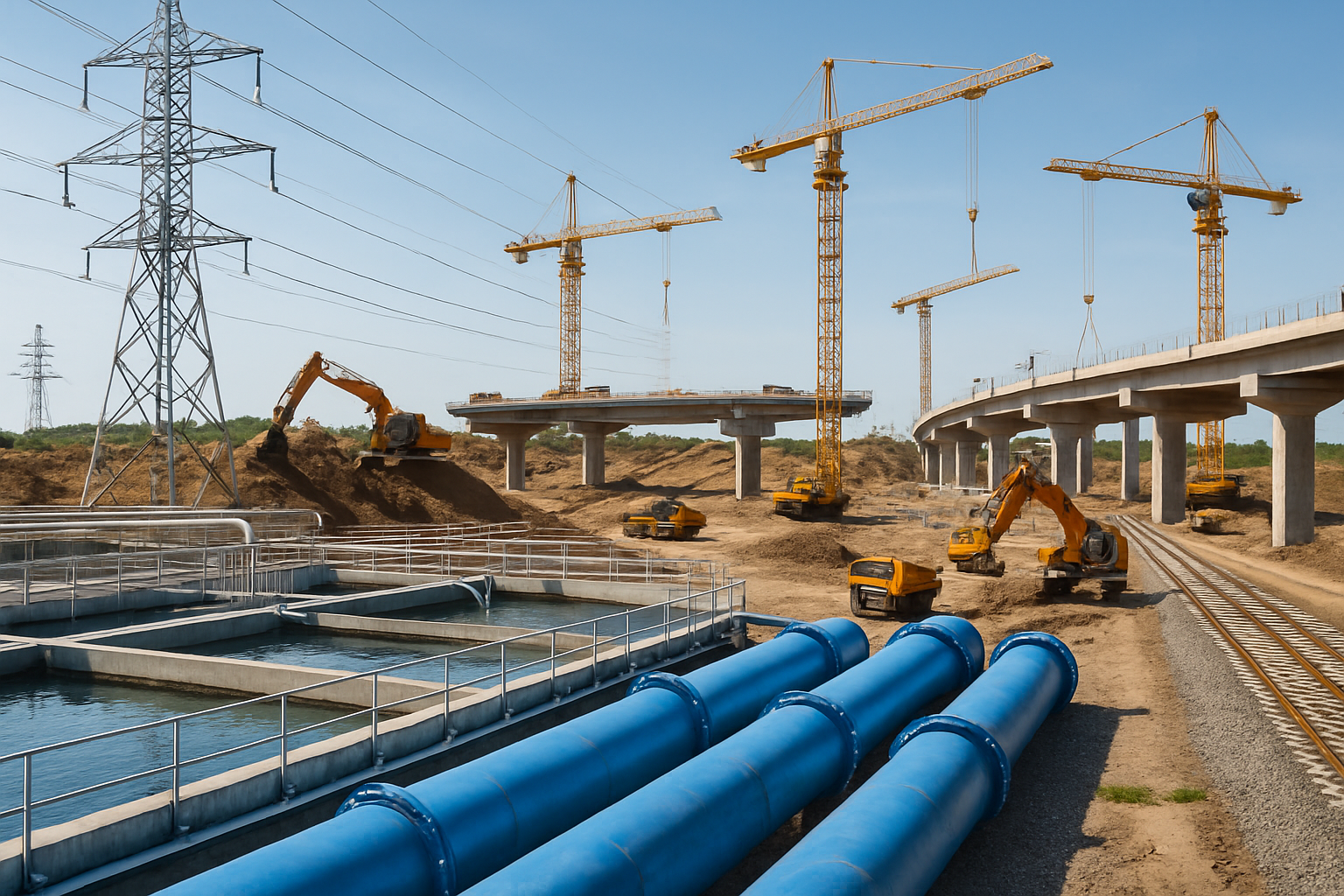
A surge of major infrastructure announcements from Zagreb to Kampala signals a transformative moment in global development, as nations accelerate ambitious projects designed to reshape transportation networks, urban environments, and economic opportunities across continents.
Croatia's capital has reached a pivotal milestone in sustainable urban development with the completion of public procurement for its groundbreaking 3.5-kilometer green corridor project. The initiative will connect three key districts - Crnomerec, Trešnjevka, and central Zagreb - through an innovative tram line that promises to revolutionize the city's transportation landscape while establishing new environmental standards for European urban planning.
Simultaneously, Uganda has secured one of the largest infrastructure financing agreements in East African history, with Standard Chartered Bank Uganda committing €641.1 million (Shs 2.747 trillion) to fund three major development projects. This historic investment package directly supports the country's ambitious Ten-Fold Growth Strategy, aimed at expanding Uganda's economy to USD 500 billion by 2040.
Croatia's Green Corridor: A Model for Sustainable Urban Transport
Zagreb's green corridor represents more than just another tram line - it embodies a comprehensive approach to climate-conscious urban development that integrates public transportation with environmental conservation. The project's completion of the conceptual design and location permit phases marks a significant achievement in Croatia's commitment to sustainable infrastructure development.
The 3.5-kilometer route will feature cutting-edge environmental technologies, including energy-efficient electric tram systems and green infrastructure elements designed to reduce urban heat effects while improving air quality. The corridor will serve as a living laboratory for sustainable transportation solutions, potentially influencing similar projects across the European Union.
Urban planning experts note that the project's integration of multiple districts addresses a critical challenge in modern city development: creating cohesive transportation networks that serve diverse urban communities while minimizing environmental impact. The green corridor concept has already attracted attention from other European capitals seeking to balance urban growth with climate commitments.
Uganda's Economic Transformation Through Strategic Investment
Uganda's €641.1 million financing agreement with Standard Chartered Bank represents a watershed moment for East African infrastructure development. The funding package will support three strategic projects designed to accelerate the country's economic diversification and modernization efforts, moving beyond traditional agricultural economies toward industrial and service sector growth.
The investment directly aligns with Uganda's Ten-Fold Growth Strategy, an ambitious economic blueprint that seeks to transform the nation into a middle-income country by 2040. Government officials emphasize that this funding represents not just financial support, but validation of Uganda's economic potential and institutional capacity to manage large-scale development projects.
The three funded projects, while not yet fully detailed in public announcements, are expected to focus on transportation infrastructure, energy development, and urban modernization initiatives. These investments will create thousands of direct and indirect employment opportunities while establishing foundation infrastructure for sustained economic growth.
Global Context: Infrastructure as Economic Recovery Driver
These developments emerge within a broader global infrastructure renaissance that has gained momentum throughout 2026. The February announcements from Croatia and Uganda join a worldwide surge of infrastructure commitments totaling over $570 billion across transportation, energy, and urban development sectors.
Recent months have witnessed unprecedented infrastructure activity across multiple continents. Vietnam has committed $120 billion to build 9,000 kilometers of new expressways by 2050, while Kenya has accelerated major highway projects ahead of schedule. Nicaragua advances its Chinese-engineered airport reconstruction, and Tanzania has completed feasibility studies for a 1,000-kilometer railway project connecting mineral resources to export facilities.
The coordination of these global efforts reflects a fundamental shift in international development priorities. Nations are increasingly viewing infrastructure investment not merely as domestic improvement projects, but as strategic components of regional integration and international competitiveness.
Financing Innovation and International Cooperation
The financing mechanisms behind these projects demonstrate sophisticated approaches to international development cooperation. Uganda's partnership with Standard Chartered Bank exemplifies how private-sector expertise combines with public development objectives to create sustainable funding models for major infrastructure initiatives.
Similarly, Croatia's advancement of its green corridor project reflects European Union priorities for sustainable development and climate adaptation. The project benefits from EU structural funds and represents the type of climate-conscious infrastructure investment that defines contemporary European development strategy.
These financing approaches contrast with traditional development models by emphasizing long-term sustainability, environmental compliance, and measurable economic impact. International development institutions increasingly require comprehensive environmental and social impact assessments, creating new standards for infrastructure project approval and implementation.
Technology Integration and Smart Infrastructure
Both Croatian and Ugandan projects incorporate advanced technologies that position them at the forefront of smart infrastructure development. Zagreb's green corridor will feature digital monitoring systems, real-time passenger information, and integrated payment technologies that connect seamlessly with the city's broader transportation network.
Uganda's infrastructure investments are expected to include modern telecommunications integration, automated systems for operational efficiency, and renewable energy components that reduce long-term operational costs while supporting climate objectives. These technological elements ensure that new infrastructure can adapt to evolving user needs and technological advancement.
The integration of smart technologies reflects a broader trend in infrastructure development where digital capabilities are considered essential from the design phase rather than aftermarket additions. This approach creates more efficient systems while providing data for ongoing optimization and maintenance planning.
Regional Integration and Continental Connectivity
Beyond their immediate local impact, these infrastructure projects contribute to broader regional integration objectives. Croatia's enhanced transportation network strengthens connectivity within the European Union's single market, facilitating commerce and cultural exchange across the continent.
Uganda's infrastructure development supports East African Community integration goals and positions the country as a regional hub for commerce and transportation. The projects are designed to connect Uganda more effectively with neighboring economies while providing improved access to international markets through enhanced port and airport connectivity.
These regional connectivity benefits align with continental initiatives including the African Continental Free Trade Area (AfCFTA) and European Union internal market deepening. Infrastructure development increasingly serves as the physical foundation for economic integration agreements and cross-border cooperation initiatives.
Economic Multiplier Effects and Job Creation
The economic impact of these infrastructure projects extends far beyond their immediate construction phases. Zagreb's green corridor will create permanent employment opportunities in transportation services, maintenance, and related sectors while stimulating business development along the route.
Uganda's infrastructure investments are projected to create thousands of direct construction jobs and tens of thousands of indirect employment opportunities across supply chains and service sectors. The projects will also enhance economic productivity by reducing transportation costs, improving market access, and providing reliable infrastructure for business development.
Economic analysts note that infrastructure investment typically generates significant multiplier effects, with every dollar invested creating additional economic activity through increased commerce, improved efficiency, and enhanced competitiveness. These effects are particularly pronounced in developing economies where infrastructure constraints have historically limited economic growth potential.
Environmental Sustainability and Climate Adaptation
Both Croatian and Ugandan projects prioritize environmental sustainability and climate adaptation considerations. Zagreb's green corridor incorporates renewable energy systems, sustainable materials, and environmental monitoring capabilities designed to minimize ecological impact while demonstrating climate-conscious development practices.
Uganda's infrastructure projects are required to meet international environmental standards and include provisions for climate resilience. The investments incorporate flood management systems, drought-resistant design elements, and renewable energy integration that reduce long-term operational costs while supporting climate adaptation objectives.
These environmental considerations reflect evolving international standards for infrastructure development where climate impact assessment and adaptation planning are essential components of project approval and financing. Modern infrastructure must demonstrate sustainability credentials to secure international funding and regulatory approval.
Challenges and Implementation Considerations
Despite their promising prospects, these infrastructure projects face significant implementation challenges. Construction in urban environments like Zagreb requires careful coordination to minimize disruption to existing transportation networks and residential communities. Public engagement and stakeholder consultation remain critical for maintaining community support throughout construction phases.
Uganda's projects must navigate complex regulatory environments, ensure transparent procurement processes, and maintain quality standards while managing cost controls. The scale of investment requires robust project management capabilities and ongoing monitoring to ensure effective resource utilization and timely completion.
Both countries must also manage potential currency fluctuations, supply chain disruptions, and evolving international standards that could affect project costs and timelines. Success requires adaptive management approaches and strong institutional capacity for complex project coordination.
Future Implications and Global Trends
These infrastructure developments signal broader trends that will shape global development patterns throughout the remainder of the decade. The emphasis on sustainable technologies, international cooperation, and comprehensive economic impact reflects maturing approaches to infrastructure investment that balance immediate needs with long-term sustainability objectives.
The successful implementation of these projects will provide valuable lessons for similar initiatives worldwide. Croatia's green corridor could become a model for sustainable urban transportation across European cities, while Uganda's financing approach may influence development cooperation strategies across Africa.
As nations continue to prioritize infrastructure development for post-pandemic recovery and climate adaptation, the experiences gained from these pioneering projects will inform international best practices and shape the future of global development cooperation.
The convergence of technological advancement, environmental awareness, and international cooperation demonstrated by these projects represents a new paradigm in infrastructure development - one that recognizes infrastructure not merely as physical assets, but as foundations for sustainable prosperity and international collaboration in an interconnected world.