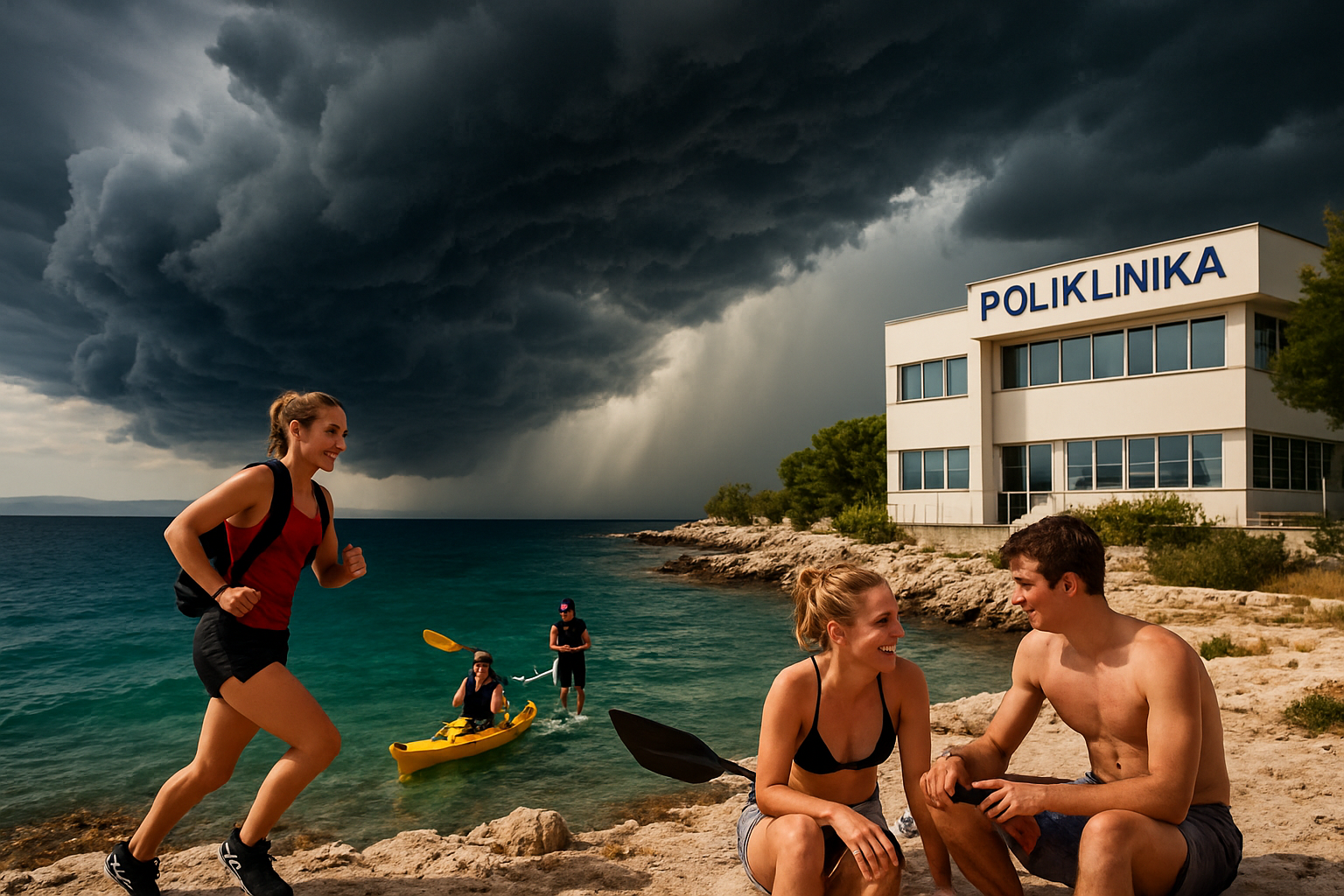
Croatia is witnessing a remarkable transformation in its tourism landscape as younger visitors reshape traditional patterns while the country grapples with scientists' warnings about violent storms becoming the "new normal."
The latest data from the Croatian Tourist Board reveals an almost perfect generational balance among visitors, with 51% of guests under 40 and 49% over the age threshold. This demographic shift is fundamentally altering Croatian tourism, particularly outside the peak summer season as younger travelers seek authentic experiences year-round.
Youth Demographics Reshaping Tourism Patterns
According to eVisitor data from 2025, children under 12 accounted for 15% of tourists, while guests between 19 and 30 represented 13% of overnight stays. The smallest segment comprised teenagers aged 13-18 at 8%, with the 31-40 age group contributing 15% of stays. This distribution demonstrates Croatia's success in attracting multi-generational travelers while positioning itself as a family-friendly destination.
The younger demographic is bringing revolutionary changes to Croatian tourism patterns. Unlike previous generations who concentrated visits during July and August, Generation Z travelers are driving demand for off-season experiences, seeking authentic cultural immersion and sustainable travel options. These visitors, representing 50% of travelers taking multiple annual trips of five days or more, demand AI-integrated travel planning combined with meaningful cultural engagement.
Climate Warnings Cast Shadow Over Tourism Growth
While tourism officials celebrate these positive trends, environmental scientists have delivered sobering warnings about Croatia's climate future. Recent research indicates that violent storms previously considered "once-in-a-century" events could now occur every ten years or more frequently due to climate change.
"Weather is changing faster than society can adapt. The destructive and exceptionally powerful storm that hit Zagreb and the wider region can no longer be considered a rare occurrence."
— Climate Scientists, Index News Report
Scientists point to a specific combination of atmospheric conditions creating unprecedented storm systems, with warming seas and altered weather patterns generating storms "the likes of which the region has never seen before." This climate volatility occurs during the 22nd consecutive month of global temperatures exceeding 1.5°C above pre-industrial levels—the longest sustained warming period in recorded human history.
Infrastructure Investment Meets Climate Adaptation
Croatia has responded proactively to these dual challenges of tourism evolution and climate adaptation through unprecedented infrastructure investment. The country operates Europe's most extensive seasonal healthcare network with 62 tourist medical clinics deployed for the 2026 season, demonstrating a quality-focused approach prioritizing visitor experience and safety.
This healthcare initiative is part of Croatia's broader strategy within the global $570+ billion tourism infrastructure surge. The government allocated 30% additional funding for new air routes targeting Asian and North American markets, while Ryanair operates a record 118 routes to Croatia, reflecting the country's strategic connectivity expansion.
Dubrovnik Leads Sustainable Tourism Revolution
Croatia's commitment to sustainable tourism excellence was recognized in March 2026 when Dubrovnik received the European Commission's highest honor: "European Green Pioneer of Smart Tourism 2026." This award, competing against destinations across Europe including Geestland (Germany), Ibiza (Spain), and Tartu (Estonia), represents a remarkable transformation from Croatia's previous reputation as an overtourism destination.
The recognition reflects Croatia's sophisticated approach to destination management, combining cutting-edge technology with traditional hospitality values. Digital crowd management systems, integrated booking platforms, and AI-enhanced visitor services now complement Croatia's natural beauty and cultural authenticity rather than replacing human connection.
Regional Development Beyond Coastal Tourism
Croatia's tourism evolution extends beyond its famous coastline to embrace regional diversity. Eastern Vukovar-Srijem County is preparing a comprehensive Destination Management Plan featuring 43 strategic projects for sustainable development that respects local community needs. This represents a strategic shift from coastal tourism dependency toward authentic regional experiences.
The Kvarner region's designation as European Region of Gastronomy 2026 exemplifies this diversification, with Rijeka gaining international recognition for authentic culinary tourism built around local specialties like maneštra. This gastronomic focus aligns with Generation Z preferences for authentic cultural experiences that contribute to local communities.
Technology Integration and Cultural Preservation
Croatia's success demonstrates the potential for technology to enhance rather than replace cultural authenticity. The country's comprehensive destination management platform integrates digital tools for practical information access while preserving Croatian hospitality traditions that attract visitors seeking genuine cultural exchange.
Advanced visitor management systems, exemplified by Rome's Trevi Fountain €6 million annual revenue model and Venice's expanded entry fee system, provide templates for balancing economic objectives with cultural preservation and environmental responsibility. Croatia has implemented similar sophisticated approaches while maintaining its distinctive Mediterranean character.
Climate Resilience as Competitive Strategy
As climate challenges intensify globally, Croatia's proactive adaptation measures position the country as a safer European alternative. The medical clinic network serves dual purposes—tourism and community healthcare—providing year-round benefits beyond seasonal economic activity while ensuring visitor safety during increasingly unpredictable weather events.
This climate resilience strategy has proven effective as international recognition of Croatia's leadership grows. The country benefits from tourism redistribution as travelers seek stable, well-prepared destinations amid global climate volatility affecting traditional tourism patterns worldwide.
Economic Multiplier Effects and Community Benefits
Croatia's tourism transformation extends far beyond hospitality services to create comprehensive economic development. Infrastructure improvements benefit residents, cultural industry support preserves traditional arts and crafts, artisan networks gain international exposure, and transportation enhancements improve regional connectivity.
The medical clinic network creates sustainable year-round employment, reducing traditional seasonal dependence while building healthcare capacity that serves both visitors and local communities. This approach demonstrates tourism's potential as a catalyst for broader economic development when integrated with community needs and cultural preservation.
Future Outlook and International Recognition
Croatia's balanced approach to tourism development—embracing younger visitors' preferences while addressing climate challenges—positions the country as a model for sustainable destination management. The combination of cultural authenticity preservation, strategic infrastructure investment, comprehensive visitor services, and meaningful community involvement creates competitive advantages extending beyond tourism to broader economic development.
As the global tourism industry evolves toward value-based development prioritizing authentic experiences over volume approaches, Croatia's sophisticated destination management demonstrates how countries can successfully navigate complex challenges including changing visitor preferences, climate adaptation requirements, and community development needs.
The success factors emerging from Croatia's experience—quality-focused strategies, international cooperation, adaptive management responding to changing conditions, and comprehensive approaches balancing economic objectives with community benefits—offer valuable lessons for destinations worldwide seeking sustainable tourism development in an era of rapid global change.