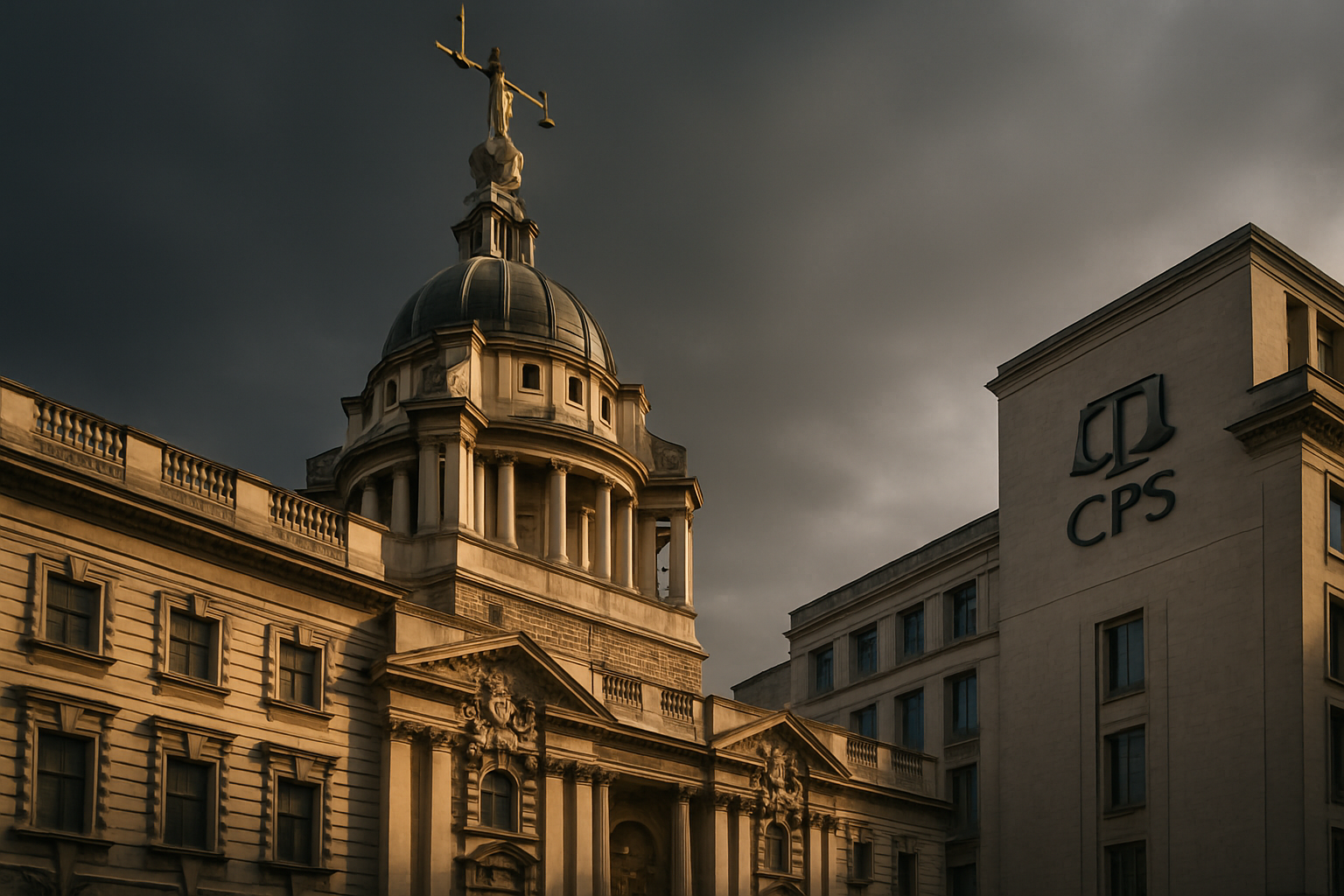
UK Crown Prosecution Service has confirmed they are providing active advice to police during the ongoing investigation into Prince Andrew's connections to Jeffrey Epstein, marking a significant escalation in the high-profile criminal inquiry that has already resulted in the former royal's historic arrest.
The Crown Prosecution Service (CPS) confirmation comes as Thames Valley Police continue their investigation into Andrew Mountbatten-Windsor, who was arrested on February 19, 2026, on suspicion of misconduct in public office. The 66-year-old former Duke of York became the first senior British royal arrested in modern history since King Charles I in 1647.
CPS Advisory Role Signals Serious Intent
The involvement of Crown prosecutors in an advisory capacity typically indicates that police believe they have sufficient evidence to potentially warrant criminal charges. According to sources familiar with the process, the CPS provides guidance on evidence collection, witness statements, and the legal framework required for a successful prosecution.
"The Crown Prosecution Service confirms support on inquiries after arrests on suspicion of misconduct in public office," a CPS spokesperson stated, referring to the investigation involving both Andrew and Peter Mandelson, the former UK ambassador to the US.
The central allegations against Andrew focus on his alleged sharing of classified government information with Epstein during his tenure as UK Special Representative for International Trade and Investment from 2001 to 2011. Specifically, investigators are examining a December 24, 2010 transmission of confidential Afghanistan intelligence containing sensitive data about Helmand province's gold, uranium, and oil reserves.
Protection Officers Under Scrutiny
New revelations have emerged about the role of Metropolitan Police protection officers assigned to Andrew during his visits to Epstein's properties. Document releases show that officers were explicitly instructed to provide security for dinner parties at Epstein's New York residence in December 2010, with emails bearing the subject line "Security for party" confirming officers were given "instructions on the door."
"This raises serious questions about the use of taxpayer-funded royal protection for private events with a convicted sex offender."
— Parliamentary Security Committee Source
The Metropolitan Police has stated that no wrongdoing has been identified "at this time" but confirms they are actively contacting former protection officers to seek information about potential allegations observed during Andrew's working royal period.
International Context and Broader Investigation
Andrew's case forms part of what European law enforcement agencies describe as the "largest international elite criminal network exposure in recent memory," spanning six countries with unprecedented cooperation between investigative bodies.
The investigation has already yielded significant political casualties across multiple nations, including the resignation of Goldman Sachs' top lawyer Kathy Ruemmler and the forced departure of DP World CEO Sultan bin Sulayem. In Norway, Crown Princess Mette-Marit faces potential criminal proceedings after being mentioned over 1,000 times in Epstein documents.
The Baltic states have coordinated investigations into trafficking networks, with Latvia declaring a human trafficking investigation into the "Natalie" modeling agency a national priority, while Poland has confirmed evidence of recruitment activities involving "women, possibly minors."
Constitutional Implications and Royal Response
King Charles III has maintained his unprecedented position supporting the investigation, declaring that "law must take its course" with "full support and cooperation" for authorities. This represents a seismic shift in royal protocol, prioritizing institutional integrity over family loyalty.
Defence Minister Luke Pollard has confirmed that the UK government is actively considering legislation to remove Andrew from the royal line of succession, calling it the "right thing to do" to prevent him from being "a heartbeat away from the throne." Such legislation would require an Act of Parliament plus consultations across the 14 Commonwealth realms where King Charles III serves as head of state.
Public support for the investigation remains strong, with polling showing 72% of British citizens backing the arrest as proof that no one is above the law.
Evidence and Legal Framework
The misconduct in public office charges carry serious penalties, including potential imprisonment if convicted. The offense requires proving that a public official willfully neglected their duty or misconducted themselves to abuse public trust.
Police searches have been completed at both Andrew's former Royal Lodge residence at Windsor and his current Sandringham Estate home. The investigation extends beyond Andrew to examine potential Official Secrets Act violations related to the handling of classified information.
The December 2010 incident occurred during a UAE state visit with Queen Elizabeth II, two years after Epstein's 2008 conviction for soliciting prostitution from a minor. The timing has raised questions about due diligence and security protocols surrounding Andrew's continued association with Epstein.
DOJ Document Releases and Victim Protection Concerns
The investigation has been complicated by the US Department of Justice's handling of Epstein documents. Deputy Attorney General Todd Blanche has confirmed that no new federal prosecutions are planned despite the release of over 3 million pages of evidence described as containing "disturbing" material.
A catastrophic victim protection failure by the DOJ exposed the identities of approximately 100 survivors, including 31 minors, through inadequate redaction processes. Federal judges are currently hearing emergency petitions over the confidentiality breach, which threatens future victim cooperation with law enforcement.
Timeline and Next Steps
Andrew remains under investigation following his release after 11 hours in custody at Aylsham Police Station, Norfolk. Thames Valley Police continue their inquiry, with the questioning of former protection officers ongoing.
The Crown Prosecution Service will ultimately decide whether to bring formal charges based on the evidence gathered. Given the complexity of the case and its international dimensions, the investigation is expected to continue for several more months.
Parliamentary committees have announced reviews of diplomatic appointment vetting procedures, while the government has not ruled out a judge-led inquiry depending on the investigation's findings.
Historical Precedent and Future Implications
The case represents a watershed moment for the British constitutional monarchy, testing the relationship between royal privilege and democratic accountability in the 21st century. The successful prosecution of a senior royal would set unprecedented legal precedents, while failure to achieve meaningful accountability could undermine public confidence in both royal and judicial institutions.
International observers are watching closely as Britain demonstrates whether its democratic institutions can deliver equal justice regardless of royal status. The resolution will establish crucial precedents for constitutional monarchies globally addressing similar accountability challenges while maintaining traditional structures.
"This is a defining moment for British justice and the principle that no one, regardless of their birth or status, is above the law."
— Constitutional Law Expert, University of Cambridge
The enhanced international cooperation emerging from this investigation is setting new standards for addressing transnational elite criminal networks, with implications extending far beyond the immediate case. The ultimate test remains whether democratic institutions can achieve meaningful accountability for sophisticated criminal networks that have historically operated with impunity across multiple jurisdictions.