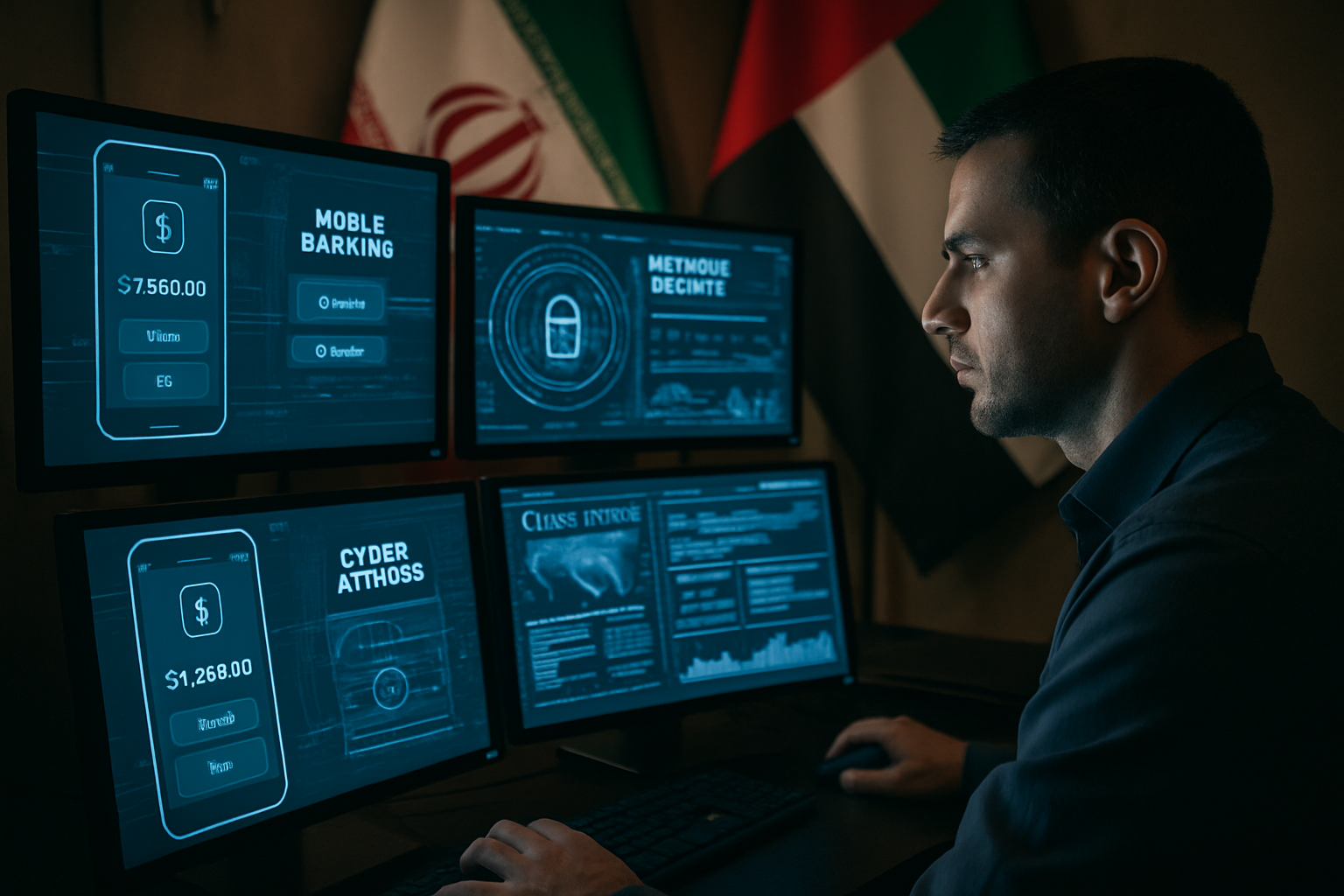
A perfect storm of cybersecurity threats and geopolitical tensions is reshaping the global digital asset landscape, with Pakistan reporting a devastating 56% increase in mobile banking cyberattacks while the UAE considers freezing billions of dollars in Iranian assets amid escalating regional conflicts.
The convergence of these developments underscores the fragility of digital financial infrastructure during periods of international instability, as cyber criminals exploit vulnerabilities in mobile banking systems while governments weaponize financial networks for geopolitical leverage.
Pakistan's Cybersecurity Emergency
According to cybersecurity firm Kaspersky's latest "Mobile Malware Evolution" report, Trojan banker attacks targeting Android smartphones in Pakistan surged by 56% throughout 2025 compared to the previous year. These sophisticated malware programs are specifically designed to steal user credentials for online banking, e-payment services, and credit card systems.
The scale of the threat has reached alarming proportions, with cybersecurity experts identifying 255,090 new Trojan banker installation packages globally – a sharp increase that indicates these criminal operations are generating substantial profits for cybercriminal organizations.
"Although Trojan bankers for smartphones are the fastest-growing category of mobile threats, they represent just one facet of an evolving cybercriminal ecosystem targeting digital financial services."
— Kaspersky Research Team
The malware distribution networks have become increasingly sophisticated, utilizing messaging applications and malicious webpages to reach victims. Cybersecurity analysts believe that threat actors will continue expanding delivery channels and developing new Trojan variants specifically designed to evade detection by traditional security solutions.
UAE-Iran Financial Tensions Escalate
Simultaneously, the United Arab Emirates is reportedly considering the unprecedented step of freezing Iranian assets worth billions of dollars held within the Gulf state. According to sources familiar with the matter, this potential action represents a dramatic escalation in regional tensions and could severely limit Tehran's access to foreign currency and global trade networks.
The move comes within the context of an ongoing military conflict involving the United States, Israel, and Iran, as reported by the Wall Street Journal. The potential asset freeze would mark a significant shift in the UAE's traditionally neutral financial posture toward Iran, potentially transforming Dubai and Abu Dhabi from financial bridges to barriers for Iranian economic activity.
Financial analysts suggest that such an action could trigger a broader realignment of Middle Eastern financial relationships, with Iran potentially seeking alternative banking relationships through China, Russia, or other non-aligned nations. The ramifications extend far beyond bilateral UAE-Iran relations, potentially affecting global oil markets, cryptocurrency flows, and alternative payment system development.
Global Context: The Cryptocurrency Collapse Connection
These developments occur against the backdrop of an unprecedented collapse in cryptocurrency markets. According to comprehensive analysis from my archived records, Bitcoin has crashed more than 50% from its October 2025 peak of $126,199, wiping out approximately $2 trillion in global cryptocurrency market value.
The cryptocurrency crisis has created a paradoxical effect: while traditional digital assets face extreme volatility, government-backed digital payment systems have demonstrated remarkable resilience. Nigeria, for example, now processes 43% of fuel sales through digital payments with same-day settlements, while Slovakia pioneers a €1.3 billion digital euro pilot project positioning the nation years ahead of EU-wide implementation.
The Infrastructure Vulnerability Factor
The convergence of cybersecurity threats and geopolitical tensions highlights critical vulnerabilities in global digital financial infrastructure. The ongoing global memory chip crisis – with Samsung, SK Hynix, and Micron facing sixfold price increases expected to persist until 2027 – has created additional strain on the technology foundations supporting digital financial services.
Pakistan's experience with mobile banking attacks demonstrates how rapidly cybercriminal capabilities can evolve to exploit infrastructure weaknesses. The 56% increase in Trojan banker attacks represents not just a national security concern but a template for potential threats facing other emerging markets heavily dependent on mobile financial services.
The UAE's consideration of Iranian asset freezes illustrates how quickly digital financial networks can become tools of geopolitical leverage. Unlike traditional banking relationships that operated through predictable diplomatic channels, the speed and scale of modern digital asset flows create new vulnerabilities and decision-making pressures for financial centers.
Emerging Market Digital Finance Resilience
Paradoxically, while Pakistan faces increased cyber threats, the broader emerging market digital finance ecosystem has demonstrated remarkable innovation and resilience. African nations have emerged as global leaders in practical fintech implementation, with Nigeria's success processing nearly half of fuel sales through digital payments providing a template for sustainable digital financial services.
Zimbabwe's Ndarama platform represents another breakthrough, creating the world's first programmable collateral-to-fiat system that bridges tokenized real-world assets directly to traditional currency without the complexity and volatility associated with cryptocurrency systems.
These success stories contrast sharply with the cryptocurrency market's devastating decline, suggesting that government-backed digital financial services offer superior stability and practical utility compared to speculative digital assets.
Regional Security Implications
The combination of cyber threats in Pakistan and potential financial warfare between the UAE and Iran creates broader security implications for the region. Pakistan's mobile banking vulnerabilities could provide attack vectors not just for financial crimes but for broader economic disruption efforts by hostile state or non-state actors.
The UAE's position as a financial hub connecting East and West makes any significant change in its approach to Iranian assets a matter of global economic significance. Dubai and Abu Dhabi have historically served as neutral financial centers, enabling complex international transactions even during periods of political tension.
"The weaponization of financial networks transforms traditional concepts of economic neutrality, potentially forcing financial centers to choose sides in ways that reshape global financial geography."
— Regional Financial Analyst
Technology and Regulation Response
The crisis is driving accelerated development of cybersecurity measures and regulatory frameworks. Pakistan's experience with mobile banking threats is leading to enhanced authentication protocols, improved fraud detection systems, and stronger international cooperation on cybercrime prevention.
Meanwhile, the potential UAE-Iran financial conflict is highlighting the need for more sophisticated approaches to international financial regulation that can balance security concerns with economic stability. Traditional sanctions frameworks were designed for conventional banking systems and may prove inadequate for addressing modern digital asset flows.
European regulators are watching these developments closely, as they finalize frameworks for comprehensive cryptocurrency oversight. Ghana has implemented the strictest cryptocurrency advertising ban in Africa, while Slovakia explores 51% combined taxes and social contributions on digital assets, demonstrating the range of regulatory approaches being considered globally.
Investment Strategy Evolution
The convergence of cybersecurity threats, geopolitical tensions, and cryptocurrency market instability is forcing a fundamental reassessment of digital asset investment strategies. Traditional speculation-based approaches are giving way to emphasis on regulatory clarity, government backing, and practical utility.
Countries that have successfully implemented digital financial services – such as Nigeria's fuel payment system or Slovakia's digital euro pilot – share common characteristics: government support, regulatory frameworks, integration with existing financial infrastructure, and focus on solving real economic problems rather than creating speculative trading opportunities.
Corporate treasuries are also reassessing their cryptocurrency holdings. While some companies like Strategy continue accumulating Bitcoin during market volatility, others are shifting toward more conservative digital asset strategies that emphasize stability and regulatory compliance.
Looking Forward: The New Digital Finance Reality
The events unfolding across Pakistan, the UAE, and Iran represent more than isolated incidents – they signal a fundamental transformation in how digital financial services operate within complex geopolitical environments. The 56% surge in Pakistani mobile banking attacks and potential UAE asset freezes against Iran demonstrate that digital finance can no longer be separated from broader security and diplomatic considerations.
Success in this new environment requires balancing innovation with security, technological advancement with regulatory clarity, and global connectivity with national security concerns. The countries and institutions that master this balance will likely emerge as leaders in the next phase of digital financial development.
As the global community grapples with these challenges, the emphasis is shifting toward sustainable, government-backed digital financial services that can provide stability and utility even during periods of market volatility and geopolitical tension. The future of digital finance appears to lie not in unregulated speculation but in carefully managed systems that serve real economic needs while maintaining appropriate security and oversight.