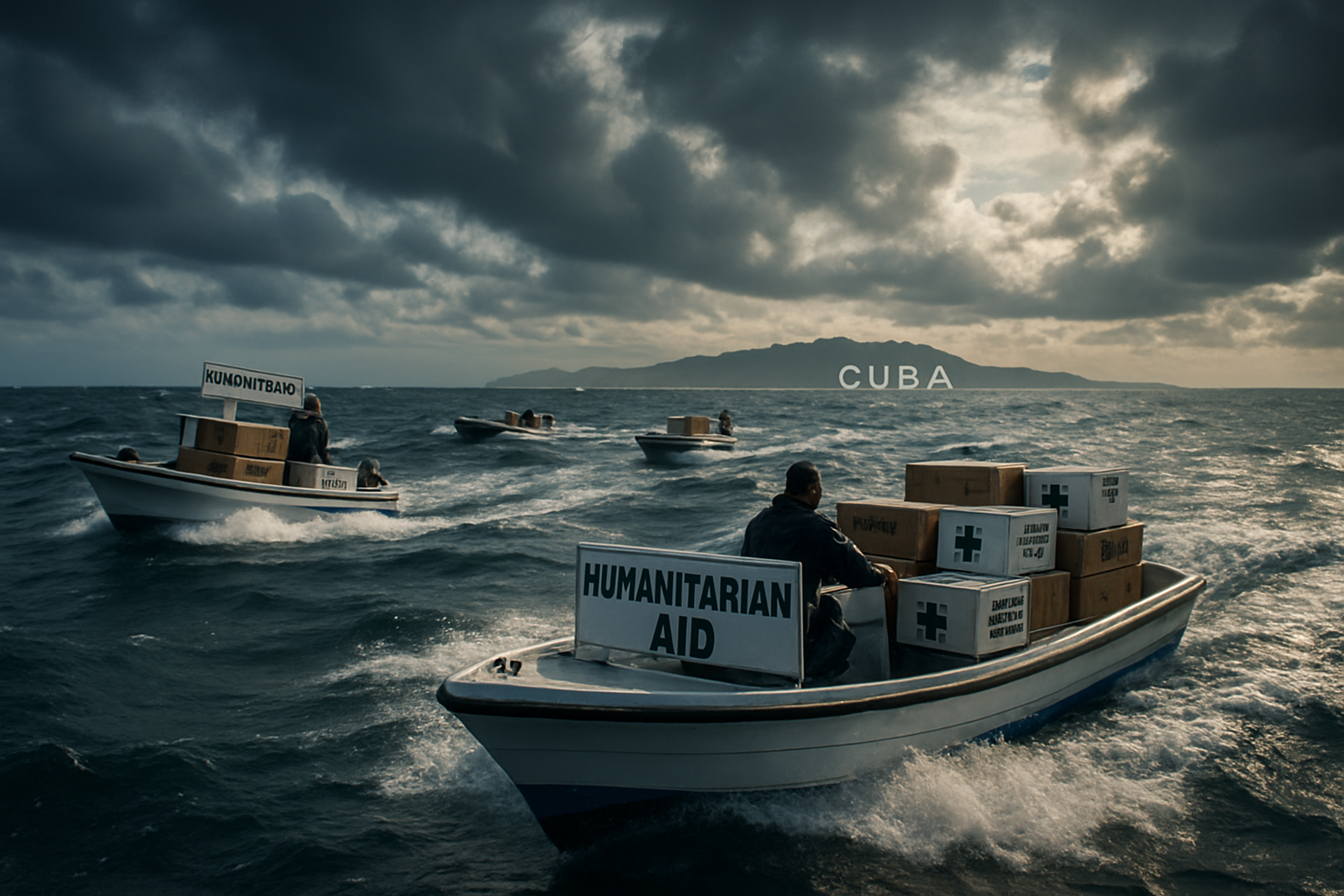
Missing humanitarian aid vessels bound for Cuba have been located with their crews safe, organizers confirmed Saturday, as part of an unprecedented international solidarity flotilla attempting to break through the most severe economic blockade of the island since the 1962 Missile Crisis.
The sailboats, carrying 9 crew members of various nationalities, temporarily went missing during the challenging Caribbean crossing as part of an ambitious international convoy that has delivered over 50 tonnes of medical supplies, food, solar panels and other essential goods to support Cuba amid what analysts describe as a "deliberately engineered humanitarian emergency."
The convoy organizers' announcement came as relief efforts intensified around a humanitarian crisis that has pushed Cuba into its deepest economic emergency since the 1990s "Special Period," but this time through systematic policy targeting rather than external collapse.
Unprecedented Economic Isolation Campaign
The aid mission unfolds against the backdrop of President Trump's "maximum pressure" campaign that has achieved what experts call total economic isolation of the Caribbean island. The January 30, 2026 executive order threatening 25% tariffs on countries supplying oil to Cuba successfully forced major allies including Mexico and Venezuela to halt energy shipments despite longstanding solidarity commitments.
The campaign's effectiveness has been devastating: Cuba's oil reserves have dropped to critical 15-20 day supply levels, domestic production has collapsed from 3 million to just 700,000 barrels daily, and the Cuban peso has hit historic lows of 500 units per US dollar. Complete aviation isolation from February 10-March 11 forced the evacuation of over 25,000 foreign tourists, including 21,000 Canadians and 4,000 Russians, after all nine major airports ran out of jet fuel.
"Not even in the hardest years of the Special Period had we seen anything like this."
— Cuban Transportation Official
The systematic infrastructure collapse has left 51% of Cuba's population—approximately 5.5 million people—experiencing scheduled blackouts. The healthcare system faces critical challenges with surgery suspensions, compromised medical equipment, and eliminated medical evacuation capacity affecting all 11 million inhabitants.
International Solidarity Flotilla
The missing boats were part of a broader international solidarity effort announced in February 2026 by UK Labour leader Jeremy Corbyn and other prominent figures from international social movements. The flotilla represents the most significant international humanitarian challenge to US economic policy toward Cuba since the revolution.
Finnish media reported Saturday that the missing aid vessels had been found and would continue their journey from Mexico to Cuba, though specific details about the temporary disappearance remain unclear. The incident highlights the dangerous conditions facing humanitarian missions attempting to reach the isolated island.
The convoy's 50 tonnes of supplies include desperately needed medical equipment, food supplies, and solar panels that could help address Cuba's chronic electricity shortages. The solar panels are particularly significant given the country's ongoing energy crisis, with six major nationwide blackouts occurring since late 2024, most recently affecting over 10 million inhabitants when the Antonio Guiteras thermoelectric power plant failed.
Regional Implications and International Response
The humanitarian crisis has forced Caribbean and Latin American nations to navigate between their traditional solidarity with Cuba and mounting US economic pressure. Mexico's President Claudia Sheinbaum exemplified this dilemma by providing 814 tons of humanitarian aid via naval vessels while suspending oil shipments to avoid US retaliation.
Russia has condemned what it calls "economic strangulation" and pledged oil aid as humanitarian assistance, though no timeline has been provided. China has demanded the US "immediately cease" its Cuba pressure campaign, while European officials have privately expressed concern about collective punishment affecting civilian populations.
The crisis has had deadly consequences beyond economic hardship. On February 25, Cuban coast guard forces killed four people and wounded six aboard a Florida speedboat in territorial waters, marking the most serious bilateral incident in years and adding a lethal dimension to the economic standoff.
Civil Unrest and Political Instability
The humanitarian emergency has triggered unprecedented civil unrest, including the March 13-14 storming of Communist Party headquarters in Morón, Ciego de Ávila province—the first successful attack on a major party facility since the 1959 revolution. Protesters chanting "¡Libertad!" burned party materials and documents, while widespread "cacerolazos" pot-banging protests have spread across multiple cities.
The government has shifted its priorities to "defense of internal order," implementing emergency measures including four-day work weeks, closure of 90% of gas stations, semi-virtual university classes, and transport paralysis. The tourism industry has collapsed entirely, with major Spanish hotel chains Meliá and Iberostar closing Varadero facilities.
Historical Context and Strategic Implications
Current conditions exceed the severity of the 1990s Special Period through what analysts describe as systematic targeting versus external collapse. The complete aviation connectivity severance is unprecedented since the 1962 Missile Crisis, while the scope of economic isolation represents a new template for 21st-century economic warfare affecting entire civilian populations.
The "Corolario Trump" strategy combines military pressure, economic coercion, and selective engagement as part of what officials describe as an updated Monroe Doctrine for hemispheric dominance. The approach follows the successful Venezuela model, where maximum pressure transformed into strategic partnership after Nicolás Maduro's capture in January 2026.
President Trump has made increasingly explicit statements about Cuba's future, declaring in March that he will have the "honor" of "taking Cuba in some form" and could "do anything I want" with the island, describing it as a "very weakened" and "failed nation with nice landscape."
Humanitarian Emergency Scope
The crisis has created cascading humanitarian effects across all sectors of Cuban society. Healthcare systems rely on backup generators as power outages threaten medical equipment and pharmaceutical storage. Transportation paralysis prevents medical staff from reaching hospitals and students from accessing schools.
The government has officially acknowledged that domestic agricultural production cannot meet national food requirements, representing a catastrophic failure affecting the entire population. At transportation hubs like Viaducto in Havana, crowds wait with backpacks and water bottles as public transport systems have completely collapsed.
Eastern provinces have been particularly affected, with 3.4 million people impacted by Holguín substation failures and inadequate power restoration. The February 13 fire at the Ñico López refinery in Havana eliminated remaining domestic oil processing capacity, further compounding the energy crisis.
International Law and Diplomatic Implications
The Cuban crisis has raised serious questions about the limits of economic coercion as a diplomatic tool and the normalization of collective punishment affecting civilian populations. International law experts express concern about precedent implications for territorial sovereignty and humanitarian protection principles in future conflicts.
European media outlets have characterized the situation as a "deliberately engineered humanitarian emergency," while regional powers face difficult choices between solidarity with Cuba and maintaining relationships with the United States. The Caribbean has effectively become a laboratory for testing American economic dominance in the 21st century.
The crisis outcome will influence future approaches to territorial disputes, democratic transitions, and great power competition management globally. Success demonstrates US economic influence in forcing regional compliance despite ideological commitments, while failure could establish dangerous precedents for comprehensive isolation of small states.
Crisis Resolution Prospects
Cuban authorities have provided no timeline for restrictions removal, and sustainable resolution requires either diplomatic breakthrough, alternative supply arrangements circumventing US pressure, or fundamental changes to Cuba's energy infrastructure. Secretary of State Marco Rubio has been positioned as the lead negotiator for potential talks, though Cuba has not publicly confirmed such discussions.
The international community faces an unprecedented test of how to respond to economic coercion affecting entire civilian populations. The humanitarian flotilla's successful delivery of 50 tonnes of supplies represents a symbolic challenge to the blockade, but the scale of need far exceeds what private solidarity efforts can address.
With Cuba entering its third month of unprecedented isolation, the coming weeks will determine whether innovative solutions emerge through international intervention or whether the island faces sustained economic siege that could reshape not only the Caribbean region but also international relations for decades to come.
The missing aid boats' safe recovery offers a moment of relief in an ongoing crisis that has pushed 11 million Cubans to the brink of humanitarian catastrophe, while testing the limits of international solidarity in confronting economic warfare targeting civilian populations in the 21st century.