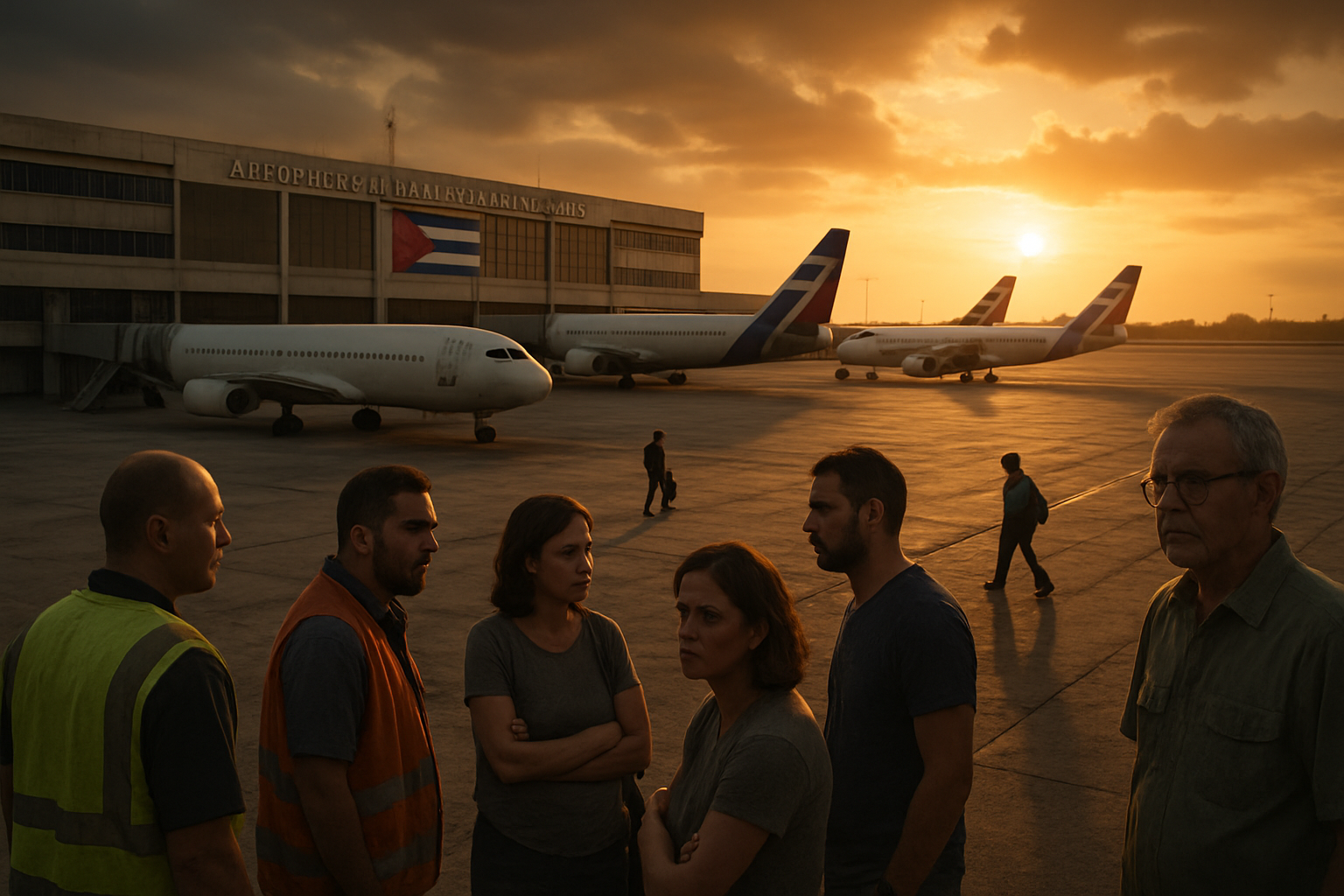
Cuba's aviation sector faces unprecedented collapse as critical fuel shortages force international airlines to cancel flights and threaten the island's connectivity with the outside world, marking the most severe aviation crisis since the 1990s Special Period.
Air Canada announced Monday the suspension of all flights to Cuba, citing the complete unavailability of aviation fuel at the island's airports. The airline confirmed that "aviation fuel will not be commercially available at the island's airports" effective February 10, forcing immediate route cancellations that affect thousands of passengers.
Spanish carriers Iberia and Air Europa have implemented emergency technical stopovers in the Dominican Republic to refuel their aircraft before continuing to Cuban destinations, according to sources from Havana Times. The workaround represents a dramatic increase in operational costs and flight times for airlines maintaining Caribbean routes.
Complete Aviation Fuel Depletion
Cuban aviation officials issued formal warnings to international carriers Sunday night that jet fuel would be unavailable at nine airports across the island, including José Martí International Airport in Havana. The notice, obtained by South China Morning Post, marks the latest escalation in Cuba's energy rationing efforts as the Trump administration's sanctions cut the Caribbean nation off from its primary fuel suppliers.
The crisis affects nearly 400 weekly flights and 70,000 scheduled seats, representing the most severe aviation isolation since the Soviet Union's collapse. International routes primarily serve Miami, Tampa, Fort Lauderdale, Madrid, and Mexico City, directly impacting Cuban-American family connections and essential supply chains serving the island's 11 million inhabitants.
According to Al Jazeera, Russia has warned that Cuba's fuel situation has reached "critical" levels, with Foreign Minister Abbas Araghchi describing the current state as approaching "total asphyxiation" of the island's economy.
Sanctions Tighten Energy Stranglehold
The aviation fuel shortage stems directly from the Trump administration's January 30 executive order threatening 25% tariffs on countries supplying oil to Cuba. The policy successfully forced Venezuela to halt crude shipments entirely, while Mexico suspended oil deliveries despite humanitarian concerns raised by President Claudia Sheinbaum.
Cuba's oil reserves have dwindled to just 15-20 days of supply, down from what were already emergency levels. Venezuelan crude shipments, which previously formed the backbone of Cuba's energy supply, have been completely halted following the political transition in Caracas and US pressure on oil-trading nations.
The island's domestic oil production has collapsed from 3 million barrels daily at its peak to just 700,000 barrels, insufficient to meet basic energy needs. This production shortfall, combined with the complete loss of international oil imports, has created an energy emergency unprecedented in Cuba's modern history.
Humanitarian Impact Escalates
The fuel crisis has triggered comprehensive emergency measures across Cuban society. The government has implemented four-day work weeks for government employees, drastically reduced public transportation, and shifted universities to semi-virtual classes. Scheduled blackouts now affect 3.4 million people during peak evening hours, according to state electricity company Unión Eléctrica.
Healthcare systems face critical constraints, with some hospitals suspending non-emergency surgeries due to transportation difficulties for medical staff and power outages threatening medicine storage and critical equipment. The crisis particularly affects eastern provinces, where Holguín substation failures have exacerbated electricity shortages.
Canada has issued a "high degree of caution" travel advisory, prompting widespread trip cancellations and forcing major hotel chains including Spanish giants Meliá and Iberostar to close facilities in Varadero and northern coastal areas. Blue Diamond's Canadian operations have similarly suspended services due to staff transportation issues.
International Response and Regional Impact
Mexico has deployed its largest humanitarian aid operation, with naval vessels Papaloapan and Isla Holbox carrying 814 tons of emergency supplies from Veracruz. President Sheinbaum emphasized that Mexico "won't allow territory used to pressure other nations," though the country suspended oil shipments to avoid US tariff threats.
European media have characterized the situation as a "deliberately engineered humanitarian emergency," questioning the effectiveness and morality of using economic pressure that directly impacts civilian populations. The crisis represents a test of economic coercion limits as a diplomatic tool, forcing Latin American countries to choose between US trade relationships and Cuba energy cooperation.
Regional aviation networks throughout the Caribbean face disruption as carriers explore contingency rerouting through Mexico and the Dominican Republic, similar to adaptations made during the 1990s Special Period when the Soviet Union's collapse triggered Cuba's last major economic crisis.
Historical Context and Precedent
The current crisis exceeds the 1990s Special Period in severity, as it results from deliberate policy rather than external economic collapse. Unlike previous challenges where Cuba maintained some international connectivity, the complete aviation fuel depletion threatens unprecedented isolation from international air travel.
The systematic targeting of energy supplies represents a new form of modern economic siege warfare, with the aviation sector serving as a critical pressure point. The crisis affects medical evacuations, tourism revenue, and family connections with the Cuban diaspora, creating collective punishment implications that extend beyond political objectives.
Looking Forward
The aviation fuel crisis highlights Cuba's vulnerability to external energy dependencies while demonstrating the reach of US economic leverage in the region. Airlines are exploring increased fuel loads at departure points to avoid Cuban refueling entirely, though this approach significantly increases operational costs and limits cargo capacity.
The resolution of this crisis will require either diplomatic breakthrough between Washington and Havana, alternative fuel supply arrangements through allied nations willing to absorb US economic pressure, or fundamental changes in Cuba's energy infrastructure and economic model. Until then, the island faces the prospect of continued aviation isolation that threatens to reshape its relationship with the international community.
As the crisis enters its second week, international observers note that the complete severance of aviation connectivity creates precedents for 21st-century economic isolation capabilities, with implications extending far beyond the Caribbean to other nations facing potential US economic pressure campaigns.