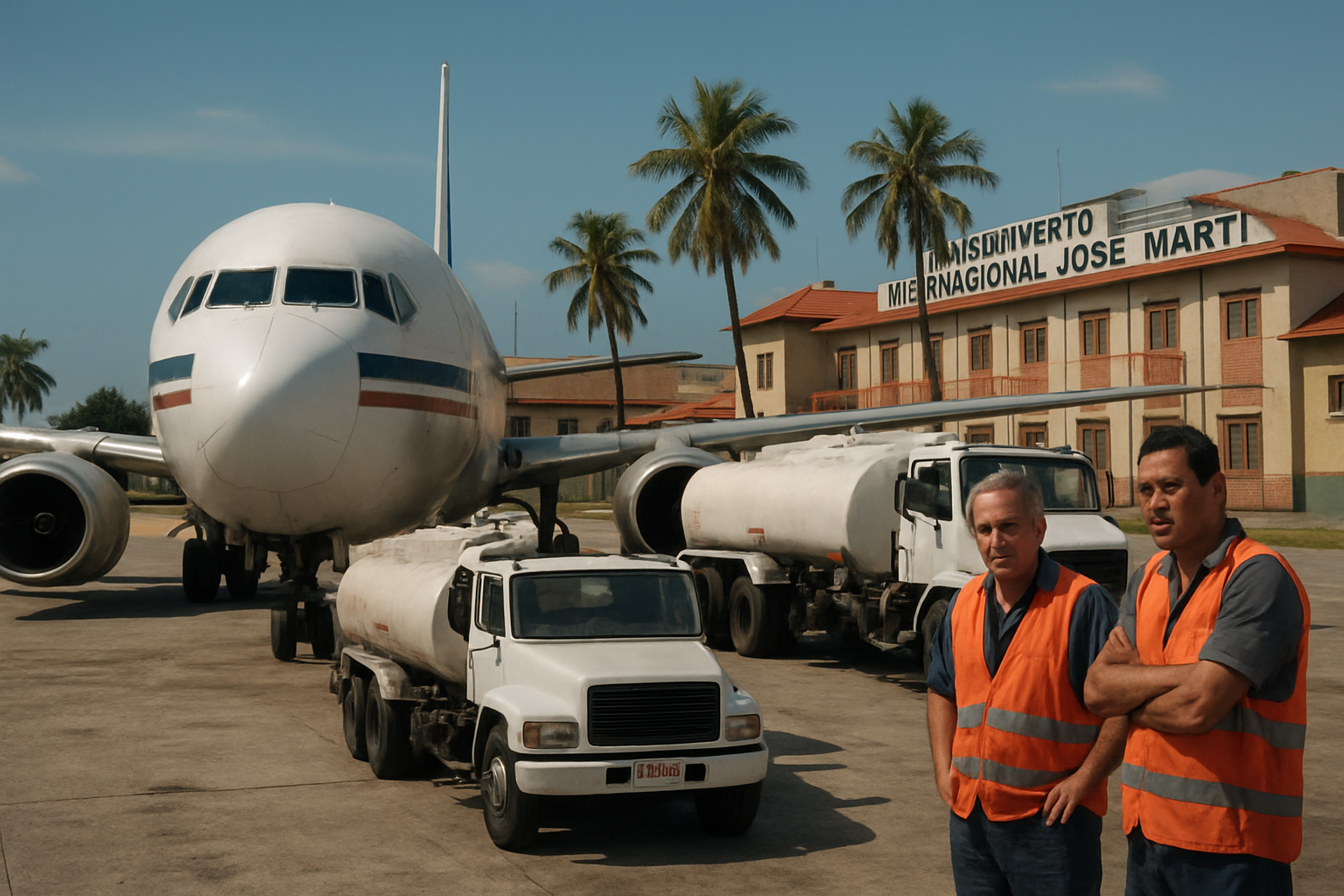
Cuba's aviation sector faces unprecedented isolation as the island's airports run out of jet fuel, forcing international airlines to implement emergency stopovers in Caribbean countries while the Cuban government implements sweeping energy rationing measures affecting millions of residents.
The crisis reached a critical point on February 10, 2026, when Cuban aviation officials issued formal warnings to international carriers that Jet A-1 fuel would not be available at any of the country's nine major airports, including José Martí International Airport in Havana. The fuel shortage has prompted European airlines to dramatically restructure their operations to Cuba, marking the most severe aviation isolation since the collapse of the Soviet Union.
Airlines Scramble for Alternative Solutions
Air Europa announced that its flights to Havana on February 10, 11, and 12 would make technical stops in Santo Domingo, Dominican Republic, to refuel before continuing to the Cuban capital. Air France has implemented similar measures, though the airline has not specified which Caribbean nation it will use as an intermediate stop.
Spanish carrier Iberia has taken a more cautious approach, announcing flexible fare policies to allow passengers to change their Cuba-bound tickets without penalty while the crisis persists. The measures reflect the airline industry's recognition that the fuel shortage represents more than a temporary logistical challenge.
Caribbean Airlines (CAL), the Trinidad and Tobago-based carrier, confirmed it will continue operating its weekly flights to Havana despite the crisis. However, the airline acknowledged the challenging circumstances in a statement to regional media outlets.
US Embargo Intensification Under Trump Administration
The fuel crisis stems directly from the Trump administration's renewed "maximum pressure" campaign against Cuba. President Trump's January 30, 2026 executive order threatens 25% tariffs on any countries supplying oil to the Caribbean island, effectively cutting off Cuba's primary energy lifelines.
The policy has successfully forced Mexico and Venezuela to suspend oil shipments to Cuba despite humanitarian concerns. Mexican President Claudia Sheinbaum, while announcing humanitarian aid shipments to the island, emphasized that Mexico "will not allow its territory to be used to pressure other nations" but confirmed the suspension of oil deliveries to avoid US economic retaliation.
Russian Foreign Minister Sergei Lavrov condemned what he described as "neocolonial pressure practices" by the United States, with Kremlin spokesman Dmitry Peskov warning Monday that Cuba's situation has become "critical." Moscow announced it is exploring "possible solutions" to provide Havana with assistance, though no concrete measures have been disclosed.
Humanitarian Crisis Deepens
The aviation fuel shortage represents just one aspect of a broader energy crisis devastating Cuban daily life. The government has implemented emergency measures including four-day work weeks for state employees, reduced public transportation, and semi-virtual university classes.
An estimated 3.4 million Cubans are affected by scheduled blackouts during peak evening hours, according to state electricity company Unión Eléctrica (UNE). The power outages have forced major tourist resorts in Varadero and the northern coast to close, affecting Spanish hotel chains Meliá and Iberostar, as well as Canadian operator Blue Diamond.
Cuba's healthcare system faces severe strain, with some hospitals suspending non-emergency surgeries due to power outages that threaten medicine storage and critical medical equipment. The crisis has also disrupted sugar harvests and forced the cancellation of international conferences, further isolating the island economically.
Oil Reserves Critically Low
Cuban officials acknowledge the country's oil reserves have dwindled to just 15-20 days of supply, with Venezuelan crude shipments completely halted and domestic production collapsed from 3 million barrels daily at its peak to just 700,000 barrels currently.
The Trump administration's strategy has proven remarkably effective in cutting off Cuba's energy supply chains. The threat of tariffs has not only stopped direct oil shipments but also eliminated the complex networks of intermediary countries that previously helped Cuba circumvent US sanctions.
Portugal's Público newspaper characterized the situation as leaving the island "on the brink of collapse," while French media have described the crisis as "deliberately engineered" to maximize pressure on the Cuban population.
International Response and Regional Implications
Mexico has deployed what officials describe as its largest humanitarian operation to Cuba, with naval vessels Papaloapan and Isla Holbox carrying 814 tons of supplies from Veracruz. However, President Sheinbaum has made clear that Mexico cannot risk its broader economic relationship with the United States by continuing oil shipments.
Canada issued a "high degree of caution" travel advisory for Cuba, citing infrastructure challenges and fuel shortages affecting basic services. The advisory has prompted numerous Canadian tourists to cancel or reconsider travel plans to the island, further devastating Cuba's crucial tourism sector.
The crisis demonstrates the far-reaching impact of US economic pressure on regional countries, forcing Latin American nations to choose between maintaining relationships with Cuba and preserving their economic ties with the United States.
Historical Context and Comparisons
Cuban officials and international observers have compared the current crisis to the "Special Period" of the 1990s following the Soviet Union's collapse. However, the current situation may be more severe because it results from deliberate policy rather than external economic collapse.
Unlike the 1990s crisis, which Cuba weathered while maintaining basic international connectivity, the complete aviation fuel depletion threatens unprecedented isolation from international travel. This affects not only tourism revenue but also medical evacuations, essential supply deliveries, and connections between Cuban families and the diaspora.
The systematic targeting of energy infrastructure represents what analysts describe as a new form of 21st-century economic siege warfare, testing the limits of economic coercion as a diplomatic tool.
Regional Aviation Networks Disrupted
The Cuban crisis has broader implications for Caribbean aviation networks, with carriers throughout the region exploring contingency routing options similar to those implemented during the 1990s Special Period. Airlines are increasing fuel loads at departure points to avoid Cuban refueling entirely, significantly raising operational costs and reducing cargo capacity.
The situation creates a precedent for how aviation connectivity can be severed through targeted economic pressure, with implications extending beyond the Caribbean to other regions facing potential US sanctions.
Looking Ahead
The crisis enters its second week with no clear resolution pathway visible. Cuban President Miguel Díaz-Canel has called for dialogue with the United States while describing the situation as an attempt at "total asphyxiation" of Cuba's economy.
International observers note that any resolution will require either a diplomatic breakthrough between Washington and Havana, alternative energy supply arrangements that can withstand US pressure, or fundamental changes to Cuba's energy infrastructure to reduce dependence on imported fuels.
The aviation fuel crisis represents a critical test of Cuba's ability to maintain international connections under maximum economic pressure, while also demonstrating the reach of US economic influence over global energy markets and supply chains.
As European airlines continue implementing costly workarounds and Caribbean nations navigate between humanitarian concerns and economic pressures, the crisis highlights the complex interdependencies of modern international aviation and the vulnerability of small island states to external economic coercion.