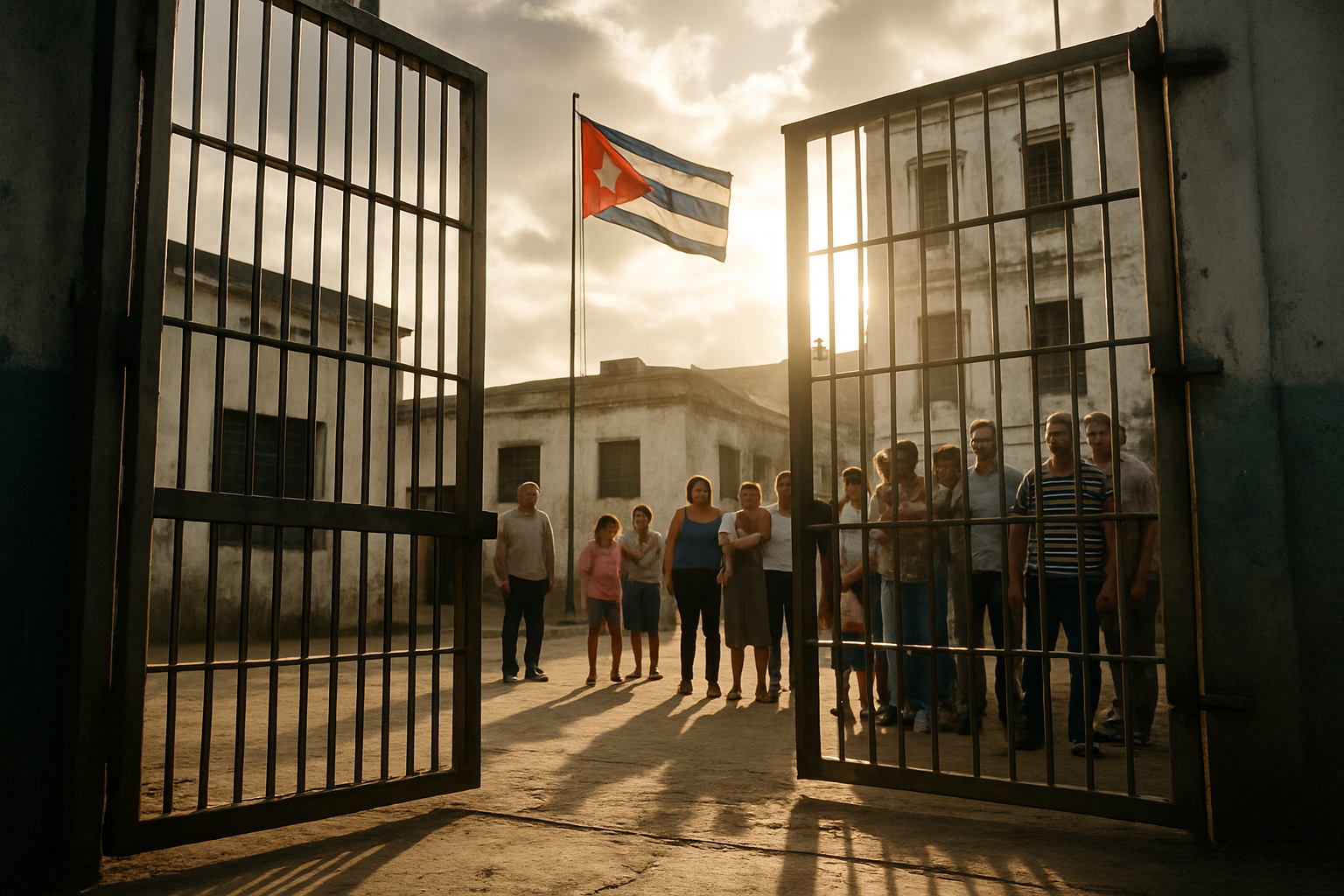
Cuban authorities began releasing prisoners on Friday after announcing that 2,010 inmates had been pardoned in what state media called a "sovereign and humanitarian" gesture, marking the largest such amnesty in Cuba in ten years amid the most intense pressure campaign applied by the United States in decades.
The releases began hours after the communist-run government announced the sweeping amnesty coinciding with Holy Week, as Cuba faces its worst crisis since the 1990s Special Period. The timing follows a sustained period of severe economic hardship, complete aviation isolation, and widespread blackouts affecting over half the island's population.
Scale and Scope of the Releases
Cuban authorities confirmed that the first prisoners began gaining freedom on Friday, though officials have not disclosed whether political prisoners are included among those being released. The pardon excludes individuals convicted of serious crimes including murder and drug trafficking, according to government announcements.
The 2,010 releases represent one of the most significant prisoner amnesty programs in recent Cuban history, surpassing previous clemency measures in both scale and timing. The announcement comes as international rights organizations have intensified scrutiny of Cuba's detention practices amid the ongoing crisis.
International Pressure and Context
The United States has been closely monitoring whether political prisoners would be among those liberated. A State Department spokesperson said it remains "unclear how many, if any, political prisoners will be released," while continuing to "call for the immediate release of the hundreds of other brave Cuban patriots who remain unjustly detained."
The question of political prisoners has long been a major sticking point in negotiations between Washington and Havana. The release of all, or the majority, of political prisoners would be seen as a major concession by the Cuban government in response to unprecedented international pressure.
"It is unclear how many, if any, political prisoners will be released. We continue to call for the immediate release of the hundreds of other brave Cuban patriots who remain unjustly detained."
— State Department Spokesperson
Economic Crisis Drives Policy Shift
The prisoner releases occur during Cuba's most severe crisis since the collapse of the Soviet Union. The island has experienced complete aviation isolation, with zero jet fuel available at all nine airports through March 2026, forcing the evacuation of over 25,000 tourists, including 21,000 Canadians and 4,000 Russians.
Fifty-one percent of Cuba's population—approximately 5.5 million people—have been experiencing scheduled blackouts during peak hours. Oil reserves have reached critically low levels with only 15-20 days of supply remaining, while Venezuelan crude shipments have completely halted following U.S. pressure on supply partners.
The healthcare system has been severely compromised, with hospital surgeries suspended due to power outages and fuel shortages affecting medical staff transportation. The peso has collapsed to historic lows of 500 to the dollar, while domestic oil production has plummeted from 3 million to 700,000 barrels daily.
Historic Civil Unrest
The releases follow unprecedented civil unrest in March, when protesters successfully stormed Communist Party headquarters in Morón, Ciego de Ávila—the first successful attack on a major party facility since the 1959 revolution. Demonstrators chanted "¡Libertad!" while burning materials inside the building, marking a significant escalation in public dissent.
Major hotel chains including Meliá, Iberostar, and Blue Diamond have closed facilities in Varadero and northern coast areas due to the crisis. Canada has issued a "high degree of caution" travel advisory, effectively ending the crucial winter tourism season that Cuba depends on for foreign currency.
Regional Prisoner Release Pattern
The Cuban amnesty follows a broader pattern of prisoner releases across Latin America in 2026. Venezuela has freed over 750 political prisoners under its comprehensive 1999-2026 amnesty program—the most extensive political reconciliation in recent Latin American history. Belarus also released 250 political prisoners in a U.S.-brokered agreement in March 2026.
These parallel developments suggest a regional trend toward prisoner releases as governments face varying degrees of international pressure and seek diplomatic accommodation with changing geopolitical realities.
International Responses
Russia has continued providing humanitarian assistance to Cuba despite U.S. pressure, with the tanker Anatoly Kolodkin delivering 730,000 barrels of oil to Port Matanzas in March after receiving a White House humanitarian exception. China has demanded that the United States "immediately cease" pressure on Cuba, while European media have characterized the situation as a "deliberately engineered humanitarian emergency."
Former British Labour leader Jeremy Corbyn has announced an international flotilla to challenge what he terms an "economic blockade," highlighting growing international concern about the humanitarian impact of the crisis on Cuban civilians.
Strategic Implications
The prisoner releases represent a significant test of what the Trump administration has termed the "Corolario Trump"—a 21st-century Monroe Doctrine update combining military pressure, economic coercion, and selective engagement. This approach follows the Venezuela model, where maximum pressure campaigns led to strategic partnerships following political changes.
The Cuban case has become a laboratory for testing the effectiveness of economic coercion on civilian populations while examining the limits of territorial sovereignty enforcement and humanitarian protection principles in the modern era.
Monitoring and Next Steps
International rights groups are closely monitoring the implementation of the prisoner releases to assess their scope and determine whether they include political detainees. The process will be scrutinized for its comprehensiveness and whether it represents a genuine policy shift or a tactical response to current pressures.
The coming weeks will be crucial in determining whether this amnesty marks the beginning of broader reforms or remains an isolated gesture amid ongoing crisis. The international community continues to watch for signs of whether Cuba's approach to detention and human rights will fundamentally change as the island faces its most challenging period in decades.
For many Cuban families, the releases offer hope for reunion after years of separation, while the broader implications for U.S.-Cuba relations and regional stability remain to be seen as the humanitarian situation continues to evolve.