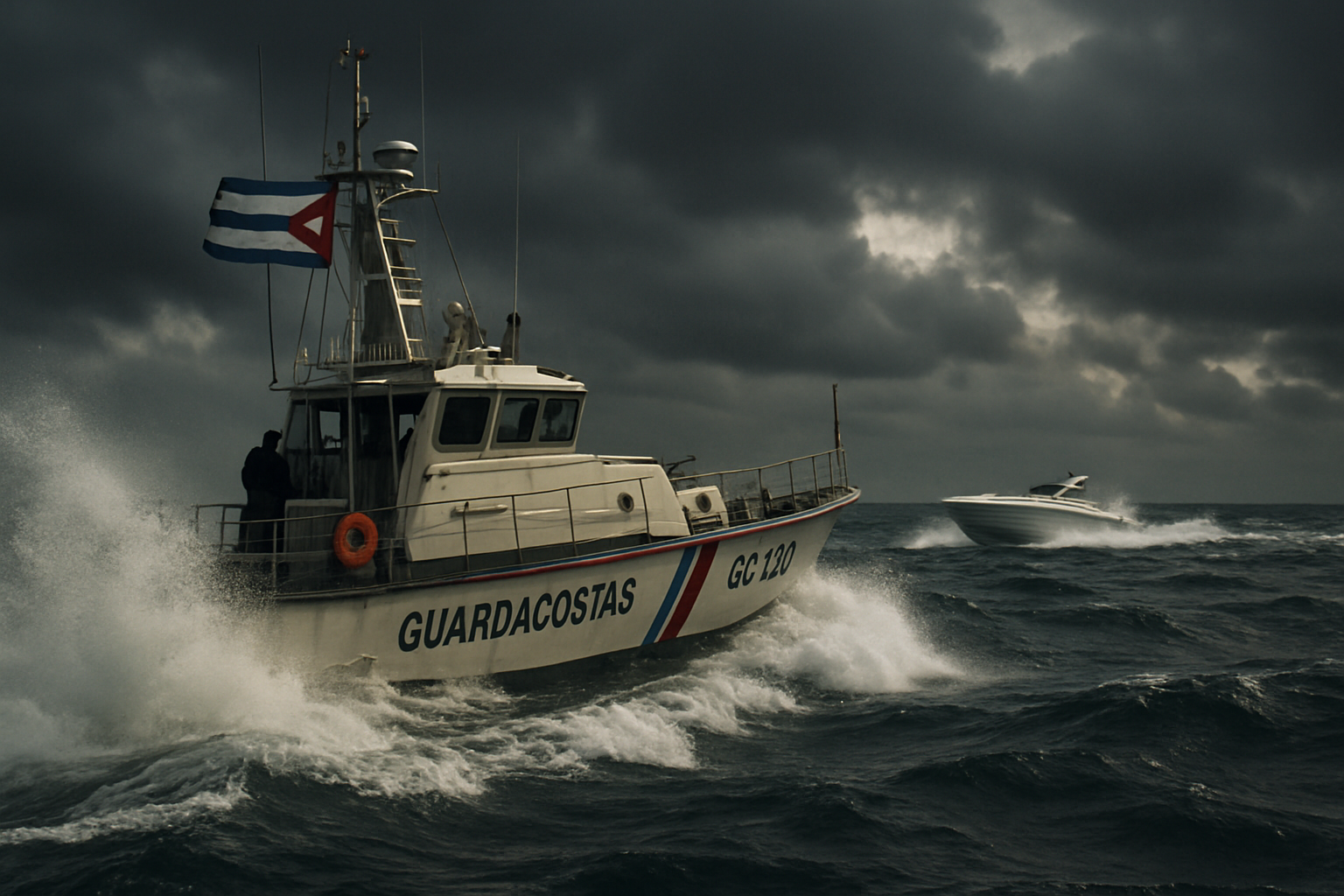
Cuban coast guard forces killed four people and wounded six others in a deadly firefight with a Florida-registered speedboat in Cuban territorial waters on February 25, 2026, in what Cuban authorities claim was an armed infiltration attempt by Cuban-Americans seeking to unleash terrorism on the communist island.
The confrontation occurred in Cuban territorial waters near the northern coast of the Caribbean nation, marking the most serious U.S.-Cuba bilateral incident in years. Cuba's Interior Ministry said the 10 passengers aboard the vessel were all Cubans living in the United States who had opened fire on Cuban soldiers first, injuring one Cuban officer.
In a statement released late Wednesday, Cuba's government said the passengers aboard the Florida-registered speedboat were "armed Cubans living in the U.S. who were trying to infiltrate the island and unleash terrorism." The ministry added that assault rifles, handguns, Molotov cocktails and other military-style gear were found on the vessel.
U.S. Officials Seek Independent Investigation
U.S. Secretary of State Marco Rubio said Washington was conducting its own investigation and would not rely solely on Cuban accounts of the incident. "We're not going to base our conclusions on what they've [Cuba] told us, and I'm very, very confident that we will know the full story of what happened here," Rubio told reporters while on a diplomatic trip to St. Kitts and Nevis.
"As we gather more information, then we'll be prepared to respond accordingly."
— Marco Rubio, U.S. Secretary of State
In Washington, U.S. Vice President JD Vance confirmed the White House was "monitoring" the situation, though he provided no further details about the nature of the vessel's mission or the identities of those aboard.
Regional Context of Escalating Tensions
The deadly incident occurs against the backdrop of unprecedented Caribbean militarization under the Trump administration's "Operation Southern Spear" campaign, which has resulted in over 145 deaths across 42 attacks since September 2025. The operation has transformed the Caribbean Sea into an active military zone through aggressive interdiction campaigns using lethal force against suspected trafficking vessels.
The confrontation also comes as Cuba experiences its worst energy crisis since the 1990s "Special Period." The island faces complete aviation isolation through March 11, 2026, with 51% of the population (5.5 million people) experiencing scheduled blackouts. Trump's maximum pressure campaign has forced Venezuela and Mexico to halt oil shipments to Cuba, leaving the island with critically low fuel reserves of just 15-20 days.
The crisis has devastated Cuba's tourism industry, with over 25,000 foreign tourists evacuated, including 21,000 Canadians and 4,000 Russians. Major hotel chains including Meliá, Iberostar, and Blue Diamond have closed facilities in Varadero and along the northern coast.
Cuba's Version of Events
According to Cuban authorities, the coast guard vessel approached the speedboat for identification when the occupants opened fire, wounding a Cuban commander. Cuban forces then returned fire, killing four and wounding six of the vessel's passengers.
The Interior Ministry statement described the incident as a thwarted infiltration by "a command of terrorist infiltration" and said those arrested after the firefight confirmed they "intended to carry out an infiltration for the purposes of terrorism."
Cuban authorities reported seizing a significant cache of weapons and equipment, including assault rifles, handguns, Molotov cocktails, bulletproof vests, telescopic sights, and camouflage uniforms from the vessel.
Historical Precedent and Maritime Law Questions
The incident raises complex questions about maritime law regarding the use of lethal force against civilian vessels in territorial waters. International maritime law experts have questioned the proportionality of shooting to kill civilians based on suspected rather than confirmed hostile activity.
The confrontation reflects Cuban defensiveness amid what international observers have characterized as a "deliberately engineered humanitarian emergency." The systematic economic siege has created unprecedented isolation for the island's 11 million inhabitants.
Previous incidents in Cuban waters have typically involved migrants attempting to reach the United States, but this case represents a potential reversal—with alleged Cuban-Americans attempting to reach Cuba with what authorities claim were violent intentions.
Regional and International Implications
The deadly confrontation highlights the dangerous intersection of political tensions and civilian maritime activities in the Caribbean. The incident occurred just days after U.S. Secretary of State Rubio attended the CARICOM 50th anniversary summit in St. Kitts and Nevis, where he defended Trump administration policies in the region despite concerns from Caribbean leaders about sovereignty violations.
Recent U.S. military operations in the Caribbean have created anxiety among fishing communities after three Saint Lucian fishermen were reportedly killed in separate U.S. operations. A February 13 U.S. drone strike in St. Vincent and the Grenadines territorial waters seized $500 million worth of cocaine without prior diplomatic notification to regional authorities.
"The situation in Cuba was heating up and called for restraint after a deadly incident with a Florida-registered speedboat off the coast of the Caribbean island."
— Kremlin Statement
Russia's Kremlin issued a statement calling for restraint and expressing concern about escalating tensions. China has also demanded that the United States "immediately" cease pressure on Cuba, while European media outlets have characterized the ongoing crisis as a "deliberately engineered humanitarian emergency."
Implications for U.S.-Cuba Relations
The incident adds a lethal dimension to what has primarily been an economic and diplomatic standoff between Washington and Havana. It represents the most serious bilateral incident in years and creates dangerous precedents for territorial enforcement amid regional militarization.
The confrontation comes as the Trump administration has implemented what Cuban President Miguel Díaz-Canel has called "total asphyxiation" of the island through comprehensive economic pressure. The systematic isolation exceeds the severity of the 1990s Special Period through deliberate policy rather than external economic collapse.
Maritime law experts warn that the incident could set concerning precedents for the use of lethal force in territorial waters enforcement during periods of regional militarization. The template-setting nature of the confrontation may influence how similar incidents are handled throughout the Caribbean region.
Ongoing Investigation and Next Steps
Both the United States and Cuba are conducting separate investigations into the incident. U.S. officials have emphasized they will draw their own conclusions rather than accepting Cuban accounts at face value, while Cuban authorities have released details about the weapons and equipment allegedly seized from the vessel.
The international community is monitoring the situation for signs of further escalation or diplomatic resolution. Success in managing the crisis diplomatically could provide lessons for conflict resolution, while failure might establish dangerous precedents for territorial waters enforcement that could affect broader Caribbean maritime security.
The incident underscores the human costs when political tensions intersect with maritime security operations, highlighting the urgent need for updated protocols and diplomatic frameworks that balance security concerns with proportional response principles.