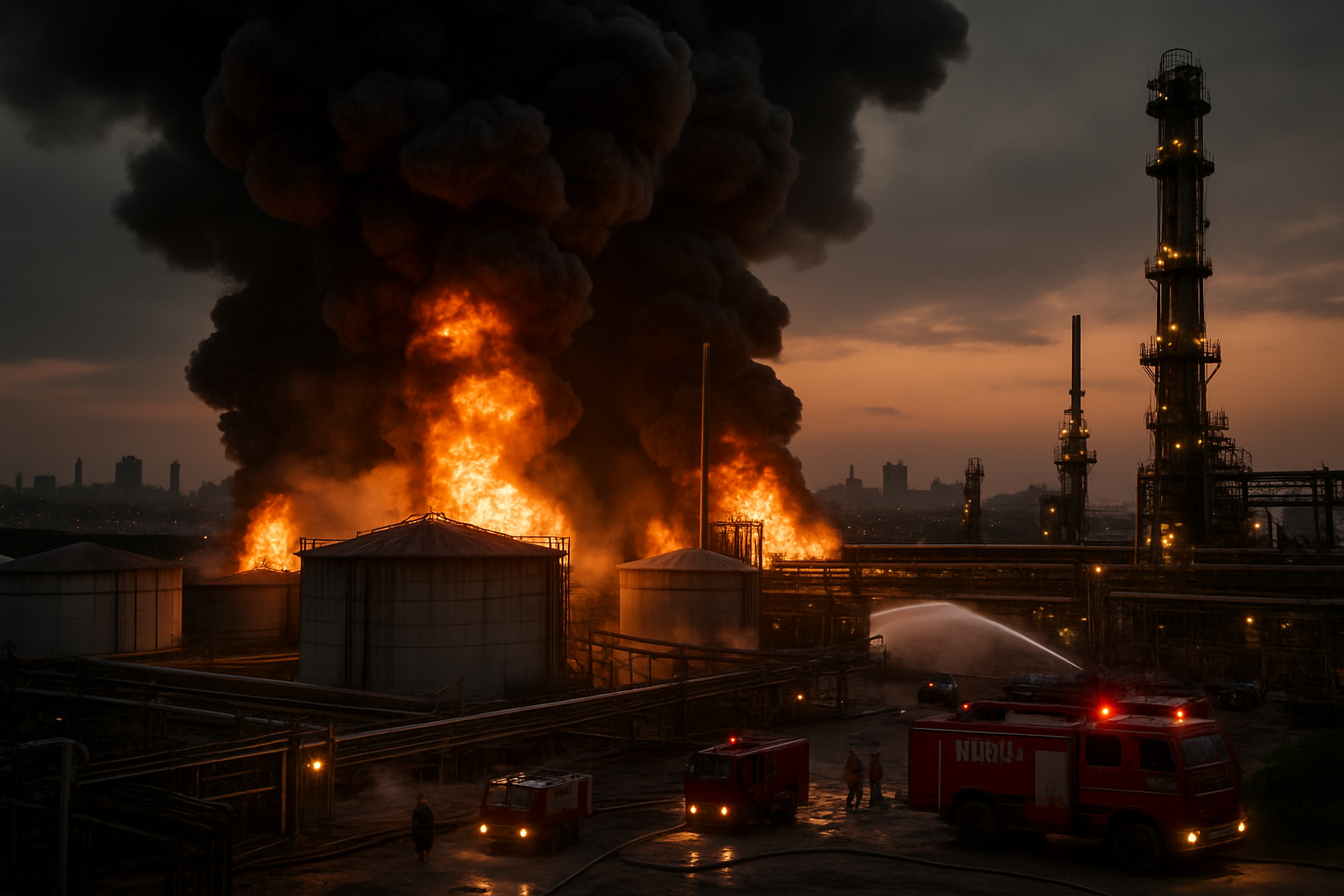
Cuba's energy crisis reached a critical new phase on February 14, 2026, as a major fire erupted at the Ñico López oil refinery in Havana, sending thick black smoke columns across the capital while the island nation grapples with its worst fuel shortage since the 1990s "Special Period."
The refinery incident, which Cuban authorities reported as "controlled" with ongoing investigations into its causes, represents another devastating blow to Cuba's already crippled energy infrastructure. The fire occurred at one of the country's few functioning refineries during an unprecedented crisis that has left the nation with just 15-20 days of oil reserves and completely isolated from international aviation.
Complete Aviation Isolation Creates Tourist Exodus
The energy emergency has created the most comprehensive aviation blockade since the 1962 Cuban Missile Crisis, with all nine major Cuban airports confirming zero jet fuel availability through March 11, 2026. This unprecedented isolation has forced the evacuation of over 25,000 tourists, including 21,000 Canadians and 4,000 Russians, as major airlines suspended all operations to the island.
Air Canada, WestJet, Air Transat, Rossiya Airlines, and Nordwind have all ceased flights indefinitely, affecting 400 weekly flights and 70,000 scheduled seats. The evacuation flights departed with increased fuel loads to avoid Cuban refueling requirements, marking the first time since the Soviet collapse that Cuba has been completely severed from international air travel.
"We are facing total asphyxiation of our economy," Cuban President Miguel Díaz-Canel declared in a televised address, calling the situation worse than the 1990s Special Period because it results from "deliberate U.S. policy rather than external economic collapse."
— Cuban Government Statement
Tourism Industry in Freefall
The aviation crisis has devastated Cuba's crucial tourism sector, which typically generates billions in foreign currency revenue. Major Spanish hotel chains including Meliá and Iberostar have closed their Varadero and northern coast facilities, while Canadian-owned Blue Diamond resorts have shuttered operations due to staff transportation difficulties and supply chain disruptions.
Canada issued a "high degree of caution" travel advisory, effectively ending the winter tourism season as thousands of travelers canceled bookings. The crisis forced Cuban bishops to cancel their scheduled meeting with Pope Leo XIV in Vatican City, citing concerns about return travel possibilities.
The peso has plummeted to historic lows of 500 units per dollar, representing a 15% weekly decline, as the economic crisis deepens. Tourism industry analysts describe the sector as entering "freefall," with recovery prospects uncertain even if fuel supplies are restored.
Trump Administration's Maximum Pressure Campaign
The crisis stems directly from President Trump's January 30, 2026 executive order threatening 25% tariffs on countries supplying oil to Cuba. This "maximum pressure" strategy successfully forced both Venezuela and Mexico to suspend petroleum deliveries despite humanitarian concerns expressed by regional leaders.
Venezuelan crude shipments, which previously sustained Cuba's energy needs, completely halted following the political transition in Caracas after Nicolás Maduro's January 2026 removal. Mexico's President Claudia Sheinbaum, while maintaining humanitarian aid shipments of 814 tons of supplies via naval vessels, suspended oil deliveries to avoid U.S. economic retaliation.
The policy represents an evolution of traditional sanctions into what European officials characterize as "deliberately engineered humanitarian emergency," using economic coercion to affect entire civilian populations beyond political targets.
Humanitarian Emergency Escalates
The energy shortage has created severe humanitarian consequences across the island's 11 million inhabitants. According to state electricity company Unión Eléctrica, 51% of the population - approximately 5.5 million people - experience scheduled blackouts during peak evening hours.
The government has implemented comprehensive emergency measures including:
- Four-day work weeks for government employees
- Semi-virtual university classes
- Suspension of non-emergency surgeries at hospitals
- 90% closure of provincial gas stations
- Paralysis of public transportation systems
Healthcare systems face particular strain as power outages threaten medicine storage and critical medical equipment. Medical staff report transportation difficulties reaching hospitals, while eastern provinces housing 3.4 million residents suffered extended blackouts after failures at the Holguín electrical substation.
International Response and Isolation
The crisis has generated unprecedented international attention and condemnation. Russia has promised crude oil and petroleum products as humanitarian aid, directly challenging the U.S. pressure campaign. China demanded Washington "immediately" cease its Cuba policy, while European media outlets characterized the situation as a test of economic coercion limits.
Former UK Labour leader Jeremy Corbyn announced plans for an international humanitarian flotilla to challenge the oil blockade, representing the most significant solidarity effort since Cuba's isolation began. However, regional allies face difficult choices between maintaining relationships with Washington and providing humanitarian assistance.
Mexico exemplifies this dilemma: while President Sheinbaum maintains humanitarian aid shipments, she suspended oil deliveries under U.S. pressure, stating Mexico "won't allow its territory to be used to pressure other nations" while avoiding economic retaliation.
Economic Infrastructure Collapse
Cuba's domestic oil production has collapsed from 3 million barrels daily at its peak to just 700,000 barrels currently, creating complete dependence on imports for aviation fuel and refined petroleum products. The Ñico López refinery fire eliminates one of the few remaining domestic processing capabilities, potentially extending the crisis indefinitely without diplomatic intervention.
The infrastructure has deteriorated significantly due to inability to import spare parts and modernization equipment under existing sanctions. The May 2022 refinery incident demonstrated the fragility of Cuba's petroleum processing capabilities, but the facility had continued operations until this latest fire.
Sugar harvests have been halted, international conferences canceled, and essential supply chains disrupted. The government has shifted priorities to "defense of internal order," suggesting preparations for extended economic siege conditions.
Historical Precedent and Strategic Implications
The current crisis represents the most comprehensive economic isolation Cuba has faced since the 1962 Missile Crisis. Unlike the 1990s Special Period, which resulted from the Soviet Union's collapse, this emergency stems from deliberate U.S. policy designed to force political change through economic pressure.
The complete aviation connectivity severance is unprecedented in modern Cuban history. During the Special Period, Cuba maintained some international flights, but current conditions have eliminated all commercial aviation for the first time in over six decades.
The crisis sets significant precedents for 21st-century economic warfare capabilities, demonstrating how energy and transportation targeting can effectively isolate small island nations. Success or failure will influence future approaches to territorial disputes, democratic transitions, and great power competition management globally.
No Resolution Timeline
Cuban officials have provided no timeline for resolving the crisis, with government priorities shifted toward maintaining internal stability. The international community faces critical decisions about humanitarian emergency response versus maintaining pressure for political change.
The outcome will determine whether innovative diplomatic solutions can emerge to address decade-old challenges or whether Cuba faces sustained economic siege unprecedented in modern history. The template being established could influence global approaches to economic coercion and territorial sovereignty for years to come.
As the energy crisis enters its second month with the refinery fire adding new complications, the stakes extend far beyond bilateral U.S.-Cuba relations to fundamental questions about economic warfare ethics, civilian population protection, and international law enforcement in the 21st century.