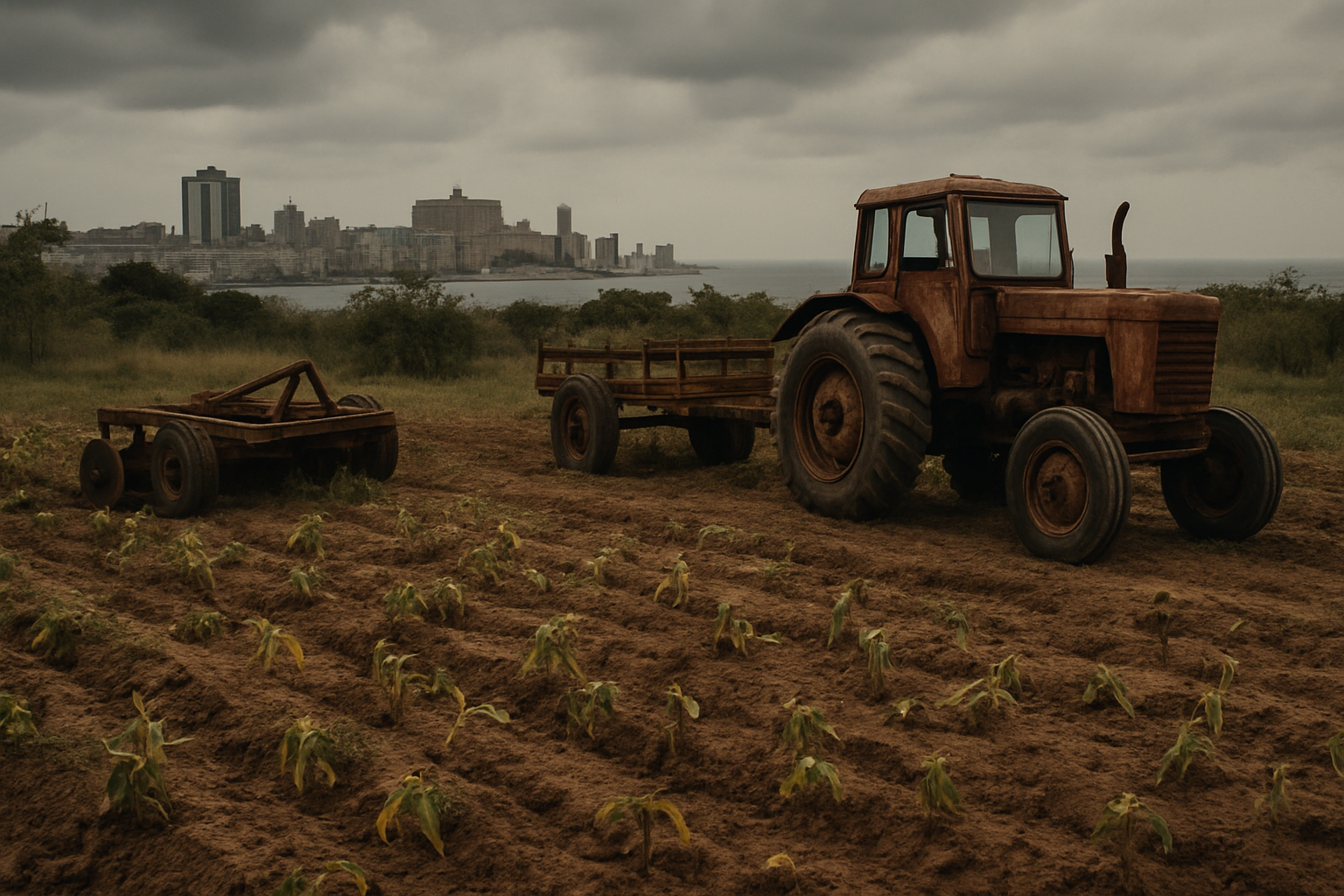
Cuba is experiencing an unprecedented economic and humanitarian crisis that government officials admit has surpassed even the darkest days of the 1990s "Special Period," with agricultural production failing catastrophically to meet the population's basic food requirements while a complete breakdown of transportation systems leaves millions stranded.
The gravity of the situation is starkly evident in the words of Cuban officials and citizens who describe conditions as worse than the devastating economic collapse that followed the Soviet Union's demise. "Not even in the hardest years of the Special Period had we seen anything like this," according to sources monitoring the crisis, reflecting the unprecedented nature of Cuba's current predicament.
Transportation System in Complete Collapse
The island's transportation infrastructure has reached a breaking point, with scenes of desperation unfolding across the country. At the Viaducto, where travelers could once simply raise their hand to catch a Transtur bus from Varadero heading to Havana, crowds now gather with backpacks, water bottles, and tense faces, waiting for transportation that may never come.
This transportation crisis extends far beyond inconvenience, creating a humanitarian emergency that affects every aspect of Cuban life. Medical staff cannot reach hospitals, students cannot access educational institutions, and workers cannot get to their jobs. The breakdown has effectively isolated communities across the island, exacerbating an already dire economic situation.
Agricultural Production Falls Short of National Needs
Perhaps most critically, Cuban government officials have acknowledged that the nation's agricultural production can no longer cover the country's food requirements. This admission, reported by Italian news sources, represents a devastating blow to a country already struggling under the weight of comprehensive international economic pressure.
The agricultural shortfall comes at a time when Cuba desperately needs food security to support its 11 million inhabitants. Years of economic pressure, infrastructure decay, and climate challenges have combined to create a perfect storm that has crippled the island's ability to feed itself.
The government has been forced to stigmatize what it calls the "hostile US policy" as a contributing factor to these agricultural failures, highlighting how international political tensions translate into human suffering at the most basic level of food security.
Systemic Economic Breakdown
Cuba's current crisis extends far beyond any single sector, representing a comprehensive breakdown of economic systems that have sustained the island for decades. Recent months have witnessed:
- Complete aviation isolation with zero jet fuel availability at all nine major airports
- 51% of the population experiencing scheduled blackouts during peak hours
- Oil reserves reduced to critical 15-20 day supply levels
- The Cuban peso hitting historic lows of 500 units per US dollar
- Healthcare systems compromised with medical equipment threatened by power outages
The transportation crisis that prevents people from reaching the Viaducto efficiently is symptomatic of broader infrastructure collapse. Roads remain impassable, public transportation has virtually ceased in many areas, and fuel shortages have made private transportation prohibitively expensive for most Cubans.
Historical Context and Unprecedented Severity
To understand the magnitude of Cuba's current predicament, it's essential to recognize how it compares to the island's previous economic nadir. The Special Period of the 1990s, triggered by the Soviet Union's collapse, led to widespread hardship including severe food shortages, energy blackouts, and economic contraction.
"This crisis exceeds the Special Period through systematic targeting versus external collapse."
— International observers monitoring the situation
However, the current crisis is fundamentally different and arguably worse. While the Special Period resulted from the external shock of losing Soviet support, today's crisis stems from a combination of internal economic mismanagement, international pressure, and infrastructure decay that has accumulated over decades.
The agricultural production crisis represents a particular escalation. During the Special Period, Cuba maintained some agricultural capacity and managed to implement urban farming initiatives that helped alleviate food shortages. Today's admission that production cannot meet food requirements suggests a more fundamental breakdown of the island's agricultural systems.
International Dimensions and Regional Impact
Cuba's crisis is unfolding within a broader context of Caribbean economic and political transformation. The island has become isolated not just economically but also diplomatically, with traditional allies facing pressure to limit their support.
The agricultural shortfall occurs as global food security faces unprecedented challenges, with climate change affecting traditional growing patterns worldwide. Cuba's inability to feed its population highlights the vulnerability of island nations to both internal mismanagement and external pressures.
Regional partners have attempted to provide humanitarian assistance, but the scale of Cuba's crisis appears to exceed the capacity of neighboring countries to provide meaningful relief. Mexico has offered limited humanitarian aid while avoiding steps that might trigger economic retaliation, illustrating the constraints facing potential supporters.
Humanitarian Consequences and Population Impact
The combined transportation and agricultural crises are creating severe humanitarian consequences for Cuba's population. Families struggle to access basic necessities, medical care becomes increasingly difficult to obtain, and economic opportunities disappear as people cannot travel to work.
The situation at transportation hubs like the Viaducto has become emblematic of broader social breakdown. Where once efficient public transportation connected Cuba's communities, now citizens wait indefinitely with whatever possessions they can carry, hoping for transportation that may not materialize.
Healthcare workers report increasing difficulty reaching medical facilities, while patients struggle to access treatment. The combination of transportation breakdown and power outages threatens medical equipment and medicine storage, creating a cascade of health emergencies that compound the economic crisis.
Government Response and Policy Challenges
Cuban authorities have implemented emergency measures attempting to address the crisis, but these appear insufficient given the scope of the challenges. Four-day government work weeks, reduced public transportation, and fuel rationing represent stop-gap measures rather than comprehensive solutions.
The government's acknowledgment that agricultural production cannot meet food requirements represents a significant admission that may open space for policy changes. However, the structural nature of the crisis suggests that addressing it will require fundamental economic reforms rather than temporary adjustments.
Cuban President Miguel Díaz-Canel has called the situation "total asphyxiation" and appealed for international dialogue, but the practical challenges of implementing solutions remain enormous given the scale of infrastructure decay and economic collapse.
Looking Forward: Challenges and Potential Solutions
Cuba's crisis requires urgent attention on multiple fronts simultaneously. Transportation infrastructure must be rebuilt, agricultural systems need comprehensive rehabilitation, and economic policies require fundamental restructuring to address the root causes of the collapse.
The agricultural crisis, in particular, demands immediate intervention to prevent humanitarian catastrophe. Cuba may need to completely reimagine its approach to food production, potentially embracing international cooperation and technical assistance to rebuild its capacity to feed its population.
However, any sustainable solution will require addressing the broader economic and political factors that have contributed to the crisis. The transportation breakdown, agricultural shortfall, and broader infrastructure collapse are symptoms of deeper structural problems that have developed over decades.
The international community faces difficult decisions about how to respond to a crisis that affects 11 million people while navigating complex political considerations. The humanitarian dimension of the crisis - people unable to access food, transportation, or medical care - may require responses that transcend political disagreements.
As scenes of desperation continue to unfold at locations like the Viaducto, where citizens wait with diminishing hope for transportation that may never come, Cuba's crisis serves as a stark reminder of how economic policies and international relations ultimately translate into human suffering. The island's ability to recover from this unprecedented collapse will depend on both internal reforms and international cooperation that prioritizes humanitarian needs alongside political objectives.