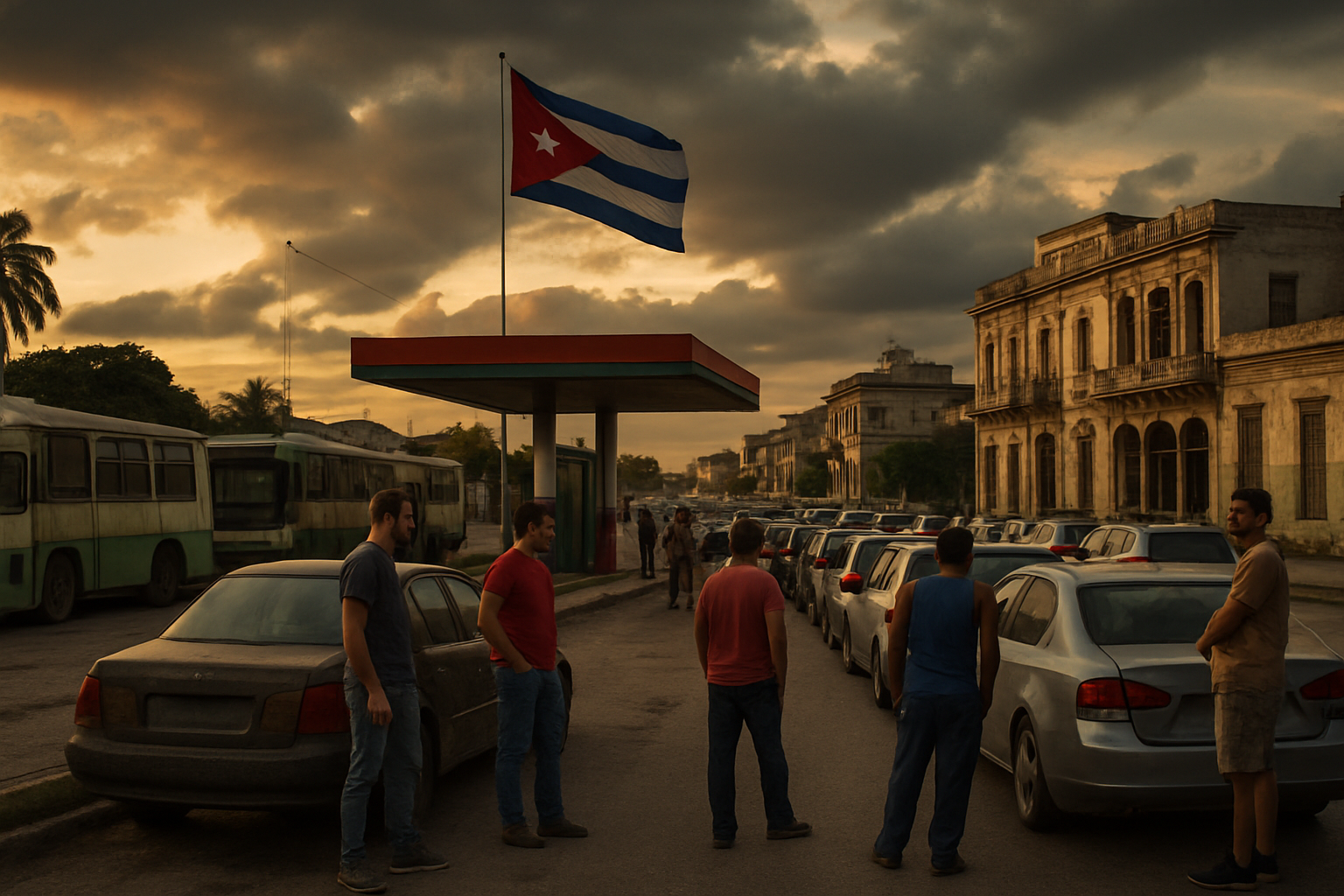
Cuba is experiencing its most severe economic crisis since the 1990s "Special Period," with complete aviation isolation, critical fuel shortages, and widespread blackouts affecting over half the population, while international partners struggle to balance humanitarian aid with U.S. diplomatic pressure.
The island nation of 11 million inhabitants faces an unprecedented combination of energy shortages, infrastructure collapse, and diplomatic isolation that exceeds even the hardships of the post-Soviet era. Ireland has issued its second-highest travel warning, classifying Cuba under "serious and potentially life-threatening risks," while Mexico's President Claudia Sheinbaum confirmed new humanitarian aid shipments will not include petroleum products.
Complete Aviation Isolation Through March
All nine Cuban international airports, including José Martí International in Havana, confirmed zero Jet A-1 fuel availability from February 10 through March 11, 2026, creating the most comprehensive aviation blockade since the 1962 Cuban Missile Crisis. Air Canada, WestJet, Air Transat, and Russian carriers Rossiya Airlines and Nordwind have suspended all operations, with emergency evacuation flights organized for approximately 25,000 stranded tourists, including 21,000 Canadians and 4,000 Russians.
The aviation fuel shortage affects 400 weekly flights and 70,000 scheduled seats, representing unprecedented Caribbean aviation disruption. Major hotel chains including Meliá, Iberostar, and Blue Diamond have closed facilities in Varadero and along the northern coast due to staff transportation difficulties.
"Aviation fuel will not be commercially available at the island's airports,"
— Air Canada spokesperson
Canada issued a "high degree of caution" travel advisory, effectively ending the winter tourism season that traditionally brings crucial foreign currency to the Cuban economy. The Vatican postponed a planned papal visit, citing concerns about return travel arrangements.
Energy Crisis Reaches Critical Levels
Cuba's oil reserves have fallen to a critical 15-20 day supply, with Venezuelan crude shipments completely halted and Mexican deliveries suspended following Trump administration threats of 25% tariffs on countries supplying oil to Cuba. The island's domestic oil production has collapsed from 3 million barrels daily at its peak to just 700,000 barrels, creating total dependence on imports for aviation fuel and other petroleum products.
The state electricity company Unión Eléctrica reports that 51% of the population—approximately 5.5 million people—are experiencing scheduled blackouts during peak evening hours. Eastern provinces have been particularly affected, with 3.4 million residents facing power outages after the failure of the Holguín substation.
A massive fire at the Ñico López refinery in Havana has eliminated the island's remaining domestic petroleum processing capacity, sending thick black smoke columns visible across the capital and further constraining fuel availability.
Humanitarian Emergency Measures
The Cuban government has implemented the most severe emergency measures since the Special Period of the 1990s, including:
- Four-day work weeks for government employees
- Semi-virtual classes at universities nationwide
- Suspension of non-emergency surgeries at hospitals
- Closure of 90% of gas stations across the island
- Paralysis of public transportation systems
- Cancellation of sugar harvests and international conferences
Healthcare systems face severe constraints as medical staff struggle with transportation difficulties and power outages threaten medicine storage and critical equipment operation. The crisis has forced the suspension of medical evacuation services, effectively severing healthcare connections for Cuban-Americans and other diaspora communities.
International Aid Response
Mexico has deployed its largest humanitarian operation with naval vessels Papaloapan and Isla Holbox carrying 814 tons of food and medical supplies to Cuban ports. However, President Sheinbaum confirmed that new aid shipments will not include petroleum products, as Mexico seeks to avoid potential U.S. economic retaliation.
"Mexico will not allow its territory to be used to pressure other nations, but we must also consider our economic relationships,"
— President Claudia Sheinbaum
Russia has pledged to provide crude oil and petroleum products as humanitarian aid, directly challenging the Trump administration's pressure campaign. However, no timeline or volumes have been specified for potential Russian energy shipments.
Spain announced it will provide humanitarian aid through UN channels following a Madrid meeting between Spanish Foreign Minister José Manuel Albares and Cuban Foreign Minister Bruno Rodríguez. The aid will include food and essential health products, though no specific timeline or volumes were detailed.
Private Sector Import Initiative
Cuban authorities have begun allowing private businesses to import diesel fuel, with shipments from various countries arriving at the port of Mariel. Private enterprises must ensure they have proper permits, including storage arrangements, potentially through the state oil company Cupet. This represents a significant shift toward market-based solutions for the energy crisis.
U.S. Maximum Pressure Campaign Success
The Trump administration's January 30 executive order threatening 25% tariffs on countries supplying oil to Cuba has achieved what officials describe as "total energy supply severance." The policy has forced traditional Cuban allies including Venezuela and Mexico to suspend oil deliveries despite humanitarian concerns.
President Trump characterized the situation as creating a "humanitarian threat" while simultaneously calling Cuba a "failed nation" and encouraging Havana to negotiate directly with Washington. This represents a return to the "maximum pressure" tactics employed during Trump's first presidency, reversing the diplomatic opening attempted during the Obama era.
Economic and Social Impact
The Cuban peso has reached historic lows of 500 units per U.S. dollar, representing a 15% weekly decline that reflects the severity of the economic crisis. Tourism workers face unemployment as the industry enters what analysts describe as "freefall," with the winter season effectively ended by travel advisories and flight suspensions.
The crisis affects fundamental aspects of daily life, with families struggling to access basic necessities as transportation networks collapse and power outages disrupt commerce. The situation has forced Cuban bishops to cancel a planned Vatican meeting with Pope Leo XIV, citing concerns about return travel arrangements.
Regional Implications and International Reactions
European media have characterized the situation as a "deliberately engineered humanitarian emergency," raising questions about the ethics and effectiveness of economic pressure campaigns that primarily affect civilian populations. The crisis tests regional solidarity in Latin America, as traditional allies face pressure to choose between U.S. economic relationships and humanitarian commitments to Cuba.
An international flotilla led by figures including UK Labour leader Jeremy Corbyn has been announced to challenge the U.S. oil blockade, representing the most significant international solidarity effort since the crisis began. China has demanded that Washington "immediately" cease its pressure campaign, while regional powers including Brazil and Chile have joined Mexico in providing humanitarian assistance while avoiding triggers for U.S. retaliation.
Historical Context and Comparison
The current crisis exceeds the severity of the 1990s Special Period through its systematic and deliberate nature, rather than resulting from external collapse as occurred with the Soviet Union's dissolution. Unlike the Special Period, when Cuba maintained some international connectivity, the current situation represents the first complete aviation isolation since the 1962 Missile Crisis.
Cuban President Miguel Díaz-Canel has called the situation an attempt at "total asphyxiation" of Cuba's economy, while appealing for dialogue with the United States. However, with no timeline provided by Cuban officials and government priorities shifted to "defense of internal order," the prospects for immediate resolution remain uncertain.
Looking Forward
The crisis represents a test of international community response to comprehensive economic isolation affecting an entire civilian population. Success or failure in providing humanitarian relief while navigating great power pressures will influence future approaches to conflict resolution and economic coercion as diplomatic tools.
The situation requires innovative solutions that address immediate humanitarian needs while potentially opening pathways for broader diplomatic engagement. As Cuba faces its most severe isolation in decades, the international response will determine whether economic pressure achieves political objectives or simply prolongs civilian suffering.
The coming weeks will be decisive as the island nation attempts to navigate through March without aviation connectivity, while international partners balance humanitarian obligations against geopolitical pressures in an increasingly complex diplomatic landscape.