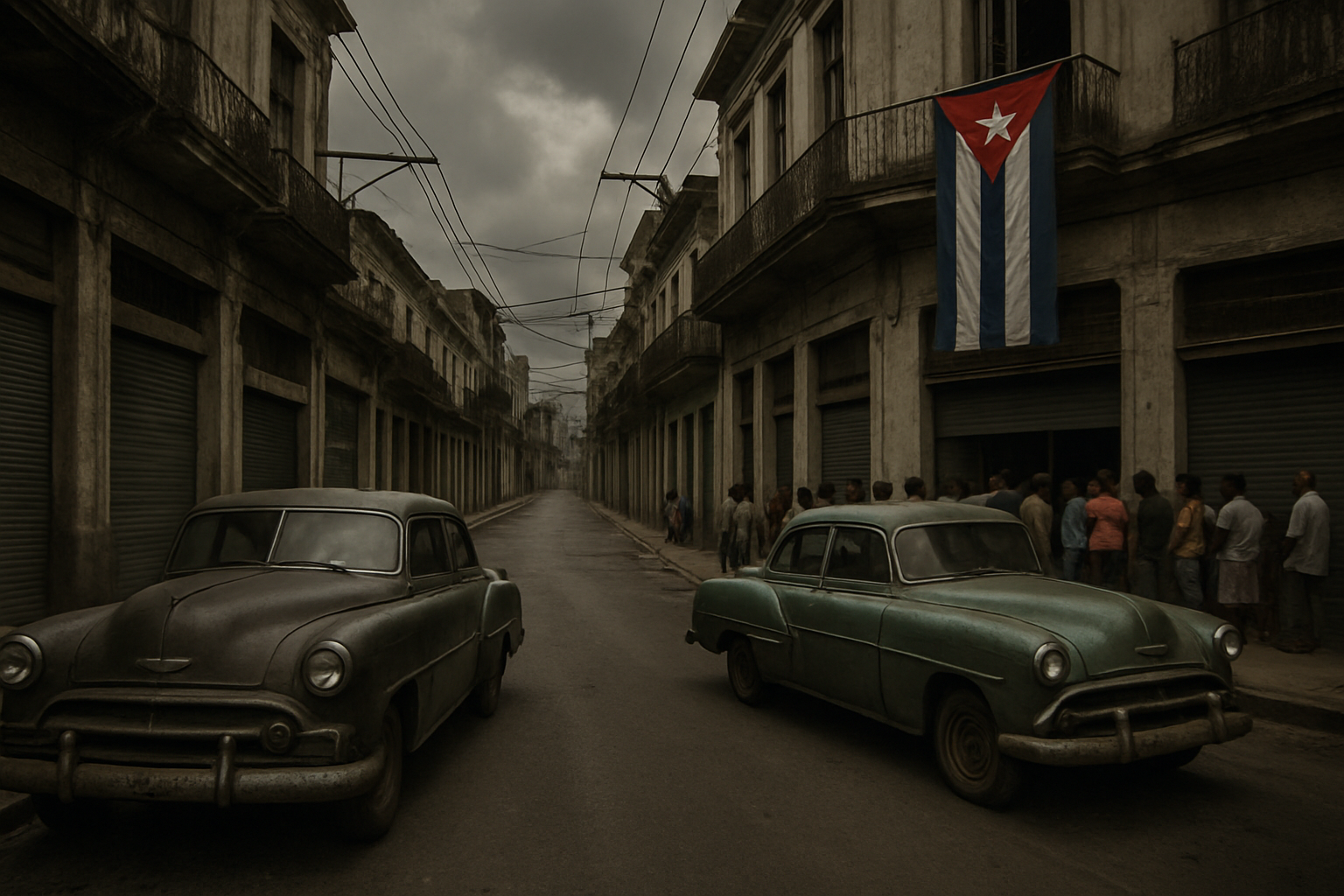
Cuba remains trapped in an unprecedented economic and social crisis that has fundamentally transformed daily life for its 11 million inhabitants, with new reporting revealing how the island's worsening conditions now affect even the most basic human services, from transportation to funeral arrangements.
According to recent reporting from Havana Times, Cuba has been virtually paralyzed since late January 2026, when the Trump administration's petroleum blockade strategy achieved what officials called "total energy supply severance." The crisis has evolved from systematic policy pressure into a humanitarian emergency that exceeds the severity of the 1990s "Special Period" through its deliberate and comprehensive nature.
Travel Becomes an Odyssey on a Stagnant Island
Transportation across Cuba has become what local observers describe as "an odyssey" due to the near-complete breakdown of the island's mobility infrastructure. The fuel shortage that began with Trump's January 30 executive order threatening 25% tariffs on countries supplying oil to Cuba has created a cascade of transportation failures affecting everything from public buses to private vehicles.
The systematic nature of Cuba's transportation collapse goes beyond simple fuel scarcity. With 90% of gas stations closed and domestic oil production having fallen from 3 million to just 700,000 barrels daily, even essential services struggle to maintain basic operations. Medical staff cannot reliably reach hospitals, students cannot access educational facilities, and workers face impossible commutes to their jobs.
"Not even in the hardest years of the Special Period had we seen anything like this,"
— Cuban officials, speaking anonymously to international media
The comparison to the 1990s Special Period is telling but misleading. While the earlier crisis resulted from external economic collapse following the Soviet Union's fall, the current emergency stems from deliberate policy targeting designed to achieve what Trump administration officials have called Cuba's systematic isolation.
Crisis Follows Cubans Even After Death
Perhaps no aspect of Cuba's current crisis illustrates its comprehensive nature more than the breakdown of funeral services in Matanzas province. Recent investigations reveal how "the grief of families collides with fuel shortages, blackouts, broken hearses, and a whole chain of informality and corruption."
The funeral crisis in Matanzas represents a microcosm of the broader infrastructure collapse. Families face delays in basic burial services due to fuel shortages affecting hearses, blackouts disrupting morgue facilities, and a growing network of informal arrangements that has emerged to fill gaps in official services. The crisis has forced families to navigate not just their grief, but also a complex web of logistical challenges that would have been unthinkable just two years ago.
These funeral difficulties highlight how Cuba's crisis has moved beyond economic inconvenience to affect the most fundamental aspects of human dignity and social organization. When a society struggles to provide basic funeral services, it signals a crisis that reaches into every aspect of civic life.
Electrical Infrastructure Under Siege
Adding to the island's woes, Cuba's electrical system continues to face severe strain. Reports indicate that a recent short circuit caused significant damage to electrical infrastructure in Havana, with protective systems failing to respond appropriately. The incident underscores the vulnerability of Cuba's aging electrical grid, which has suffered repeated nationwide blackouts affecting millions of residents.
The electrical crisis is not merely about inconvenience. With 51% of Cuba's population (approximately 5.5 million people) experiencing scheduled blackouts during peak hours, the power shortage threatens medical equipment, disrupts food storage, and compounds every other aspect of the ongoing crisis.
International Context and Historical Significance
Cuba's current crisis unfolds against the backdrop of what experts describe as the most comprehensive economic isolation campaign since the 1962 Cuban Missile Crisis. The Trump administration's "maximum pressure" strategy achieved unprecedented results, forcing traditional allies like Venezuela's interim government and Mexico to halt oil shipments despite decades of solidarity with Cuba.
The aviation isolation that lasted from February to March 2026, with zero jet fuel available at any Cuban airport, resulted in the evacuation of over 25,000 tourists and the suspension of operations by major international airlines. This complete connectivity severance had no precedent in modern Cuban history and demonstrated the reach of contemporary economic warfare capabilities.
Healthcare System Under Pressure
Cuba's healthcare system, long a source of national pride and international recognition, faces mounting pressures from the multifaceted crisis. Hospitals have been forced to suspend non-emergency surgeries due to power outages and transportation difficulties. Medical equipment faces threats from unreliable electricity supply, and medicine storage has been compromised by temperature control failures during blackouts.
The medical evacuation capacity that once connected Cuba to international healthcare networks has been eliminated. Eastern provinces, home to 3.4 million people, have been particularly affected by transmission failures that compound healthcare delivery challenges.
Economic Indicators Paint Grim Picture
The Cuban peso has collapsed to historic lows of 500 pesos to the dollar, representing a dramatic devaluation that affects every aspect of daily economic life. This currency collapse, combined with chronic shortages of basic goods, has created a perfect storm of economic hardship for ordinary Cubans.
The tourism industry, traditionally a crucial source of foreign currency, has virtually collapsed. Major international hotel chains including Meliá, Iberostar, and Blue Diamond closed facilities throughout the island. Canada, traditionally Cuba's largest tourism market, issued its highest-level travel advisories, effectively ending the winter tourism season that Cuba depends upon for economic stability.
Social Fabric Under Strain
Beyond the immediate economic and infrastructure challenges, Cuba's crisis has begun to affect the island's social fabric. Historic protests in March 2026 saw demonstrators storm Communist Party headquarters in Morón, Ciego de Ávila province—the first successful attack on a major party facility since the 1959 revolution. Protesters chanted "¡Libertad!" while burning party materials in scenes that would have been unthinkable just months earlier.
The government's response has focused on what officials term "defense of internal order," indicating awareness that the crisis has moved beyond economic challenges to questions of political stability and social cohesion.
International Responses and Regional Implications
The international response to Cuba's crisis has revealed the complex geopolitical dynamics of the contemporary Caribbean. Russia has condemned what it terms "economic strangulation" and pledged oil aid as humanitarian assistance, though delivery timelines remain unclear. China has demanded that the United States cease its pressure campaign, while European observers have characterized the situation as a "deliberately engineered humanitarian emergency."
Mexico's response illustrates the difficult position of regional powers. President Claudia Sheinbaum has maintained humanitarian aid shipments totaling 814 tons of supplies via naval vessels while suspending oil shipments to avoid U.S. economic retaliation. This careful balance demonstrates how the Cuba crisis has forced regional governments to choose between traditional solidarity and economic self-interest.
Looking Forward: Uncertain Resolution
As Cuba enters what some energy experts describe as a "zero hour," the island faces critical choices about its future. The crisis requires either diplomatic breakthrough, alternative supply arrangements that circumvent U.S. pressure, or fundamental changes to Cuba's energy and political infrastructure.
Recent developments, including the April release of 2,010 prisoners as a "humanitarian gesture" during Holy Week, suggest potential diplomatic openings amid mounting pressure. However, the underlying conditions that created the crisis—Cuba's energy import dependence, aging infrastructure, and geopolitical isolation—require solutions that extend far beyond immediate diplomatic agreements.
The Cuban crisis represents more than a bilateral dispute between Washington and Havana. It serves as a template for 21st-century economic warfare capabilities and raises fundamental questions about the limits of economic coercion as a diplomatic tool when entire civilian populations become affected by comprehensive isolation campaigns.
Human Cost of Geopolitical Pressure
Ultimately, the crisis facing Cuba in 2026 illustrates how geopolitical pressures translate into human suffering that affects the most basic aspects of daily life. From the difficulties of traveling across the island to the challenges of providing dignified funeral services, Cuba's crisis demonstrates how systematic economic pressure can fundamentally reshape social organization and human relationships.
The international community's response to Cuba's crisis will likely establish precedents for how economic coercion is applied and constrained in future conflicts. The stakes extend far beyond Cuba's borders to questions of international law, humanitarian protection principles, and the legitimate scope of economic pressure in achieving political objectives.
As Cuba struggles with fuel shortages, blackouts, and mounting funeral costs, the island's 11 million inhabitants face an uncertain future that will depend as much on international diplomatic developments as on their own resilience and adaptability in the face of unprecedented challenges.