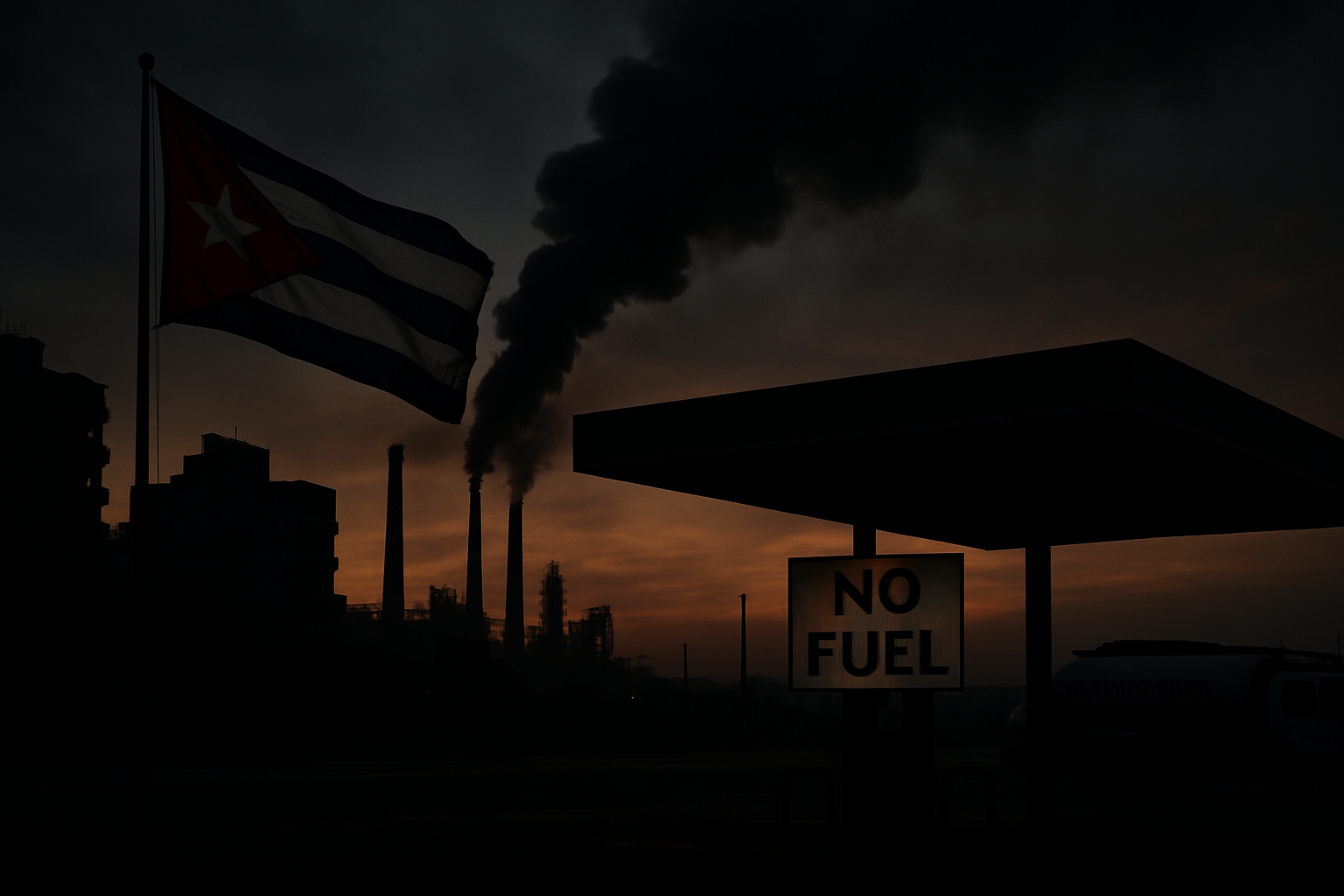
Cuba's energy crisis has reached critical levels with the cancellation of the prestigious Festival del Habano and the suspension of international flights by LATAM Peru, as the island faces complete aviation isolation through March 11 with zero jet fuel available at all nine major airports.
The Festival del Habano, scheduled for five days in late February, became the latest casualty of Cuba's worst fuel shortage since the 1990s "Special Period." The organizing committee announced Saturday that this year's event would be postponed indefinitely due to what they described as the "complex economic situation" facing Cuba as a result of the U.S. "economic, commercial and financial blockade."
Complete Aviation Isolation
The crisis has escalated to unprecedented levels, with Cuban authorities confirming that jet fuel reserves will remain unavailable at all airports from February 10 through March 11, 2026. This represents the most severe aviation isolation since the 1962 Cuban Missile Crisis, affecting approximately 400 weekly flights and 70,000 scheduled seats.
LATAM Peru became the latest international carrier to suspend operations, joining Air Canada, WestJet, Air Transat, and Russian carriers Rossiya Airlines and Nordwind. The airline announced it would provide full refunds for ticket costs, including seat selection and baggage fees, acknowledging the extraordinary circumstances.
"If we don't see a tanker by mid-March, Cuba will have reached zero hour"
— Jorge Piñón, Energy Institute researcher at University of Texas
Systematic Energy Collapse
Cuba's energy infrastructure is experiencing systematic collapse, with 51% of the population—approximately 5.5 million people—facing scheduled blackouts during peak hours according to state electricity company Unión Eléctrica (UNE). The crisis stems from Cuba's oil reserves dropping to a critical 15-20 day supply, while Venezuelan crude shipments have been completely halted and Mexican deliveries suspended.
The island's domestic oil production has collapsed from 3 million barrels daily at its peak to just 700,000 barrels currently, creating complete import dependence that has been severed by U.S. economic pressure. Emergency measures now include four-day government work weeks, semi-virtual university classes, suspension of non-emergency hospital surgeries, and the closure of 90% of gas stations.
International Response and Isolation
The international community has reacted with a mixture of humanitarian concern and diplomatic pressure. Over 25,000 tourists have been evacuated, including 21,000 Canadians and 4,000 Russians, as major hotel chains including Meliá, Iberostar, and Blue Diamond have closed facilities in Varadero and along the northern coast.
Canada has issued a "high degree of caution" travel advisory, effectively ending the winter tourism season that typically provides crucial foreign currency to the Cuban economy. The Cuban peso has plummeted to a historic low of 500 units per dollar, representing a 15% weekly decline.

Trump Administration Maximum Pressure
The crisis is largely attributed to the Trump administration's January 30, 2026 executive order threatening 25% tariffs on countries that supply oil to Cuba. This measure effectively forced Venezuela's interim government and Mexico to suspend petroleum shipments despite humanitarian concerns expressed by regional leaders.
Mexican President Claudia Sheinbaum has maintained humanitarian aid shipments—deploying naval vessels Papaloapan and Isla Holbox carrying 814 tons of supplies—while suspending oil deliveries to avoid U.S. economic retaliation. The policy represents what Cuban President Miguel Díaz-Canel has termed an attempt at "total asphyxiation" of the island's economy.
Healthcare System Under Pressure
The energy crisis has severely compromised Cuba's healthcare system, with hospitals suspending non-emergency surgeries due to power outages threatening medicine storage and critical equipment. Medical staff face transportation difficulties, while 3.4 million people in eastern provinces have been affected by the failure of the Holguín electrical substation.
Historical Context and Comparison
Energy experts note that the current crisis exceeds the severity of Cuba's 1990s "Special Period" because it results from deliberate U.S. policy rather than external collapse. During the Special Period following the Soviet Union's dissolution, Cuba maintained some international connectivity, but the current situation has created complete aviation isolation for the first time since the 1962 Missile Crisis.
The systematic targeting of Cuba's energy infrastructure through economic pressure represents what European media have characterized as a "deliberately engineered humanitarian emergency." Unlike previous crises that resulted from external economic shocks, this situation stems from calculated policy decisions designed to maximize pressure on the Cuban government.
International Solidarity and Resistance
Despite the isolation, international solidarity efforts are emerging. Russia has announced plans to send crude oil and petroleum products to Cuba as humanitarian aid, directly challenging the U.S. maximum pressure campaign. A coalition led by figures including UK Labour leader Jeremy Corbyn has announced an international flotilla to challenge the oil blockade.
China has demanded that Washington "immediately" cease its pressure campaign against Cuba, while European officials have privately expressed concern about the collective punishment affecting civilian populations versus government officials.
"The situation in Cuba is extremely critical. This is a test of the international community's response to economic coercion affecting entire civilian populations."
— International Relations Expert
Economic and Social Impact
The tourism industry, which provides crucial foreign currency earnings, has been devastated. Major Spanish hotel chains have closed their Cuban operations, while cultural events including meetings with Vatican representatives have been cancelled due to concerns about return travel logistics.
The broader economic implications extend beyond tourism. Sugar harvests have been halted, international conferences cancelled, and the peso's devaluation has created severe inflationary pressures on an already struggling population. The crisis affects all 11 million Cuban inhabitants, with particular impact on vulnerable populations who depend on consistent energy supply for medical equipment and essential services.
Regional Implications
The Cuba crisis is testing the limits of economic coercion as a diplomatic tool and raising questions about collective punishment of civilian populations. The success or failure of the U.S. strategy has implications far beyond the Caribbean, potentially setting precedents for how economic pressure can be applied to small island states.
Regional powers are being forced to choose between traditional solidarity with Cuba and economic relationships with the United States. Mexico's position demonstrates the practical limits of regional cooperation when faced with the gravitational pull of American economic influence.
Looking Forward
The coming weeks will be decisive for Cuba's energy future and the broader precedent being set for international economic warfare in the 21st century. Without diplomatic intervention or alternative supply arrangements, the island faces the prospect of extended isolation that could reshape Caribbean geopolitics for decades.
The crisis requires urgent international attention not only for humanitarian reasons but also because it represents a test case for global governance and the international community's response to economic pressure tactics that affect entire civilian populations. The outcome will influence future approaches to territorial disputes, economic sanctions, and the protection of civilian populations in international conflicts.
As the Festival del Habano's postponement symbolically demonstrates, Cuba's rich cultural traditions and international connections are being severed by an energy crisis that goes far beyond technical infrastructure to touch the heart of the nation's identity and its place in the global community.