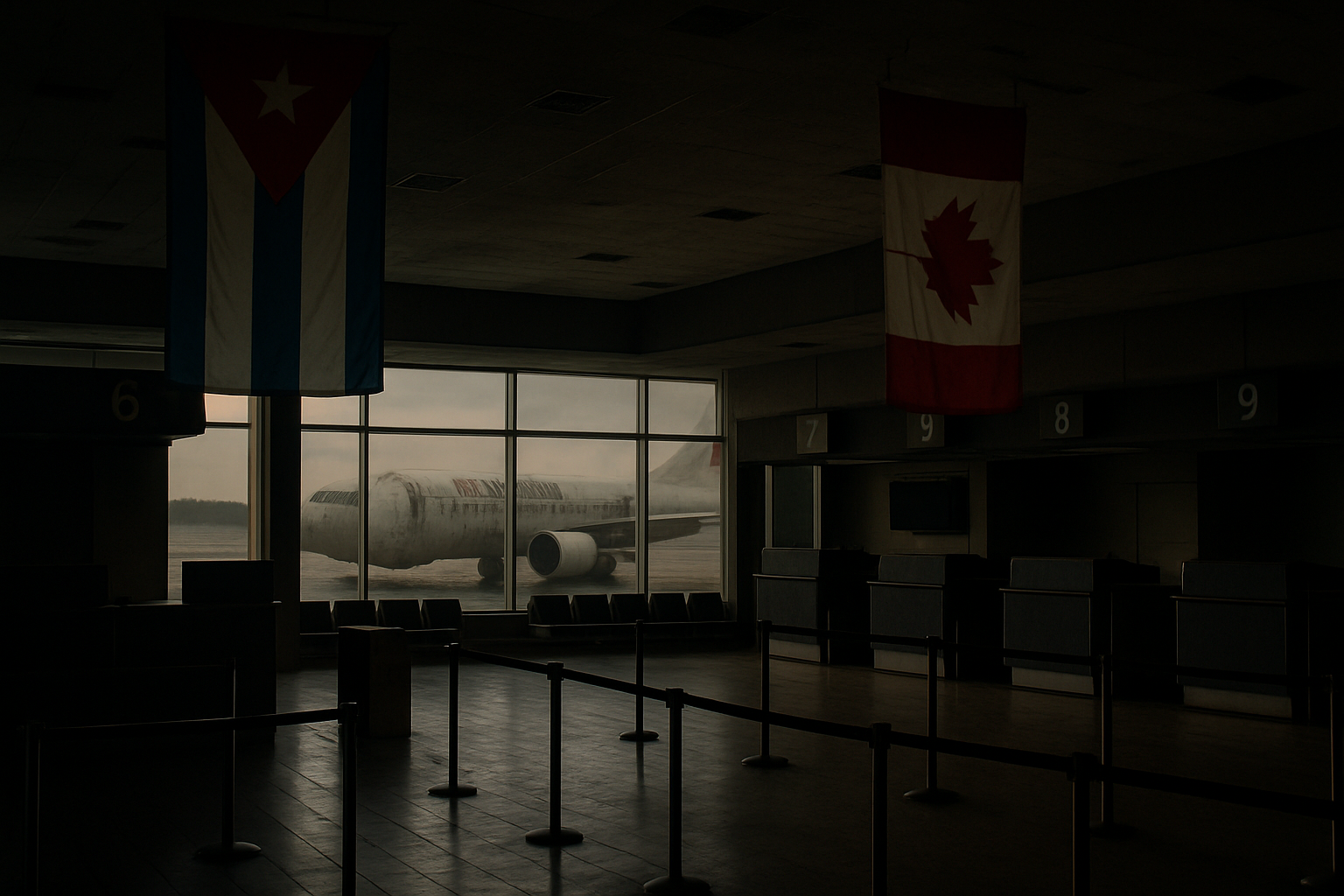
Cuba's deepening energy crisis has reached a critical breaking point as all three major Canadian airlines—Air Canada, WestJet, and Air Transat—suspended flights to the island after Cuban authorities warned that jet fuel would be unavailable from February 10 until at least March 11, 2026.
The unprecedented aviation fuel shortage has left up to 21,000 Canadian tourists stranded on the Caribbean island, with airlines scrambling to arrange emergency repatriation flights. Canada accounts for roughly half of all foreign tourists visiting Cuba, making this suspension a devastating blow to the island's tourism-dependent economy.
Complete Aviation Isolation Looms
Cuban aviation officials formally warned international carriers on February 8 that jet fuel reserves would be completely depleted within 24 hours, according to industry sources speaking to EFE news agency. This marks the most dramatic escalation of Cuba's energy emergency since President Trump's January 30 executive order threatening tariffs on countries supplying oil to Cuba.
The crisis affects nearly 400 weekly flights and 70,000 scheduled seats, representing the most severe aviation isolation Cuba has faced since the Soviet collapse. All nine major Cuban international airports, including José Martí International Airport in Havana, will have zero Jet A-1 fuel availability through at least March 11.
"Aviation fuel will not be commercially available at the island's airports effective February 10. We are working to repatriate our customers as quickly and safely as possible."
— Air Canada spokesperson
Trump's Maximum Pressure Campaign Takes Effect
The aviation fuel crisis stems directly from the Trump administration's renewed "maximum pressure" campaign against Cuba. The January 30 executive order threatened 25% tariffs on countries supplying oil to Cuba, effectively forcing Mexico and Venezuela to suspend crude oil shipments despite humanitarian concerns.
According to diplomatic sources, Cuba's oil reserves have dwindled to just 15-20 days supply, with Venezuelan crude shipments completely halted following the political transition in Caracas. The island's domestic oil production has collapsed from 3 million to just 700,000 barrels daily.
Former Canadian ambassador to Cuba Mark Entwistle described the situation as the Trump administration trying to "inflict pain and throttle the country's economy" through what European media has characterized as a "deliberately engineered humanitarian emergency."
Canadians Face Uncertain Return
The suspension has sparked panic among the estimated 21,000 Canadians currently vacationing in Cuba. Airlines have pledged to operate emergency repatriation flights with increased fuel loads to avoid Cuban refueling, but the logistics remain complex and expensive.
Canada issued a "high degree of caution" travel advisory for Cuba in recent weeks, prompting thousands of travelers to cancel planned trips. The advisory cited infrastructure challenges, fuel shortages, and basic goods availability issues affecting the island.

Island-Wide Energy Collapse
The aviation fuel shortage represents just one aspect of Cuba's broader energy catastrophe. The island is experiencing its worst energy crisis since the 1990s "Special Period," but this time caused by deliberate U.S. policy rather than external economic collapse.
Current emergency measures include:
- Four-day government work weeks
- Scheduled blackouts affecting 3.4 million people during peak hours
- Semi-virtual university classes
- Suspended public transportation
- Hospital surgery suspensions
- 90% of gas stations closed in provincial areas
In eastern provinces, massive power outages have affected millions after the failure of the Holguín substation. The situation is particularly desperate outside Havana, where fuel is only available on the black market.
Tourism Industry in Freefall
Cuba's tourism sector, a crucial source of foreign currency, has entered what industry analysts describe as "freefall." Major Spanish hotel chains including Meliá, Iberostar, and Canadian-owned Blue Diamond have closed facilities in Varadero and along the northern coast due to staff transportation issues and infrastructure failures.
The Canadian flight suspension particularly devastates Cuba's tourism hopes, as Canadian visitors have historically provided the most reliable source of foreign tourists. Even Cuban bishops have canceled their planned trip to meet Pope Leo XIV at the Vatican, citing risks of being unable to return to the island.
"This represents the most comprehensive aviation blockade since the 1962 missile crisis. Unlike the 1990s Special Period, this is a deliberate policy targeting the entire population."
— Aviation industry analyst
International Response and Regional Impact
Mexico has deployed its largest humanitarian operation since taking office, with naval vessels Papaloapan and Isla Holbox carrying 814 tons of emergency supplies from Veracruz. However, President Claudia Sheinbaum suspended oil shipments to avoid U.S. tariff retaliation, demonstrating the limits of regional solidarity under American pressure.
European airlines including Air Europa are implementing emergency Caribbean stopovers through Santo Domingo in the Dominican Republic, while Air France explores similar contingency arrangements. Spanish carrier Iberia has introduced flexible ticketing policies during the crisis.
Russia's Foreign Minister Sergey Lavrov condemned the "neocolonial pressure," with Kremlin spokesperson Dmitry Peskov calling the situation "critical" and exploring assistance options. However, practical help remains limited due to logistical challenges and U.S. sanctions pressure on third countries.
Humanitarian Consequences Mount
The crisis extends far beyond inconvenienced tourists. Cuba's healthcare system faces critical challenges with hospitals suspending non-emergency surgeries, power outages threatening medicine storage and critical equipment, and medical staff unable to reach facilities due to transport paralysis.
The aviation isolation eliminates Cuba's capacity for medical evacuations and severs Cuban-American family connections. Essential supply chains for the island's 11 million inhabitants face severe disruption, with international conferences canceled and sugar harvests halted.
Historical Precedent and Future Implications
Cuba has experienced energy crises before, but the current situation represents unprecedented aviation isolation combined with systematic targeting of the island's energy infrastructure. The complete severing of aviation fuel supplies exceeds even the hardships of the 1990s Special Period, when Cuba maintained some international connectivity despite severe economic constraints.
The crisis demonstrates the reach of U.S. economic influence over global energy markets and the vulnerability of small island states to external coercion. It sets a template for 21st-century economic isolation capabilities that affect civilian populations beyond traditional diplomatic and military targets.
The situation requires either a diplomatic breakthrough, alternative supply arrangements, or fundamental changes to Cuban energy infrastructure. With the crisis now entering its second week with no clear resolution pathway, the international community faces a test of how to respond to economic coercion that collectively punishes entire populations.
Looking Ahead
As the February 10 deadline for aviation fuel depletion passes, Cuba enters uncharted territory in modern international relations. The success of Trump's maximum pressure campaign in achieving complete energy isolation may influence future approaches to international disputes, but at enormous human cost.
For the thousands of stranded Canadian tourists, the immediate priority remains safe repatriation. For Cuba's 11 million inhabitants, the crisis represents a fundamental test of resilience in the face of economic siege warfare that exceeds traditional sanctions in its scope and severity.
The coming weeks will determine whether diplomatic intervention can provide relief or whether Cuba faces an extended period of isolation that could reshape the Caribbean region and set dangerous precedents for international economic coercion.